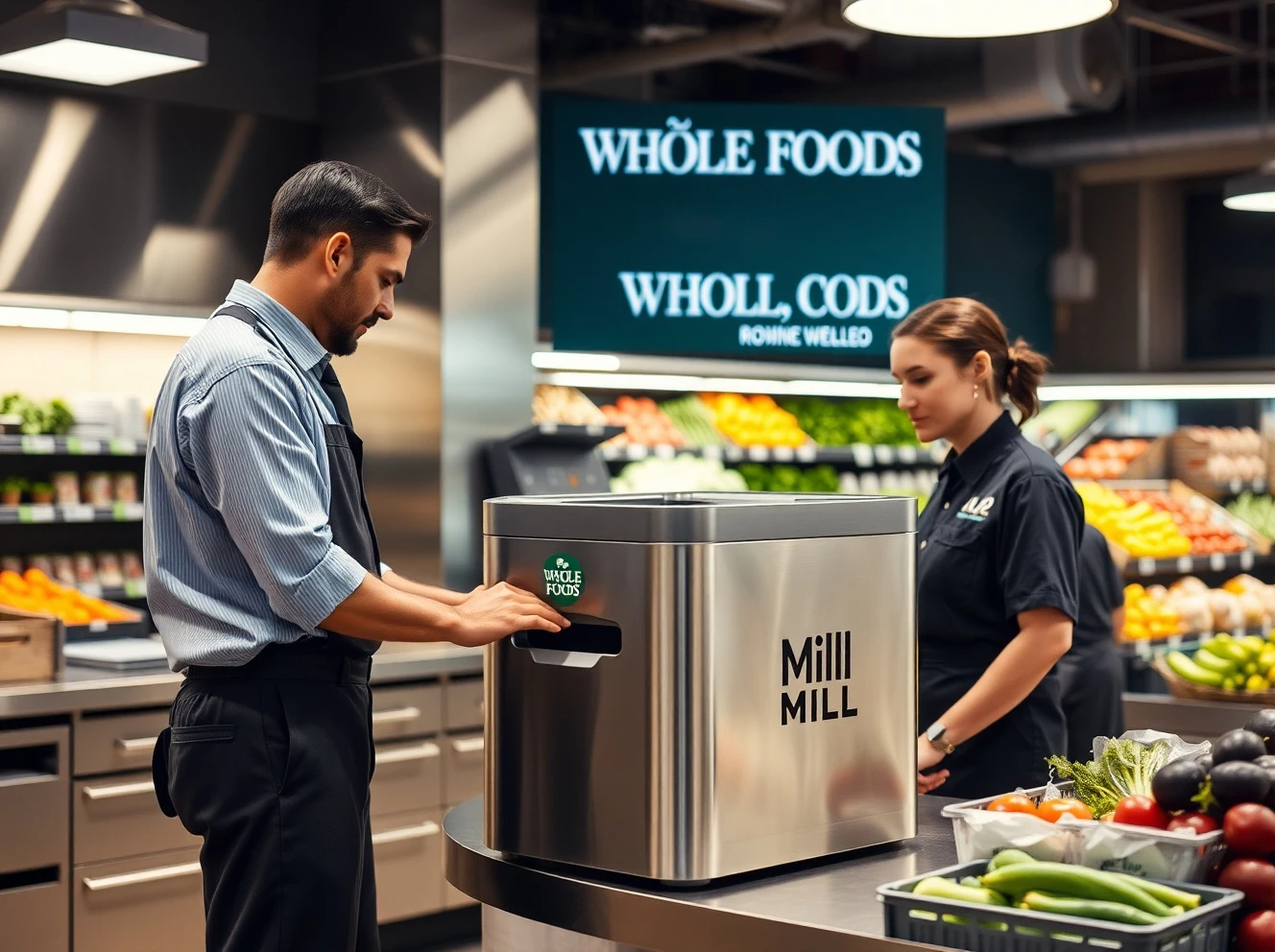
In a landmark move for sustainable retail operations, food waste technology startup Mill has secured a transformative partnership with Amazon and Whole Foods Market that will reshape how grocery chains manage waste nationwide. The agreement, announced this week, represents a strategic evolution for Mill from consumer-focused hardware to enterprise-scale solutions, leveraging artificial intelligence and sensor technology to address one of retail’s most persistent challenges. Beginning in 2027, every Whole Foods location will deploy Mill’s commercial food waste system, creating what industry analysts describe as the largest coordinated food waste reduction initiative in U.S. grocery history.
From Household Innovation to Enterprise Solution
Mill’s journey from consumer product to commercial partner follows a deliberate strategic path that co-founder and CEO Matt Rogers outlined from the company’s earliest days. “This expansion to commercial customers has been part of our plan since our Series A presentation,” Rogers explained in an exclusive interview. The startup initially gained attention with its well-designed household food waste bins, which attracted early adopters through their user-friendly approach to waste reduction. Interestingly, many Whole Foods executives had already adopted Mill’s consumer products in their homes before formal partnership discussions began, creating organic brand familiarity that facilitated enterprise negotiations.
This consumer-to-commercial transition mirrors successful patterns seen in other technology sectors. Companies like Nest, where Rogers previously worked, similarly demonstrated how consumer adoption can validate technology before enterprise deployment. The approach provides valuable data, refines user experience, and builds brand credibility that translates directly to business negotiations. For Mill, this meant entering Whole Foods discussions with proven technology and enthusiastic internal advocates already familiar with their systems.
The Technical Evolution Behind the Partnership
Mill’s technology represents a significant advancement beyond traditional food waste management. The commercial system combines several innovative components:
- Advanced Grinding and Dehydration: The system processes food waste into dry, shelf-stable material that reduces volume by approximately 80%
- AI-Powered Analytics: Computer vision and sensor arrays identify waste patterns and provide actionable insights
- Circular Economy Integration: Processed material serves as feed for egg producers, creating value from waste
- Real-time Monitoring: Continuous data collection helps identify waste sources and reduction opportunities
This technological sophistication directly addresses what Rogers identifies as the partnership’s core objective: “Ultimately, our goal moves beyond making waste operations more efficient to helping retailers actually waste less food through upstream interventions.”
The Strategic Business Case for Whole Foods
Whole Foods’ decision to partner with Mill stems from multiple converging business imperatives. The grocery industry faces increasing pressure on multiple fronts, including sustainability commitments, operational efficiency demands, and competitive margin pressures. Food waste represents a particularly challenging area where environmental and business interests align significantly.
Industry data reveals the scale of the opportunity. According to ReFED, a leading food waste research organization, U.S. grocery stores generate approximately 16 billion pounds of food waste annually, representing both environmental impact and substantial financial loss. Traditional disposal methods, primarily landfill disposal, incur significant costs while missing potential value recovery opportunities.
| Metric | Traditional Landfill | Mill System |
|---|---|---|
| Volume Reduction | 0% | 80% |
| Disposal Cost per Ton | $50-$150 | $20-$40 |
| Value Recovery | None | Feed production |
| Data Collection | Limited | Comprehensive analytics |
| Carbon Impact | High methane emissions | Significant reduction |
For Whole Foods, the partnership addresses what the industry terms “shrink”—sales lost through waste, damage, or theft. By implementing Mill’s AI-driven system, the grocer gains unprecedented visibility into waste patterns, enabling targeted interventions that preserve both product and profit. Rogers emphasizes this capability: “Minimizing shrink provides competitive advantage in today’s challenging grocery market.”
AI Acceleration and Technological Advantage
The rapid development of Mill’s commercial system owes much to recent advances in artificial intelligence, particularly large language models and computer vision technologies. Rogers contrasts this with his experience at Nest, where training cameras to recognize people and packages required extensive engineering resources and time. “With current LLM capabilities,” he notes, “we achieved superior results with far fewer engineers and significantly reduced development time.”
This AI acceleration enabled Mill to develop sophisticated waste identification systems that analyze what enters their bins and determine whether items should have remained salable. The system provides actionable intelligence about waste patterns, expiration management, and inventory optimization. This technological edge proved crucial in securing the Whole Foods partnership, as it directly addresses core operational challenges in grocery retail.
The Multi-Channel Business Strategy
Rogers frequently references his experience at Apple during the iPod era when discussing Mill’s strategic direction. “Apple recognized the danger of single-channel dependence,” he explains. “The iPhone development represented adding another leg to the stool.” Mill consciously applies this philosophy through diversified revenue streams across consumer, commercial, and developing municipal sectors.
This strategic diversification provides several advantages. First, it reduces business fragility by creating multiple revenue sources. Second, it enables technology development across different use cases that inform and improve all product lines. Third, it positions Mill as a comprehensive solution provider rather than a niche product company. The Whole Foods partnership represents a significant step in building this diversified business model while validating the company’s technology at enterprise scale.
Implementation Timeline and Broader Impact
The phased implementation beginning in 2027 allows for systematic deployment and optimization across Whole Foods’ national network. This timeline accommodates necessary store modifications, staff training, and system integration while ensuring smooth operational transition. The partnership’s structure includes continuous feedback mechanisms where Whole Foods’ experience informs ongoing system improvements.
Beyond immediate operational benefits, the partnership carries significant environmental implications. Food waste in landfills generates methane, a potent greenhouse gas with approximately 25 times the warming potential of carbon dioxide over a 100-year period. By diverting waste from landfills and creating useful byproducts, the Mill system contributes to circular economy principles while reducing greenhouse gas emissions.
The partnership also signals broader industry trends. As sustainability becomes increasingly integrated with business operations, technology solutions that address both environmental and financial objectives gain competitive advantage. Other grocery chains will likely monitor Whole Foods’ experience with Mill, potentially accelerating adoption of similar technologies across the industry.
Conclusion
Mill’s strategic partnership with Amazon and Whole Foods represents a significant milestone in sustainable retail technology deployment. The agreement validates Mill’s consumer-to-commercial strategy while demonstrating how AI-driven solutions can address persistent industry challenges. By combining waste reduction, operational efficiency, and data analytics, the partnership creates value across multiple dimensions—financial, environmental, and operational. As implementation progresses toward 2027, the grocery industry will watch closely how this collaboration reshapes food waste management practices and potentially establishes new standards for sustainable retail operations nationwide. The Mill and Whole Foods partnership ultimately illustrates how strategic technology deployment can transform environmental challenges into business opportunities while advancing broader sustainability goals.
FAQs
Q1: What exactly does Mill’s technology do for Whole Foods stores?
Mill’s commercial system grinds and dehydrates food waste from produce departments, reducing volume by approximately 80%. The system also provides AI-powered analytics about waste patterns and converts processed material into animal feed, creating both operational savings and environmental benefits.
Q2: When will Whole Foods stores begin using Mill’s systems?
The nationwide deployment begins in 2027, following a development and testing period. This timeline allows for systematic implementation across all Whole Foods locations while ensuring proper staff training and system integration.
Q3: How does this partnership benefit Whole Foods financially?
The system reduces landfill disposal costs, creates value from waste through feed production, and provides data to minimize future waste. By reducing “shrink” (product loss), Whole Foods can improve margins in a competitive grocery market.
Q4: What role does artificial intelligence play in Mill’s system?
AI enables the system to identify waste patterns, analyze what items are being discarded, and determine whether products could have remained salable. This intelligence helps Whole Foods optimize inventory management and reduce preventable waste.
Q5: How does Mill’s commercial system differ from their consumer product?
The commercial version processes larger volumes, includes enterprise-grade analytics, and integrates with store operations. While based on similar grinding and dehydration technology, the commercial system offers enhanced durability, reporting capabilities, and scale appropriate for grocery store operations.