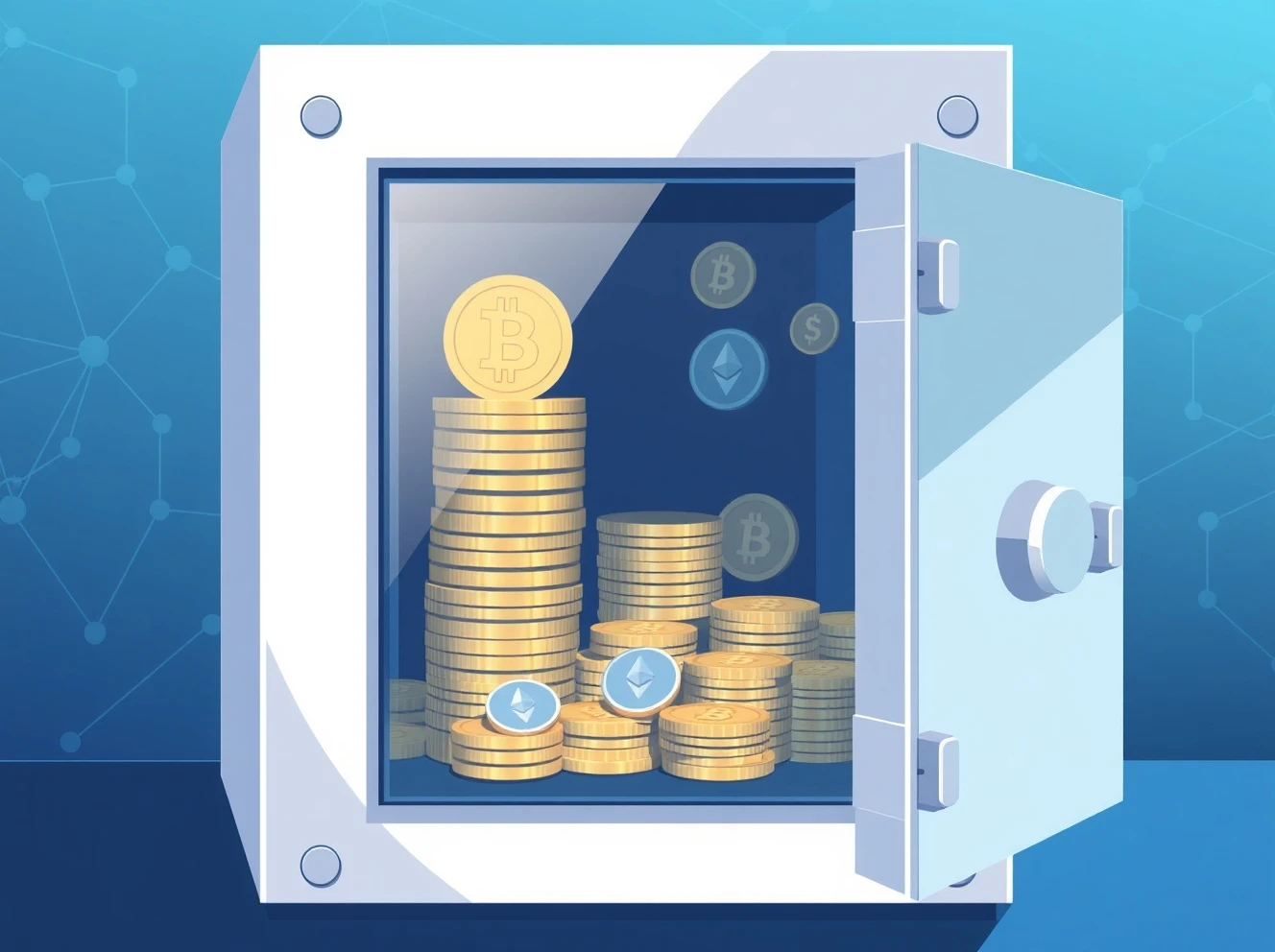
In the evolving landscape of digital finance, transparency has become the cornerstone of trust. On December 25, 2025, Bybit, a leading global cryptocurrency exchange, published its latest reserve ratio data, providing a clear and verifiable snapshot of its financial health. This disclosure, covering a snapshot from December 17th, reveals a consistent practice of over-collateralization across major digital assets, directly addressing one of the crypto industry’s most persistent concerns: counterparty risk. The data shows Bybit not only holds 100% of user funds but maintains a substantial safety buffer, reinforcing its position as a secure platform for traders and investors worldwide.
Understanding Bybit’s Reserve Ratio Announcement
A reserve ratio is a fundamental metric for any custodial financial platform. It measures the amount of an asset an exchange holds in reserve against the total liabilities owed to its users. Consequently, a ratio at or above 100% indicates full backing, a critical requirement for solvency. Bybit’s latest figures, therefore, are not merely operational data. They represent a proactive commitment to financial integrity in a sector historically marred by opacity. The exchange utilizes Merkle Tree proofs, a cryptographic verification method, allowing users to independently confirm their holdings are included in the published totals. This technical approach moves beyond simple attestation to provide actionable, user-verifiable proof.
The December 2025 Data Snapshot
The disclosed ratios provide a detailed look at Bybit’s asset management strategy. For instance, the platform reported a 105% reserve ratio for Bitcoin (BTC). This means for every 1 BTC held in user accounts, Bybit safeguards 1.05 BTC in its reserves. Similarly, Ethereum (ETH) and XRP both showed a 101% ratio, while Solana (SOL) was backed at 103%. Notably, stablecoins, which are pivotal for daily trading liquidity, showed strong buffers. Tether (USDT) was reported at 102%, and USD Coin (USDC) at a significant 112%. This variance in ratios likely reflects a nuanced, asset-specific risk and liquidity management framework, rather than a one-size-fits-all policy.
The Critical Importance of Over-Collateralization
Over-collateralization acts as a vital financial cushion against market volatility and operational stress. In traditional finance, banks operate on fractional reserves, but the crypto industry, learning from past failures like FTX, is increasingly adopting a more conservative standard. Maintaining reserves above 100% prepares an exchange to handle simultaneous large-scale withdrawal requests—a scenario known as a “bank run”—without defaulting on user obligations. This practice directly mitigates the systemic risk that can lead to platform insolvency and catastrophic user losses. Furthermore, it signals responsible stewardship, a quality that institutional investors and regulatory bodies now demand as prerequisites for participation.
Industry Context and Evolving Standards
The push for proof-of-reserves became a dominant industry trend following the collapses of 2022. Today, it is transitioning from a marketing differentiator to a baseline expectation. While many exchanges now provide some form of reserve attestation, the frequency, detail, and verification methods vary widely. Bybit’s commitment to regular, asset-specific disclosures with Merkle Tree verification places it at the forefront of this transparency movement. This approach allows for more meaningful comparison and analysis than a simple binary “proof” statement. It enables the market to assess not just if an exchange has the funds, but how prudently it manages them.
Beyond Reserves: A Holistic Security Framework
It is essential to view reserve ratios as one critical component within a broader security ecosystem. A strong ratio indicates financial solvency but does not, in isolation, guarantee complete safety. Users and analysts must also consider an exchange’s technological safeguards. These include the percentage of assets held in cold storage (offline wallets), the robustness of its cybersecurity infrastructure, insurance policies for digital assets, and its compliance with relevant regulatory frameworks in jurisdictions where it operates. Bybit’s transparent reserve data should be evaluated alongside its track record of operational security and its adherence to evolving global compliance standards.
The Impact on User Trust and Market Stability
Regular, verifiable transparency has a profound effect on market psychology. For the everyday trader, it reduces the anxiety associated with leaving assets on an exchange. This fosters greater market participation and liquidity. For the broader ecosystem, it contributes to overall stability by making it harder for undercapitalized or fraudulent platforms to operate. As more exchanges adopt and standardize detailed reserve reporting, it raises the barrier to entry and improves industry-wide risk management. This maturation is a necessary step for cryptocurrency to achieve deeper integration with the traditional global financial system.
Conclusion
Bybit’s December 2025 reserve ratio report provides a concrete, data-driven benchmark for trust in the cryptocurrency sector. The demonstrated practice of over-collateralization across key assets like Bitcoin and stablecoins shows a clear prioritization of user asset protection. This level of transparency, supported by cryptographic verification, is rapidly becoming the non-negotiable standard for legitimate exchanges. As regulatory scrutiny intensifies globally, such practices will likely transition from voluntary disclosures to mandatory requirements. For now, Bybit’s consistent commitment offers users a measurable metric for security and reinforces the foundational role of transparency in building a resilient digital asset economy.
FAQs
Q1: What exactly does a 105% reserve ratio for Bitcoin mean?
It means that for every 1 Bitcoin that users have deposited on the Bybit exchange, the company holds 1.05 Bitcoin in its secure reserves. The extra 0.05 BTC (5%) serves as a financial buffer to ensure all withdrawal requests can be met even during periods of high demand or market stress.
Q2: How can I personally verify that my funds are included in Bybit’s reserves?
Bybit uses a cryptographic tool called a Merkle Tree to generate its proof-of-reserves. Users can access a verification tool, often within their account dashboard, which allows them to input their account information. The tool then cryptographically proves that their specific balance is included in the total reserve hash that Bybit publicly publishes.
Q3: Why would a stablecoin like USDC have a higher reserve ratio (112%) than Bitcoin (105%)?
Different assets have different risk and liquidity profiles. Stablecoins are used heavily for trading pairs and withdrawals, potentially leading to higher and more volatile transaction volumes. A higher reserve ratio for USDC indicates a more conservative liquidity management strategy for this high-utility asset, ensuring smooth redemptions and operations at all times.
Q4: Does a 100%+ reserve ratio make an exchange completely safe from failure?
No. While it is a paramount indicator of financial solvency, it is not a guarantee. Overall safety also depends on other critical factors including cybersecurity defenses, the security of private keys (especially for cold storage), internal operational controls, corporate governance, and regulatory standing. A reserve ratio primarily addresses the risk of insolvency, not all forms of operational risk.
Q5: How often should a reputable cryptocurrency exchange publish its reserve ratios?
There is no universal standard, but industry best practice is moving toward regular, periodic disclosures—such as monthly or quarterly. Frequent updates provide ongoing assurance and allow the community to track an exchange’s financial health over time, rather than relying on a single point-in-time audit. Consistency in reporting is as important as the data itself.