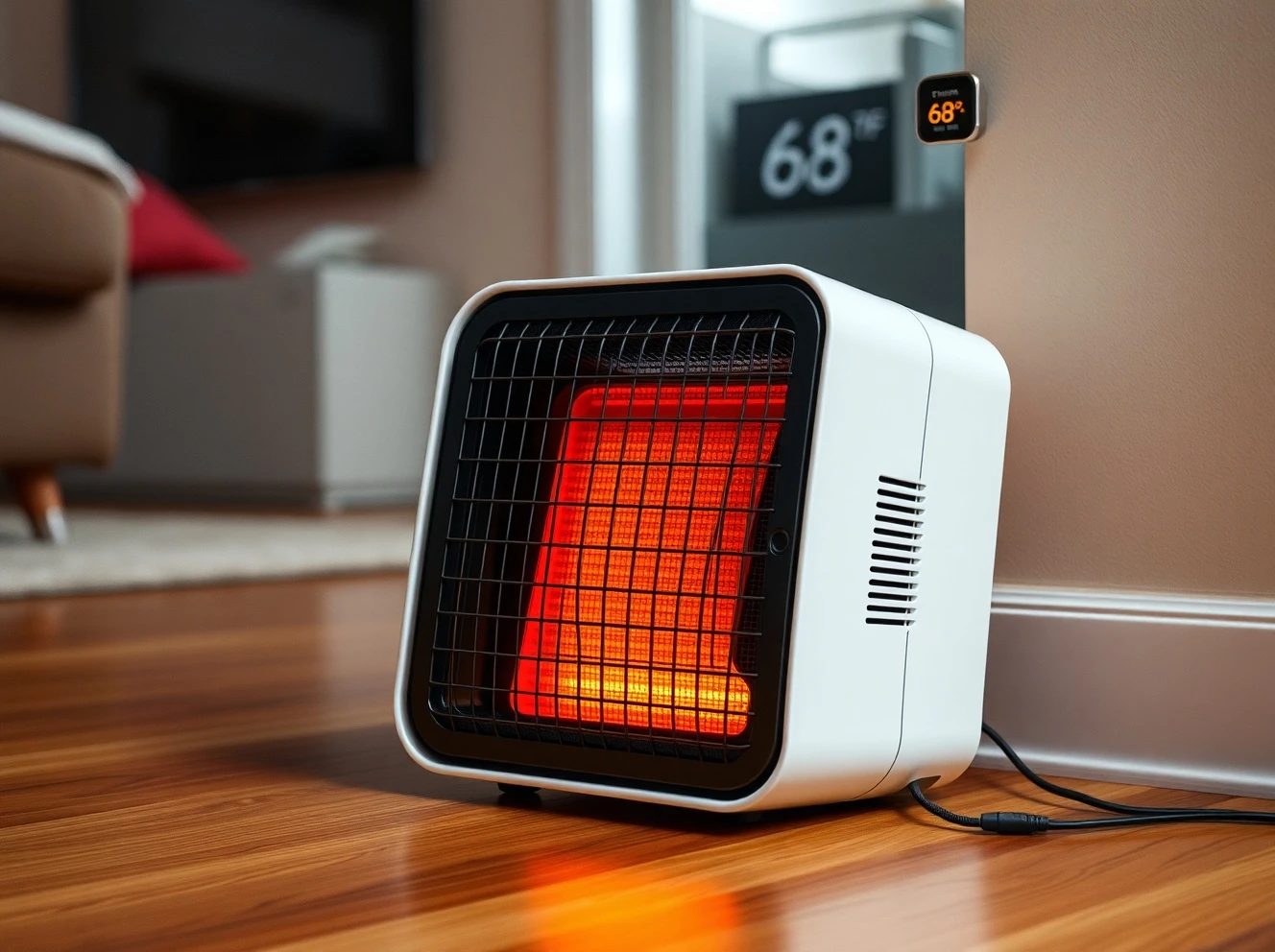
As winter temperatures plunge across the United States, a new, affordable heating solution is gaining rapid attention on Amazon. The retail giant currently lists a compact space heater priced at just $40, with customer reviews consistently highlighting its ability to heat up in mere seconds. This product arrives during a period of increased consumer focus on energy efficiency and cost-effective home comfort solutions. Consequently, its performance and safety features warrant a detailed, factual examination.
Analyzing the $40 Amazon Space Heater’s Key Features
This particular model represents a category of personal ceramic heaters. These devices use a ceramic heating element and a fan to distribute warm air. Market data from the Consumer Technology Association shows a steady annual growth in sales of portable heaters, especially compact models. The heater’s primary advertised claim is rapid heat production. Technically, ceramic elements can reach high temperatures quickly when an electric current passes through them. The integrated fan then immediately pushes this warm air into the room.
Key specifications typically found in this price segment include:
- Power Settings: Most offer low (750W) and high (1500W) settings.
- Thermostat: An adjustable thermostat allows users to set a desired temperature.
- Safety Features: Essential features include tip-over protection and overheat protection.
- Portability: Lightweight design, often under 5 pounds, with a carrying handle.
Furthermore, the “heats up in seconds” description aligns with the fundamental physics of ceramic heating technology. The element has low thermal mass, meaning it requires less energy to increase in temperature compared to oil-filled radiators.
Safety and Efficiency in Modern Space Heater Design
Safety remains the paramount concern with any portable heating device. The U.S. Consumer Product Safety Commission (CPSC) estimates that space heaters are involved in approximately 1,700 residential fires every year. Modern heaters, however, incorporate critical safety mechanisms. For instance, a tip-over switch automatically cuts power if the unit is knocked over. Similarly, an overheat sensor shuts the heater off if internal temperatures exceed safe limits. Reputable manufacturers submit their products for testing by independent laboratories like Underwriters Laboratories (UL).
Expert Insights on Responsible Heater Use
Energy efficiency experts emphasize proper usage. “A space heater is most effective for supplementing heat in a single, occupied room,” explains a report from the U.S. Department of Energy. “Heating an entire house with multiple portable units is significantly less efficient than a central system.” Experts also recommend placing the heater on a hard, level surface away from foot traffic and combustible materials like curtains or bedding. Additionally, users should always plug the heater directly into a wall outlet, not a power strip or extension cord, to prevent circuit overload.
Market Context and Consumer Heating Trends
The popularity of affordable space heaters intersects with broader economic and environmental trends. Rising energy costs have led many consumers to seek “zone heating” strategies. This practice involves lowering the thermostat for the whole house and using a portable heater to warm only the occupied space. A 2024 study by the American Council for an Energy-Efficient Economy (ACEEE) suggested that strategic zone heating could reduce overall heating bills for some households. The table below compares common heater types:
| Heater Type | Avg. Cost | Heat-Up Time | Best For |
|---|---|---|---|
| Ceramic Fan Heater | $30-$60 | Seconds | Small rooms, quick warmth |
| Oil-Filled Radiator | $80-$150 | Minutes | Medium rooms, sustained heat |
| Infrared Heater | $70-$120 | Instant | Direct personal heating |
Amazon’s algorithm, which surfaces highly-rated and well-priced items, has likely contributed to this product’s visibility. Customer reviews serve as a powerful social proof mechanism, directly influencing purchase decisions for practical home goods.
Conclusion
The $40 Amazon space heater exemplifies the market’s shift toward affordable, fast-acting personal comfort appliances. Its design leverages proven ceramic heating technology to deliver immediate warmth, a key selling point for consumers. However, its value is inextricably linked to responsible use and an understanding of its role as a supplemental heat source. For those seeking a rapid solution for a chilly home office or small bedroom, this category of heater presents a compelling, low-cost option, provided all modern safety protocols are strictly followed.
FAQs
Q1: Is a $40 space heater from Amazon safe to use?
When used correctly, modern space heaters with current safety certifications (like UL) are designed to be safe. Critical safety features include tip-over and overheat protection. Always follow the manufacturer’s instructions, keep it away from flammables, and plug it directly into a wall outlet.
Q2: How fast does ‘heats up in seconds’ actually mean?
Ceramic heating elements can become hot enough to warm the air passing over them within 30 to 60 seconds of being turned on. The fan then distributes this warm air immediately, creating a perceptible difference in room temperature quickly.
Q3: Can this type of heater significantly reduce my heating bill?
It can, if used for zone heating. By lowering your central thermostat and only heating the room you are occupying with the space heater, you may see savings. However, using it in addition to your normal heating will increase your overall electricity costs.
Q4: What size room is a heater like this suitable for?
Most 1500-watt ceramic heaters are effective for spaces up to 150 square feet. They are ideal for home offices, small bedrooms, or for providing direct personal warmth near a desk or chair in a larger room.
Q5: What should I look for when reading reviews for an affordable space heater?
Focus on reviews that discuss long-term reliability, noise level of the fan, accuracy of the thermostat, and durability of the controls. Look for patterns in feedback rather than isolated extreme opinions, and check if the seller or brand is responsive to customer concerns.