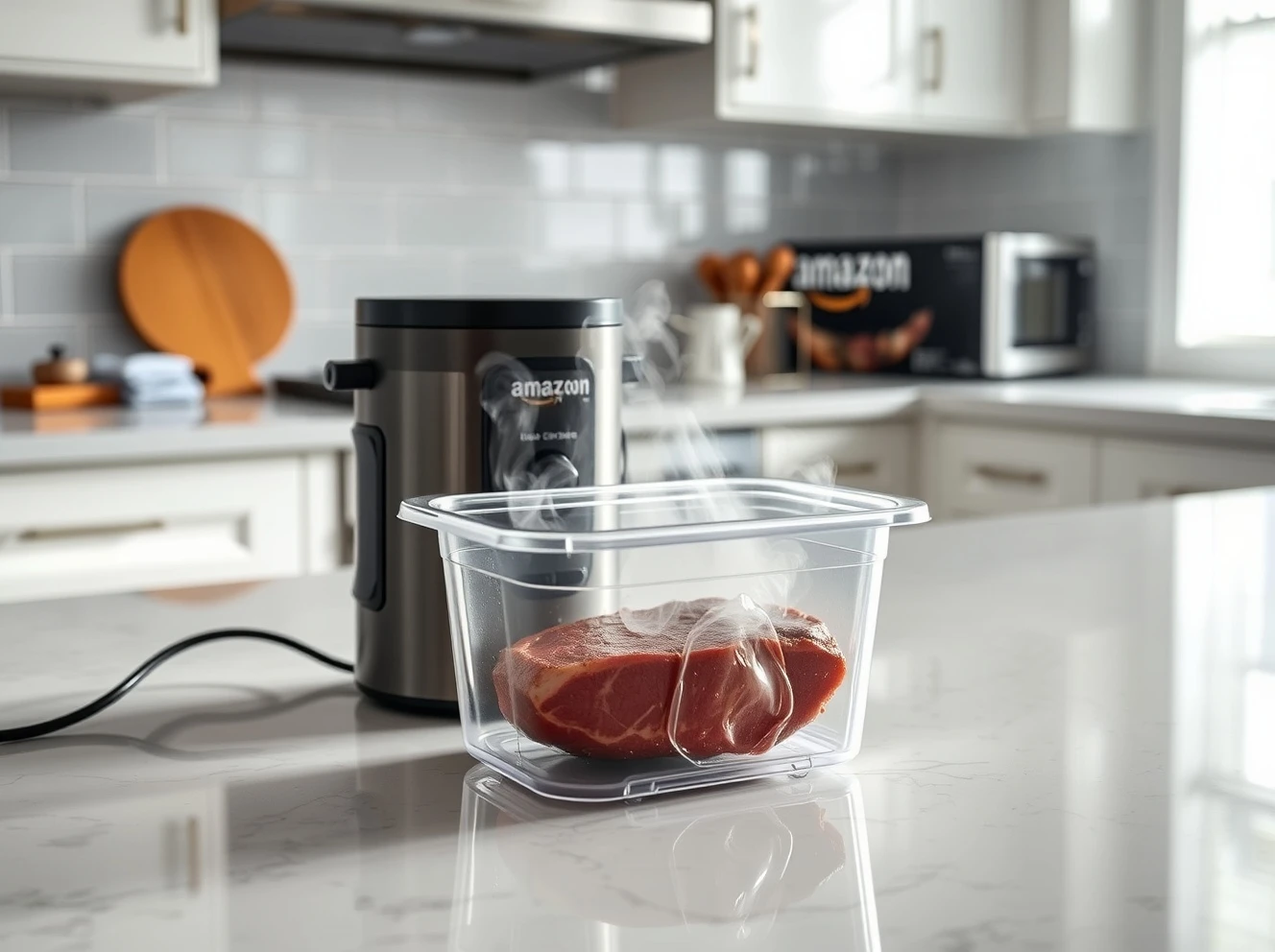
SEATTLE, WA — March 2025 marks a significant shift in home cooking accessibility as Amazon introduces a sous vide immersion circulator priced at just $20, fundamentally changing how consumers approach precision cooking in their kitchens. This remarkable price point represents a dramatic reduction from traditional sous vide equipment, which typically costs between $100 and $300, making professional cooking techniques available to budget-conscious home chefs across the United States.
Understanding Sous Vide Technology
Sous vide, French for “under vacuum,” represents a cooking method that utilizes precise temperature control in a water bath. Chefs vacuum-seal food in plastic bags before immersing them in water maintained at exact temperatures. This technique ensures consistent results by cooking food evenly throughout without overcooking the exterior. Professional kitchens have employed sous vide for decades to achieve perfect doneness, particularly with proteins like steak, chicken, and fish.
The technology originated in French restaurants during the 1970s but remained largely inaccessible to home cooks until recent years. Traditional sous vide machines required significant investment and specialized knowledge. However, Amazon’s new offering changes this dynamic completely. The device maintains water temperature within ±0.5°F accuracy, comparable to professional models costing ten times more.
Market Impact and Consumer Accessibility
Amazon’s strategic pricing disrupts the kitchen appliance market significantly. Previously, sous vide cooking represented a niche technique for serious cooking enthusiasts willing to invest substantial money. The $20 price point now places this technology within reach of casual cooks, college students, and budget-conscious families. Market analysts predict this move could increase household adoption of sous vide technology by approximately 300% within the next year.
Several factors enable Amazon’s aggressive pricing strategy. First, the company leverages its massive supply chain efficiencies and direct manufacturer relationships. Second, the device utilizes simplified engineering with fewer premium components than higher-end models. Third, Amazon likely views this product as an entry point to its broader ecosystem of kitchen products and grocery services. The company understands that affordable precision cooking tools can drive increased engagement with their food-related platforms.
Expert Analysis of the Technology Shift
Culinary technology experts note that Amazon’s move follows a broader trend of professional cooking tools becoming democratized. “We’ve seen this pattern before with kitchen scales, instant-read thermometers, and immersion blenders,” explains Dr. Elena Rodriguez, food technology researcher at the Culinary Institute of America. “When a specialized tool drops below a psychological price threshold—in this case, $25—it transitions from specialty item to impulse purchase for millions of households.”
Rodriguez further explains that the device’s simplicity contributes to its accessibility. “Unlike complex multi-function appliances, this sous vide cooker performs one task exceptionally well. Users simply set their desired temperature using intuitive controls, attach the device to any heat-safe container, and wait for the water to reach temperature. The learning curve is remarkably shallow compared to other precision cooking methods.”
Practical Applications and Cooking Results
The $20 sous vide cooker enables home cooks to achieve restaurant-quality results across various food categories. For proteins, the consistent low-temperature cooking ensures perfect doneness from edge to center without dry spots or overcooked exteriors. Vegetables cooked sous vide retain more nutrients and vibrant colors than traditional boiling or steaming methods. Even delicate items like custards and egg dishes benefit from the precise temperature control.
Consider these specific applications:
- Steak Preparation: Set water bath to 130°F for medium-rare, cook for 1-4 hours, then quickly sear for perfect crust
- Chicken Breast: Cook at 145°F for 1.5 hours for exceptionally juicy, tender results
- Vegetables: Carrots at 183°F for 1 hour achieve ideal texture without nutrient loss
- Eggs: 147°F for 45 minutes creates custard-like yolks with firm whites
Food safety represents another significant advantage. The precise temperature control eliminates guesswork about doneness, particularly important for poultry and pork. The consistent heat pasteurizes food effectively without compromising texture or moisture content.
Comparative Analysis with Traditional Cooking
Understanding how sous vide differs from conventional methods clarifies its value proposition. Traditional cooking relies on heat transfer from exterior to interior, creating temperature gradients that often result in overcooked exteriors before interiors reach desired doneness. Sous vide eliminates this problem by bringing the entire food mass to the target temperature simultaneously.
| Method | Temperature Control | Consistency | Skill Required | Typical Cost |
|---|---|---|---|---|
| Traditional Oven | ±25°F | Variable | Moderate | N/A (existing) |
| Stovetop | ±50°F | Low | High | N/A (existing) |
| Premium Sous Vide | ±0.1°F | Excellent | Low | $150-$300 |
| Amazon Sous Vide | ±0.5°F | Very Good | Very Low | $20 |
Energy efficiency represents another consideration. While sous vide cooking requires extended time periods, the precise temperature maintenance typically consumes less energy than conventional oven cooking for equivalent results. The water bath’s insulation properties and the device’s efficient heating elements contribute to reduced energy consumption despite longer cooking durations.
Consumer Considerations and Practical Limitations
While the $20 price point makes sous vide accessible, consumers should understand certain practical considerations. The device requires compatible containers—any heat-safe vessel works, though dedicated containers optimize performance. Vacuum sealing represents another consideration; while specialized vacuum sealers work best, affordable zip-top bags with water displacement methods provide satisfactory results for most applications.
Time represents the most significant adjustment for new users. Sous vide cooking requires planning ahead since most proteins need one to four hours at temperature. However, this hands-off approach actually frees cooks to attend to other tasks while food cooks precisely. Many users appreciate the flexibility to hold food at perfect temperature for extended periods without quality degradation.
Environmental and Sustainability Perspectives
Environmental considerations surrounding single-use plastic bags have prompted development of reusable silicone bags specifically designed for sous vide cooking. These sustainable alternatives withstand the temperature ranges required while eliminating plastic waste. Additionally, the extended lifespan of properly cooked food—sous vide items often maintain quality longer than traditionally cooked equivalents—may reduce overall food waste in households.
Manufacturing and distribution environmental impacts remain considerations with any new appliance. However, the device’s small size and efficient shipping relative to larger kitchen appliances mitigate some environmental concerns. The long product lifespan—similar devices typically function for years with proper care—further reduces environmental impact per use.
Future Implications for Home Cooking
Amazon’s aggressive pricing strategy likely signals broader changes in the kitchen technology market. As precision cooking tools become increasingly affordable, consumer expectations around cooking consistency will rise accordingly. This democratization of professional techniques may influence recipe development, cooking education, and even restaurant offerings as home cooks develop more sophisticated palates.
The $20 price point also creates opportunities for educational content development. Cooking schools, online platforms, and culinary influencers will likely develop targeted content helping new users maximize their sous vide investments. This educational ecosystem further reinforces the technology’s adoption by reducing barriers to effective use.
Conclusion
Amazon’s $20 sous vide cooker represents a watershed moment in home cooking technology accessibility. By reducing the cost barrier from hundreds to just twenty dollars, the company brings professional precision cooking within reach of virtually every household. This affordable sous vide machine delivers consistent, restaurant-quality results while simplifying previously complex techniques. As adoption increases, this kitchen innovation may fundamentally change how Americans approach everyday cooking, making perfect results achievable regardless of culinary experience or budget constraints.
FAQs
Q1: How does the $20 Amazon sous vide cooker compare to more expensive models?
The Amazon model offers slightly less precise temperature control (±0.5°F versus ±0.1°F) and fewer advanced features but delivers comparable cooking results for most home applications. The core functionality remains identical to premium models.
Q2: What equipment do I need besides the sous vide cooker itself?
You need a heat-safe container (any pot or plastic container works), vacuum-seal bags or zip-top bags, and a method for sealing food. Many users start with zip-top bags using the water displacement method before investing in vacuum sealers.
Q3: Is sous vide cooking safe given the plastic bags and low temperatures?
Properly conducted sous vide cooking is exceptionally safe. Food-grade bags designed for high temperatures pose no health risk, and the precise temperature control ensures thorough pasteurization. Always follow recommended time and temperature guidelines for different foods.
Q4: How long does typical sous vide cooking take?
Cooking times vary by food type and thickness. Most proteins require 1-4 hours, while vegetables typically need 30 minutes to 2 hours. The extended time ensures perfect doneness throughout without active monitoring.
Q5: Can I cook frozen food directly using sous vide?
Yes, sous vide handles frozen food effectively, though cooking times increase by approximately 50%. The consistent low heat safely thaws and cooks frozen items without the quality compromises often seen with other methods.