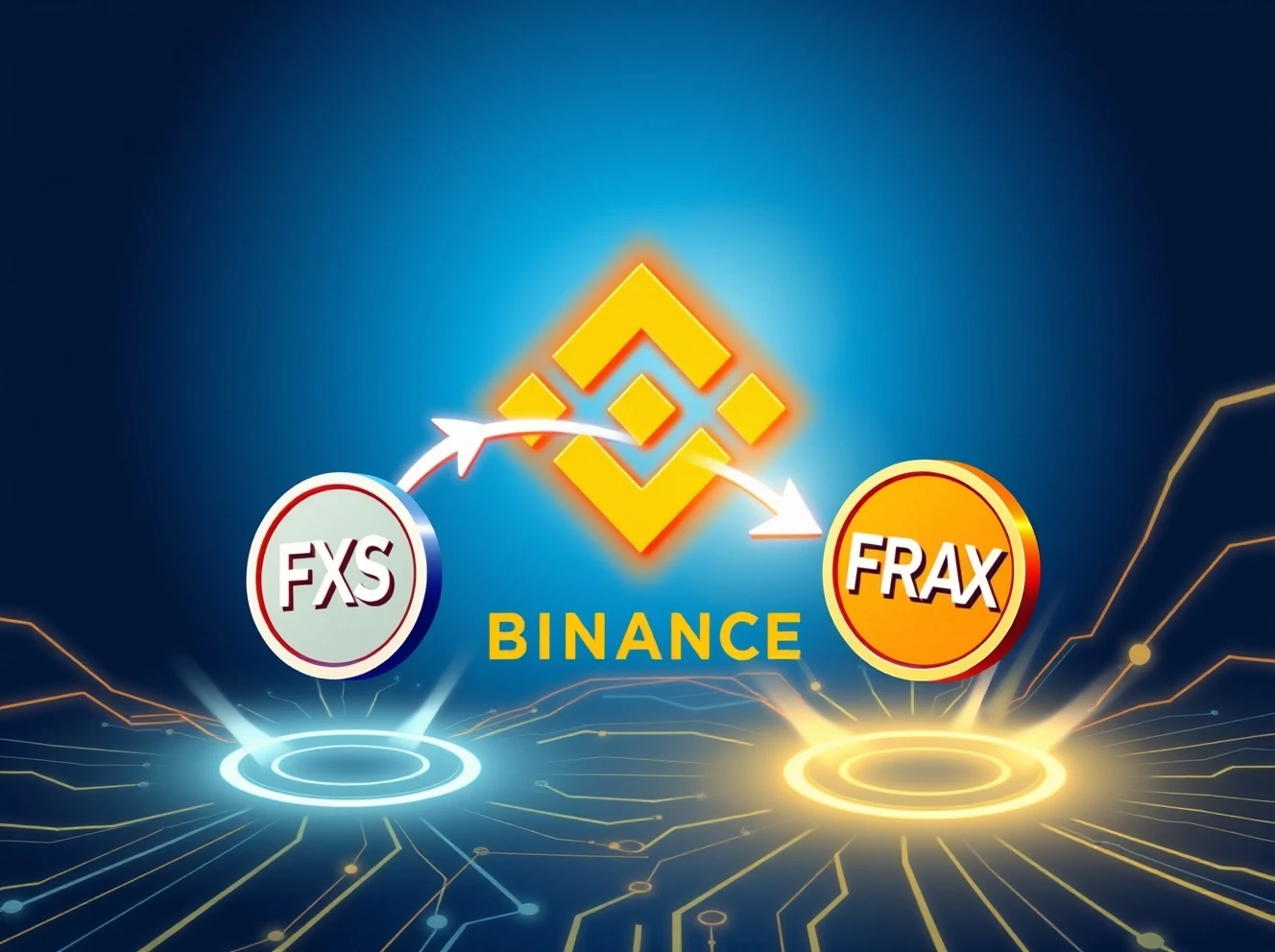
Major cryptocurrency exchange Binance has announced comprehensive support for the Frax Share (FXS) token migration to Frax (FRAX), marking a pivotal moment for algorithmic stablecoin infrastructure. This institutional endorsement facilitates a seamless transition for millions of users during Frax Finance’s strategic rebranding initiative. Understanding the technical timeline and procedural implications remains essential for all FXS token holders participating in this ecosystem evolution.
Understanding the Binance FXS Token Swap Mechanism
Frax Finance, a leading algorithmic stablecoin protocol, is executing a fundamental token system consolidation. The existing FXS token, which serves dual governance and utility functions within the ecosystem, undergoes direct replacement by the new FRAX token. This migration represents a strategic rebrand rather than a protocol fork or supplementary airdrop. Consequently, Binance’s involvement eliminates technical complexities for exchange users through automated balance conversion.
Industry analysts recognize this migration as part of broader DeFi maturation trends. Protocol consolidation often enhances token utility and market positioning. Furthermore, exchange-facilitated migrations reduce user friction significantly compared to manual wallet-based processes. The Frax protocol’s decision to partner with Binance demonstrates calculated ecosystem strategy, leveraging the exchange’s technical infrastructure and user base.
The Technical Architecture Behind Token Migrations
Token migrations involve sophisticated blockchain operations requiring precise coordination between protocol developers and exchange engineering teams. For the FXS to FRAX transition, Binance’s systems must synchronize with Frax Finance’s smart contract deployment schedule. This coordination ensures accurate balance snapshots and prevents trading discrepancies. Exchange-led migrations typically demonstrate higher success rates than decentralized alternatives due to centralized technical oversight.
Critical Timeline for the FRAX Migration Process
Binance has established a precise operational schedule to minimize market disruption during the FXS token swap. Adherence to these deadlines prevents potential asset management complications for traders and long-term holders alike.
January 13, 2025 (3:00 a.m. UTC): All existing FXS spot trading pairs undergo permanent delisting. Trading suspension occurs simultaneously across all supported markets.
January 13, 2025 (3:30 a.m. UTC): Deposit and withdrawal functionalities for legacy FXS tokens become inactive. Users must avoid transferring FXS to Binance addresses after this timestamp.
January 15, 2025 (7:00 a.m. UTC): Deposit capabilities activate for the new FRAX token contract address. Users may begin transferring externally migrated tokens.
January 15, 2025 (8:00 a.m. UTC): Trading commences for the primary FRAX/USDT spot pair. Market dynamics will establish initial price discovery for the rebranded asset.
The automated conversion process executes at a precise 1:1 ratio for all FXS balances held in Binance spot wallets. No manual intervention remains necessary for qualified accounts. However, users maintaining positions in Binance Earn products or margin trading should consult specific exchange announcements regarding those instruments.
Strategic Implications of the FRAX Rebranding Initiative
Frax Finance’s consolidation from FXS to FRAX extends beyond nomenclature adjustment. This strategic move aims to unify protocol identity within the competitive stablecoin sector. Market data indicates that token simplification often correlates with improved liquidity metrics and exchange integration rates. Binance’s endorsement provides immediate credibility and market access advantages for the migrated asset.
Algorithmic stablecoins face increasing regulatory scrutiny and market competition throughout 2025. Consequently, protocol simplification represents a defensive strategic maneuver. Streamlined token economics potentially enhance governance participation and utility applications. Historical analysis of similar migrations, including Polygon’s MATIC to POL transition, suggests successful rebranding can positively impact long-term adoption metrics.
Liquidity and Market Structure Considerations
Binance’s market dominance ensures immediate liquidity provision for the new FRAX trading pair. Exchange-supported migrations typically demonstrate lower volatility during initial trading phases compared to organic listings. The FRAX/USDT pair will benefit from Binance’s sophisticated market-making infrastructure and extensive user base. However, traders should monitor volume transitions from decentralized exchanges where FXS currently maintains significant liquidity.
Practical Action Plan for Binance Users
While Binance automates the core migration process, users should implement several precautionary measures to ensure asset security and trading continuity.
- Conclude FXS Trading Activities: Finalize all open orders and trading strategies before the January 13 delisting deadline to prevent order execution failures.
- Suspend External Deposits: Avoid transferring FXS tokens from external wallets to Binance after withdrawal suspension activates on January 13 to prevent potential asset loss.
- Balance Verification Protocol: Log into Binance accounts following the January 15 migration completion to confirm accurate FRAX balance allocation.
- Market Analysis Preparation: Research the new FRAX token economics and monitor initial trading patterns when the FRAX/USDT pair launches.
Users holding FXS in private wallets or other exchanges must follow separate migration procedures outlined by Frax Finance. The Binance process exclusively applies to tokens custodied on their platform. Self-custody participants should consult official Frax Finance communication channels for wallet-specific guidance.
Regulatory and Compliance Dimensions
Token migrations involve complex regulatory considerations across multiple jurisdictions. Binance’s structured approach demonstrates compliance with evolving digital asset frameworks. The exchange’s migration methodology includes comprehensive user communication, precise timing, and technical safeguards. Regulatory observers note that exchange-facilitated migrations generally receive favorable regulatory assessment compared to decentralized alternatives due to enhanced consumer protection mechanisms.
Conclusion
The Binance FXS token swap to FRAX represents a landmark collaboration between centralized exchange infrastructure and decentralized finance innovation. This migration establishes procedural precedents for future protocol upgrades within the cryptocurrency ecosystem. Binance’s technical facilitation removes significant user friction while ensuring market stability during the transition period. The successful execution of this token migration will likely influence how exchanges and DeFi protocols coordinate future ecosystem developments, ultimately strengthening the interconnected architecture of digital asset markets.
FAQs
Q1: What specific actions must Binance users take to participate in the FXS to FRAX migration?
Binance users holding FXS in spot wallets require no manual actions. The exchange automatically converts eligible balances at the predetermined 1:1 ratio during the migration window between January 13 and January 15, 2025.
Q2: How does this migration affect the market valuation of converted holdings?
The token quantity maintains parity through conversion, but market forces determine the post-migration price of FRAX. Historical analysis indicates that successful rebranding migrations often correlate with positive sentiment, though individual asset performance depends on broader market conditions and protocol fundamentals.
Q3: What procedures apply to FXS tokens held in decentralized wallets or competing exchanges?
The Binance migration process exclusively covers tokens custodied on their platform. External holders must follow official Frax Finance migration instructions, typically involving smart contract interactions or exchange-specific procedures where applicable.
Q4: Will trading history and tax documentation update automatically post-migration?
Binance typically provides updated transaction records reflecting the conversion event. However, users should consult their regional tax regulations regarding token migration accounting and maintain independent records of pre- and post-migration holdings.
Q5: What security measures protect users during the migration technical process?
Binance implements multiple security protocols including balance snapshots, transaction monitoring, and system validations. The migration occurs during scheduled maintenance windows to minimize operational risks. Users should enable two-factor authentication and monitor official communications throughout the process.