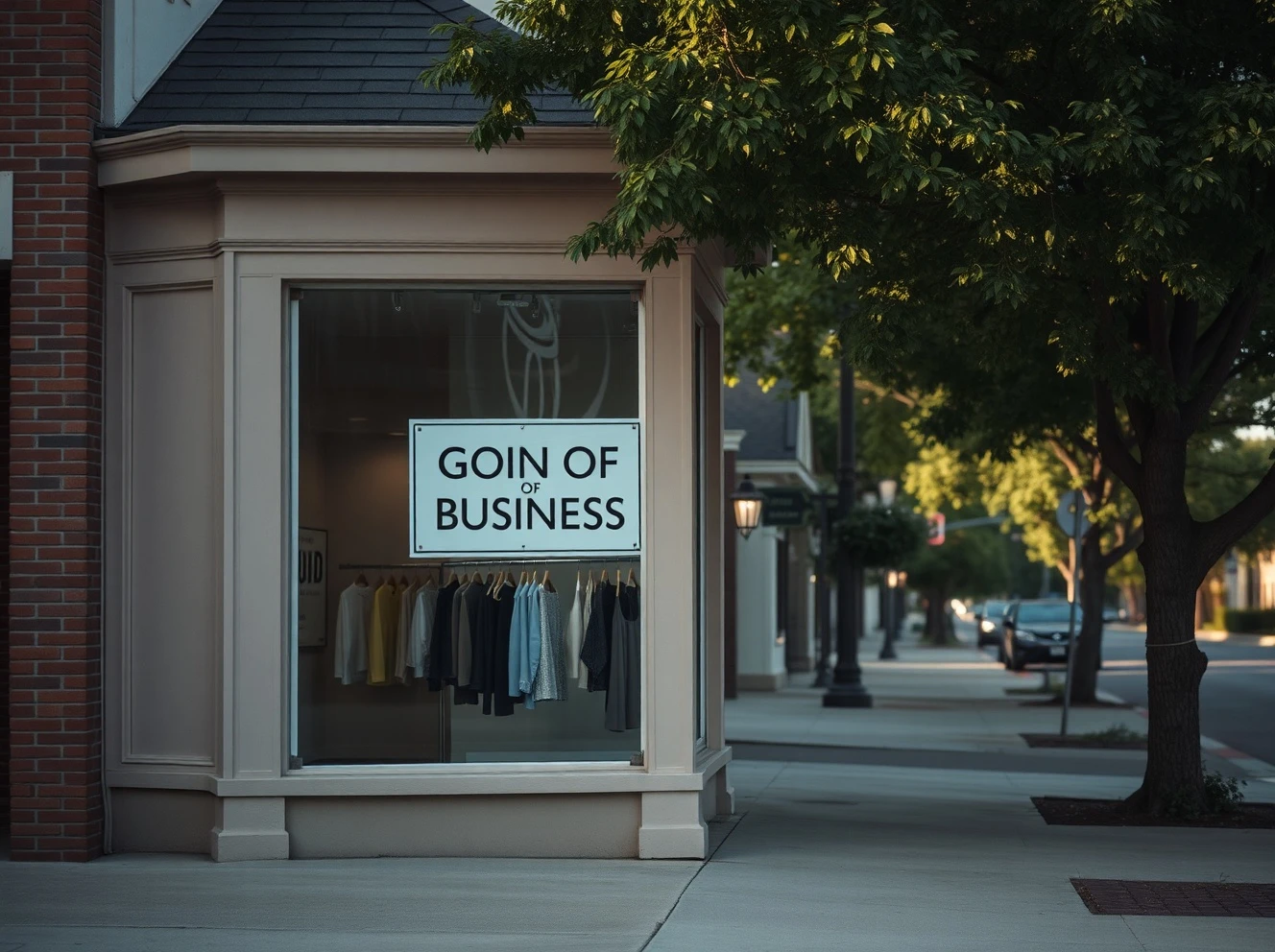
In a significant blow to the local retail landscape, a beloved boutique that served its community for two decades has officially filed for Chapter 7 bankruptcy, triggering the immediate closure of all its physical locations. This move, confirmed by court filings this week, marks the end of a long-standing business and highlights the persistent challenges facing small, independent retailers. The closure sends ripples through the local economy, affecting employees, loyal customers, and commercial landlords.
Understanding the Chapter 7 Bankruptcy Filing
The boutique’s decision to file for Chapter 7 bankruptcy, also known as liquidation bankruptcy, represents a final step. Unlike Chapter 11, which aims for reorganization, Chapter 7 involves the complete shutdown of business operations. Consequently, a court-appointed trustee will now oversee the sale of the company’s remaining assets. The proceeds from this liquidation will then be used to pay creditors in a specific order mandated by law.
This legal process provides a structured, albeit definitive, end for businesses that cannot continue. For this 20-year-old boutique, the filing indicates that leadership deemed financial recovery impossible. The trustee’s primary duty is to maximize asset value for fair creditor repayment. This process often includes auctioning inventory, fixtures, and even intellectual property like the business name.
The Retail Landscape and Boutique Challenges
This closure did not occur in a vacuum. Instead, it reflects broader, powerful trends reshaping retail. The boutique sector faces unique pressures from multiple directions. First, the relentless growth of e-commerce giants continues to squeeze market share. Second, shifting consumer spending habits post-pandemic have altered priorities. Finally, persistent inflation has increased operational costs dramatically for small businesses.
Independent boutiques often compete on curation and customer experience, not price. However, maintaining that edge requires significant investment. Key cost pressures include:
- Commercial Rent: Lease agreements in desirable areas often carry high, fixed costs.
- Inventory Financing: Purchasing unique stock requires upfront capital with slow turnover.
- Labor Costs: Providing personalized service demands skilled staff, increasing payroll expenses.
- Marketing: Competing for attention in a digital world requires consistent advertising spend.
Expert Analysis on Small Business Sustainability
Dr. Evelyn Reed, a professor of retail management at Stern University, explains the systemic issues. “A 20-year lifespan for an independent boutique is commendable, but it also means the business model was forged in a different era,” she states. “The consumers who valued that model have aged, and capturing the next generation requires digital fluency, omnichannel presence, and value propositions beyond mere product selection. Many legacy boutiques struggle with this pivot due to capital constraints and operational inertia.”
Financial data supports this analysis. The following table outlines common financial ratios that signal distress for small retailers, which likely plagued this boutique in its final years:
| Financial Ratio | Healthy Benchmark | Distress Signal |
|---|---|---|
| Current Ratio (Liquidity) | > 2.0 | < 1.0 |
| Debt-to-Equity Ratio | < 2.0 | > 3.0 |
| Inventory Turnover | > 4 times/year | < 2 times/year |
| Net Profit Margin | > 5% | Consistently Negative |
The Ripple Effects of a Local Business Closure
The immediate impact of this Chapter 7 bankruptcy extends far beyond the shuttered storefronts. Firstly, employees face sudden job loss without the severance packages often associated with larger corporate closures. Secondly, commercial landlords must now find new tenants for potentially specialized retail spaces in an uncertain market. Thirdly, vendors and wholesalers who supplied the boutique become unsecured creditors, likely recovering only pennies on the dollar.
Furthermore, the community loses a social and commercial hub. For two decades, the boutique likely contributed to local character, participated in community events, and fostered personal relationships. Its absence creates a void that chain stores cannot fill. This erosion of local business density can accelerate a decline in foot traffic for neighboring shops, creating a negative cycle for the entire commercial district.
Historical Context and Consumer Shift
Twenty years ago, when this boutique opened, the retail world was profoundly different. Online shopping was nascent, malls were thriving, and consumer discovery happened in physical spaces. The boutique’s original success was built on principles of deep product knowledge, personalized service, and a carefully edited selection—advantages that have been eroded by technology.
Today’s consumers, while still valuing quality, often begin their journey with online research and price comparison. They expect seamless integration between online browsing and in-store pickup. They also demand robust digital marketing and active social media engagement. For a business built on an analog model, adapting to these expectations requires a significant and continuous reinvestment that becomes difficult when profits are thin.
The Timeline to Insolvency
Business failures of this scale rarely happen overnight. A typical path to Chapter 7 bankruptcy for a retail establishment follows a recognizable pattern. Initially, the business may experience several quarters of declining same-store sales. Management often responds by increasing promotions, which further erodes margins. Next, the company might delay payments to vendors or tap into personal lines of credit. Finally, as cash reserves deplete, the owner confronts the impossibility of meeting upcoming obligations, leading to the legal filing.
For this boutique, this process likely accelerated over the last 18-24 months. Factors like reduced discretionary spending, higher credit card interest rates on carried balances, and increased supply chain costs for niche goods would have compounded existing vulnerabilities. The decision to file Chapter 7 bankruptcy, therefore, represents the culmination of a long, financially draining struggle.
Conclusion
The Chapter 7 bankruptcy and subsequent closure of this 20-year-old boutique serves as a stark case study in the modern retail economy. It underscores the difficult transition facing legacy small businesses in a digital-first marketplace. While the liquidation process will settle its debts, the loss impacts employees, the community, and the commercial ecosystem. This event highlights the critical need for small retailers to continuously adapt their financial strategies and operational models to remain viable. The story of this boutique’s closure is a reminder of the fragile balance between tradition and innovation in today’s business world.
FAQs
Q1: What is the difference between Chapter 7 and Chapter 11 bankruptcy?
A1: Chapter 7 bankruptcy involves liquidating all business assets to pay creditors, resulting in the business closing permanently. Chapter 11 bankruptcy allows a business to reorganize its debts and operations under court supervision with the goal of continuing to operate and eventually returning to profitability.
Q2: What happens to gift cards and outstanding credits when a boutique files for Chapter 7?
A2: Holders of gift cards or store credits typically become unsecured creditors in a Chapter 7 proceeding. Unfortunately, they are low-priority claimants and rarely receive any reimbursement after secured creditors and administrative costs are paid. These credits usually become worthless.
Q3: Can a business come back after filing for Chapter 7 bankruptcy?
A3: No, a corporate entity that files for Chapter 7 liquidation ceases to exist. The assets are sold, debts are discharged as possible, and the business is dissolved. A new business could be started separately, but it would be a distinct legal entity.
Q4: What are the most common reasons a long-standing boutique might fail?
A4: Common reasons include failure to adapt to e-commerce, rising fixed costs (rent, labor), changing local demographics, loss of a key customer base, poor inventory management leading to cash flow problems, and increased competition from both online retailers and large discount chains.
Q5: What should employees of a business filing for Chapter 7 do?
A5: Employees should immediately file a claim for unpaid wages with the bankruptcy court. They are considered priority unsecured creditors for wages earned in the 180 days before filing, up to a cap, which gives them a higher chance of recovery than general unsecured creditors. They should also apply for state unemployment benefits.