On December 25th, 2025, Bitcoin traders received a crucial market sentiment snapshot that revealed more than just holiday quiet—it exposed a cryptocurrency market holding its breath in near-perfect equilibrium. The aggregate BTC perpetual futures long/short ratio, a vital derivatives sentiment gauge, showed bulls and bears locked in a tense standoff. This data provides essential insights for understanding current market psychology and anticipating potential volatility shifts in the coming weeks.
Understanding the BTC Perpetual Futures Long/Short Ratio
The BTC perpetual futures long/short ratio serves as a real-time thermometer for market sentiment across major cryptocurrency exchanges. This metric calculates the percentage of open positions betting on price increases (longs) versus those anticipating declines (shorts) in perpetual futures contracts. Unlike traditional futures with expiration dates, perpetual contracts use funding rate mechanisms to maintain price alignment with spot markets.
Market analysts consider this ratio a leading indicator because it reflects trader positioning before price movements materialize. A ratio above 50% indicates bullish dominance, while below 50% suggests bearish control. However, experienced traders watch for extreme readings that often signal contrarian opportunities, as overcrowded trades frequently reverse direction. The ratio’s true value emerges when analyzed alongside other metrics like funding rates, open interest, and spot market volume.
December 25th Data Breakdown: Exchange-by-Exchange Analysis
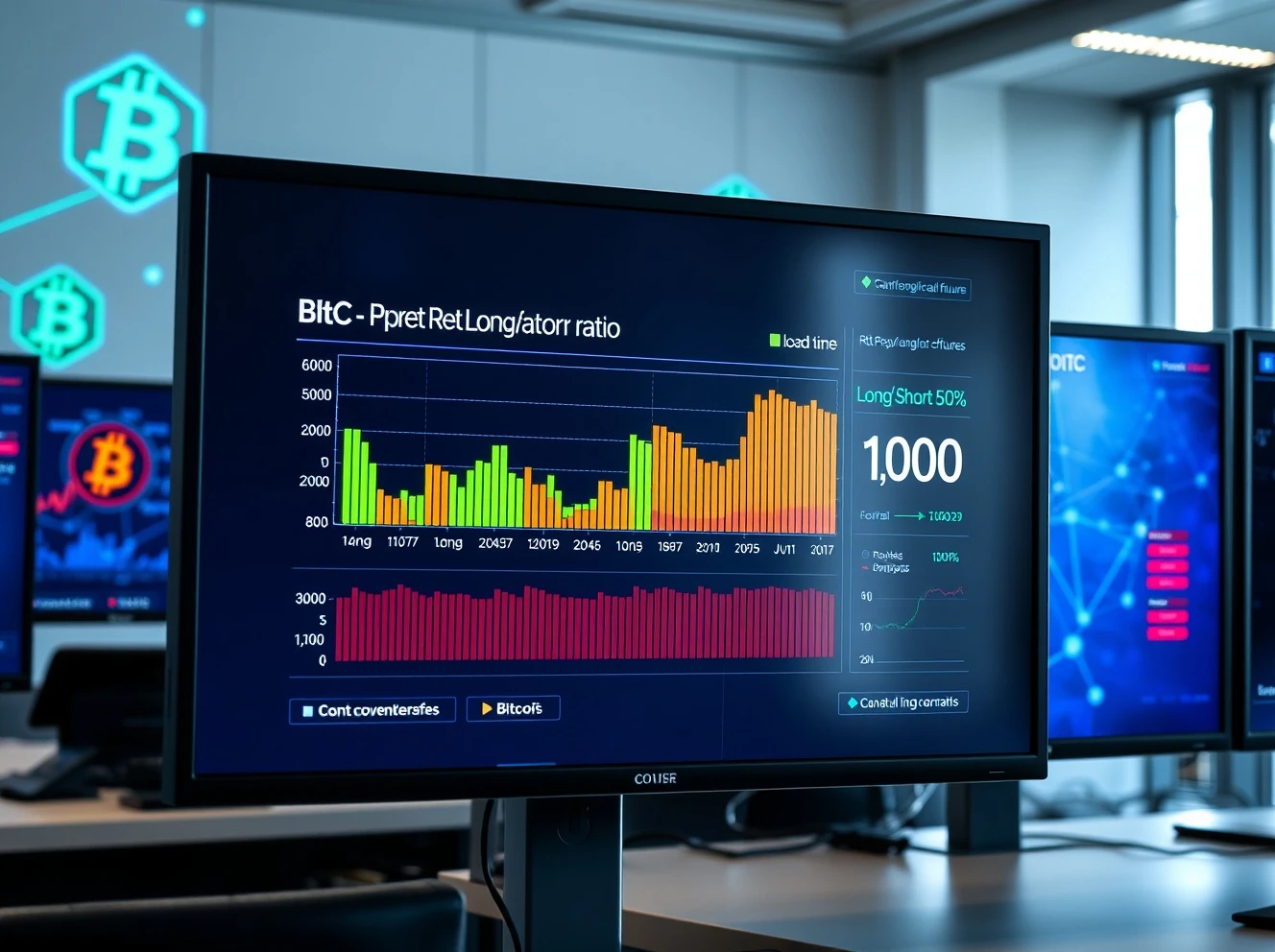
The December 25th aggregate data presents a fascinating picture of market indecision. The overall BTC perpetual futures long/short ratio registered at 50.19% long versus 49.81% short—a statistical dead heat. This near-perfect balance suggests traders await a definitive catalyst before committing to directional positions. However, examining individual exchange data reveals subtle variations in trader demographics and regional sentiment.
| Exchange | Long Positions | Short Positions | Sentiment Skew |
|---|---|---|---|
| Overall Market | 50.19% | 49.81% | Neutral |
| Binance | 50.08% | 49.92% | Neutral |
| OKX | 50.29% | 49.71% | Slightly Bullish |
| Bybit | 51.01% | 48.99% | Moderately Bullish |
Bybit’s noticeable bullish skew at 51.01% long positions warrants particular attention. This platform often attracts different trader segments compared to Binance’s broader user base. The variation suggests regional or strategic differences in market outlook despite the overall equilibrium. These exchange-level discrepancies highlight why analysts examine multiple data sources rather than relying on single-platform metrics.
Historical Context and Market Implications
Historically, prolonged periods of neutral BTC perpetual futures long/short ratios often precede significant volatility expansions. Similar equilibrium patterns occurred before Bitcoin’s April 2024 breakout above $70,000 and the subsequent consolidation phase in late 2024. Market technicians note that when sentiment indicators flatten near 50%, they frequently signal accumulation or distribution phases where institutional and sophisticated traders establish positions before retail participants recognize the emerging trend.
The current December 25th reading gains additional significance due to its timing during typically low-volume holiday trading. Reduced liquidity can amplify price movements when the equilibrium eventually breaks. Furthermore, this data arrives amid broader market developments including institutional adoption milestones, regulatory clarity in major jurisdictions, and evolving macroeconomic conditions affecting risk assets globally.
Expert Analysis: Interpreting Neutral Sentiment Readings
Seasoned derivatives traders interpret neutral BTC perpetual futures long/short ratios through multiple analytical frameworks. First, they examine whether the neutrality results from balanced opposing views or widespread uncertainty. Current market conditions suggest the latter, with traders awaiting clearer signals from macroeconomic indicators and Bitcoin-specific developments.
Second, analysts monitor funding rates alongside the long/short ratio. When funding rates remain neutral or slightly negative during equilibrium periods, it suggests sustainable positioning rather than leveraged speculation. Third, they watch for divergence between price action and sentiment metrics—if Bitcoin begins trending while the ratio remains at 50%, it often indicates strengthening underlying momentum that could drive sustained moves.
Practical Applications for Traders and Investors
Active market participants can utilize the December 25th BTC perpetual futures long/short ratio data in several strategic ways:
- Risk Management: Neutral sentiment suggests avoiding oversized directional bets and implementing tighter stop-loss orders in anticipation of potential volatility spikes.
- Strategy Selection: Range-bound trading strategies often perform well during equilibrium periods, while breakout strategies require confirmation from multiple indicators before execution.
- Monitoring Priorities: Traders should watch for decisive breaks above 52% or below 48% as potential early warning signals for sentiment shifts.
- Multi-Timeframe Analysis: Comparing hourly, daily, and weekly ratios provides insight into whether neutrality represents short-term indecision or longer-term equilibrium.
Importantly, this single metric should never drive trading decisions independently. Successful traders combine derivatives sentiment data with technical analysis, on-chain metrics, and fundamental developments. The BTC perpetual futures long/short ratio serves best as a confirmation tool within broader analytical frameworks.
Comparative Analysis with Other Sentiment Indicators
The December 25th BTC perpetual futures data gains richer context when examined alongside complementary market indicators. Fear and Greed Index readings, options put/call ratios, and exchange netflow data all contribute to a holistic market sentiment picture. Currently, most auxiliary indicators align with the derivatives data, suggesting genuine market uncertainty rather than conflicting signals.
Notably, Bitcoin’s spot trading volumes have declined moderately during the holiday period, consistent with typical seasonal patterns. However, open interest in perpetual futures has remained relatively stable, indicating continued institutional and professional participation despite retail trader absence. This combination suggests that when directional conviction returns, it may originate from sophisticated market participants rather than retail sentiment shifts.
Conclusion
The December 25th BTC perpetual futures long/short ratio reveals a cryptocurrency market at a critical inflection point. With bulls and bears nearly perfectly balanced across major exchanges, the stage appears set for a volatility expansion once a definitive catalyst emerges. This equilibrium period offers traders valuable preparation time to establish risk parameters and watch for early sentiment shifts. As the market moves beyond holiday trading conditions, any decisive break in the current 50/50 standoff could provide crucial early signals for Bitcoin’s next significant trend. The BTC perpetual futures long/short ratio remains an essential component of comprehensive market analysis, particularly during these periods of apparent indecision that often precede substantial price movements.
FAQs
Q1: How does the BTC perpetual futures long/short ratio differ from traditional futures metrics?
The perpetual futures ratio specifically measures sentiment in contracts without expiration dates, providing continuous sentiment tracking rather than periodic snapshots tied to contract rollovers.
Q2: Why do different exchanges show varying long/short ratios?
Exchange variations result from differing user demographics, regional trading hours, platform-specific products, and varying institutional versus retail participation levels across trading venues.
Q3: How reliable is this indicator for predicting short-term price movements?
While not infallible, extreme readings (above 60% or below 40%) have historically correlated with near-term reversals, while neutral readings like the current one often precede volatility expansions.
Q4: What timeframes do exchanges use to calculate this ratio?
Most platforms calculate the BTC perpetual futures long/short ratio using 24-hour rolling open interest data, though some provide additional timeframe options for specialized analysis.
Q5: How should retail traders incorporate this data into their decision-making?
Retail traders should use this metric as a sentiment confirmation tool alongside price action analysis, volume indicators, and fundamental developments rather than as a standalone trading signal.