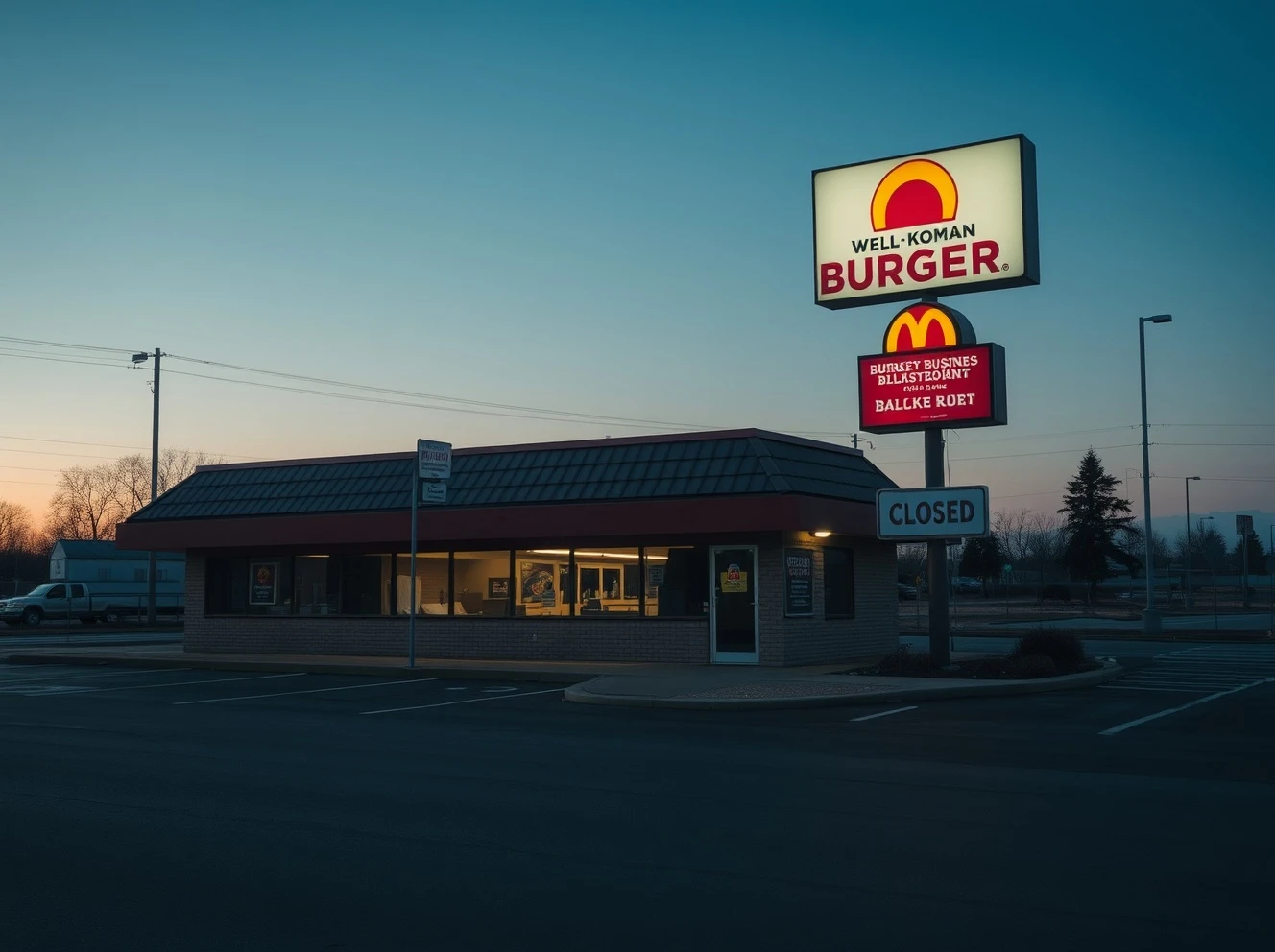
In a significant development for the restaurant industry, a 56-year-old burger chain franchisee has closed a long-standing location without filing for bankruptcy, raising important questions about franchise operations in 2025. This strategic closure reflects broader economic pressures affecting food service businesses nationwide. The decision demonstrates how experienced franchise operators are adapting to changing market conditions while maintaining financial stability.
Burger Chain Franchisee Closes Location: Analyzing the Business Decision
The franchisee made this difficult decision after operating the location for nearly two decades. Importantly, this closure occurred without bankruptcy proceedings, indicating a calculated business move rather than financial distress. Restaurant industry analysts note that such strategic closures have become increasingly common as operators optimize their portfolios. Consequently, this trend represents a shift toward more sophisticated franchise management practices.
Several factors contributed to this specific closure decision. First, changing consumer preferences have impacted traditional burger chains significantly. Second, rising operational costs have squeezed profit margins substantially. Third, labor market challenges have created staffing difficulties consistently. Fourth, increased competition from newer dining concepts has drawn customers away gradually. Finally, location-specific factors, including changing neighborhood demographics, played a crucial role.
Franchise Restaurant Operations in 2025
The restaurant industry faces unprecedented challenges in 2025. According to National Restaurant Association data, operational costs have increased by 18% since 2023. Meanwhile, consumer spending patterns have shifted toward value-oriented options noticeably. Franchise operators must navigate these complex economic conditions carefully. They balance brand standards with local market realities constantly.
Successful franchisees employ several strategic approaches today. They conduct regular location performance reviews quarterly. They implement technology solutions for operational efficiency aggressively. They diversify revenue streams through delivery partnerships actively. They optimize menu offerings based on local preferences specifically. They maintain strong community relationships for customer loyalty consistently.
Expert Analysis: Franchise Business Models Under Pressure
Industry experts provide valuable insights into this closure’s significance. Dr. Elena Rodriguez, a franchise business analyst at Cornell University, explains the current landscape clearly. “Franchise operators face a perfect storm of challenges in 2025,” she states authoritatively. “Rising commodity prices, wage pressures, and changing consumer behaviors require constant adaptation. Strategic closures represent prudent business management rather than failure.”
Rodriguez emphasizes several key points emphatically. First, franchise agreements often limit operational flexibility significantly. Second, royalty fees and marketing contributions create fixed cost burdens. Third, brand-wide initiatives may not align with local market conditions. Fourth, technology adoption requirements strain smaller operators financially. Fifth, supply chain disruptions continue affecting consistency and costs.
Restaurant Industry Economic Pressures
The broader restaurant industry context explains this closure completely. Food service businesses confront multiple economic headwinds simultaneously. Labor costs have increased due to minimum wage adjustments nationally. Food inflation remains elevated above historical averages consistently. Commercial real estate expenses continue rising in many markets. Additionally, consumer debt levels affect discretionary spending patterns noticeably.
Industry data reveals several concerning trends clearly. Restaurant traffic has declined by 4% year-over-year. Takeout and delivery now represent 42% of total sales. Menu prices have increased by 12% on average. Labor represents 34% of total operating costs currently. These factors combine to create challenging operating conditions universally.
Comparative Analysis: Franchise vs. Independent Restaurants
| Factor | Franchise Restaurants | Independent Restaurants |
|---|---|---|
| Brand Recognition | High – Established customer awareness | Variable – Requires building reputation |
| Operational Flexibility | Limited – Must follow brand standards | High – Can adapt quickly to changes |
| Initial Investment | Higher – Franchise fees and requirements | Lower – No franchise fees |
| Marketing Support | Strong – National and regional campaigns | Self-directed – Local marketing only |
| Supply Chain | Structured – Approved vendors and pricing | Flexible – Can source from multiple vendors |
Strategic Business Decisions in Franchising
Experienced franchisees make location decisions based on comprehensive analysis. They evaluate several key metrics regularly. Sales per square foot provide crucial performance indicators. Customer traffic patterns reveal important trends. Labor efficiency ratios measure operational effectiveness. Food cost percentages track profitability closely. Local competition density affects market positioning directly.
When considering closure, franchisees examine multiple alternatives thoroughly. They might attempt renegotiation of lease terms first. They could consider remodeling to attract new customers potentially. They explore menu adjustments to improve margins possibly. They assess operational changes to reduce costs effectively. They evaluate transfer opportunities to new operators carefully.
The Future of Burger Franchises
Burger chains face particular challenges in the current market. Consumer preferences have shifted toward several alternatives. Plant-based options attract health-conscious customers increasingly. Premium burger concepts compete for quality-focused diners. Fast-casual restaurants offer better perceived value frequently. Home meal solutions provide convenience for busy families regularly.
Successful burger franchises adapt through several strategies. They introduce limited-time offerings to generate excitement. They enhance digital ordering capabilities significantly. They develop loyalty programs to retain customers. They optimize drive-thru operations for efficiency. They explore ghost kitchen models for delivery expansion.
Conclusion
The burger chain franchisee closes location decision represents sophisticated business management in challenging times. This strategic closure without bankruptcy demonstrates prudent financial stewardship. The restaurant industry continues evolving rapidly in 2025. Franchise operators must balance brand requirements with local realities constantly. Ultimately, such decisions reflect the complex calculations successful business owners make regularly. The burger chain franchisee closes location story offers valuable insights for all restaurant operators navigating today’s economic landscape.
FAQs
Q1: Why would a franchisee close a location without declaring bankruptcy?
The franchisee likely determined that continued operation would be unprofitable. Strategic closure allows for asset liquidation and prevents further losses. This approach maintains the operator’s financial reputation and avoids bankruptcy’s legal complexities.
Q2: What happens to employees when a franchise location closes?
Employees typically receive termination notices according to state labor laws. Some may transfer to other locations within the same franchise group. Others receive severance packages based on tenure and company policy. All eligible employees can file for unemployment benefits immediately.
Q3: How common are franchise closures in the restaurant industry?
Franchise closures have increased moderately since 2023. The National Restaurant Association reports approximately 4% of franchise locations close annually. However, strategic closures without bankruptcy remain less common than financial distress closures.
Q4: Can a franchisee open a new location after closing an existing one?
Yes, franchise agreements often allow for relocation or new development. The franchisor evaluates the operator’s performance history carefully. Successful franchisees frequently close underperforming locations to fund better opportunities elsewhere.
Q5: What alternatives do franchisees have before closing a location?
Franchisees can explore several alternatives first. They might renegotiate lease terms with landlords. They could implement cost-reduction measures aggressively. They can request temporary royalty relief from franchisors. They might remodel to attract new customer segments. They could adjust operating hours to match demand patterns.