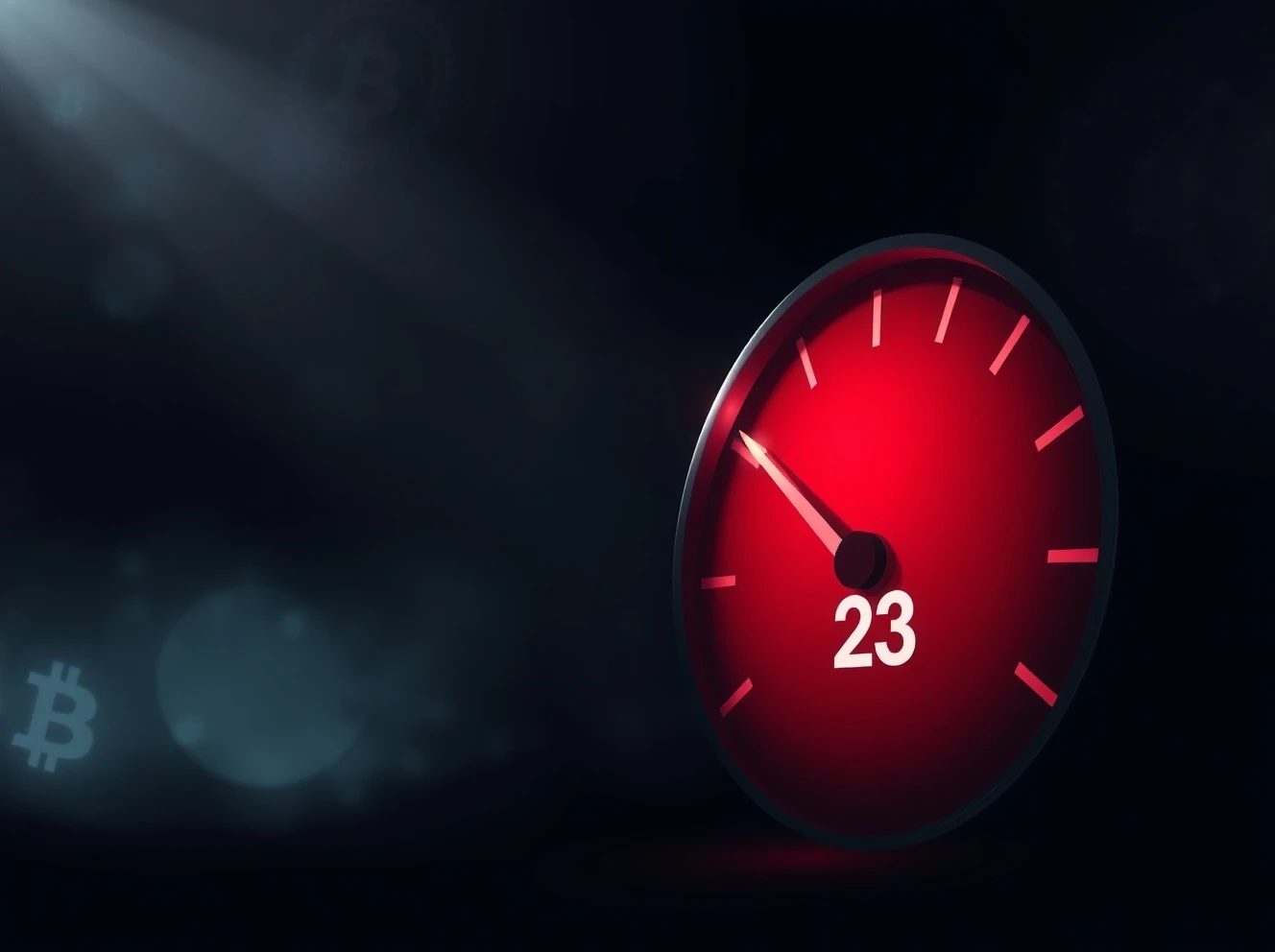
Global cryptocurrency markets entered a profound state of anxiety in late December 2025, as the widely monitored Crypto Fear & Greed Index plummeted to a critical reading of 23. This dramatic drop signals a market engulfed by ‘extreme fear,’ presenting both significant risks and potential strategic considerations for digital asset investors navigating the volatile landscape. The index’s descent reflects a complex interplay of technical factors, macroeconomic pressures, and shifting investor psychology that demands careful analysis.
The Crypto Fear & Greed Index Plummets: Understanding the 23 Reading
Developed by Alternative.me, the Crypto Fear & Greed Index serves as a quantitative barometer for market emotion. It synthesizes multiple data streams into a single score ranging from 0 to 100. Consequently, readings below 25 indicate extreme fear, while scores above 75 signal extreme greed. The current 23 reading represents one of the most pessimistic sentiment levels observed in recent years. Historically, such extreme readings have coincided with significant market inflection points, though they do not guarantee immediate reversals. Market analysts note that sustained periods of extreme fear often correlate with capitulation events where weak-handed investors exit positions.
How the Index Calculates Market Sentiment: A Multi-Factor Approach
The index employs a weighted methodology analyzing six distinct market dimensions. This multi-source approach prevents any single metric from distorting the overall sentiment picture. First, volatility (25% weight) measures the magnitude of recent price swings across major cryptocurrencies. Second, market momentum and volume (25%) analyzes trading activity and capital flows. Third, social media sentiment (15%) scans platforms like Twitter and Reddit for emotional tone. Fourth, surveys (15%) gather direct investor sentiment from various polling platforms. Fifth, Bitcoin dominance (10%) tracks Bitcoin’s market share relative to altcoins. Finally, Google Trends data (10%) monitors search interest for cryptocurrency terms.
Historical Context and Comparative Analysis
Comparing the current 23 reading to historical data reveals meaningful patterns. During the 2022 bear market, the index reached similar extreme fear levels multiple times, with a notable low of 6 in June 2022. However, market conditions in 2025 differ substantially due to increased institutional participation and regulatory developments. Previous extreme fear periods typically lasted between two to eight weeks before sentiment began moderating. The table below illustrates recent extreme fear episodes and subsequent market behavior:
| Date | Fear & Greed Index | Bitcoin Price (Approx.) | Market Condition After 90 Days |
|---|---|---|---|
| June 2022 | 6 | $20,000 | +15% recovery |
| March 2023 | 26 | $28,000 | +42% rally |
| January 2025 | 31 | $72,000 | Consolidation phase |
| December 2025 | 23 | Data varies | To be determined |
What Extreme Fear Means for Cryptocurrency Portfolios in 2025
Extreme fear readings present a dual-edged scenario for portfolio management. On one hand, they indicate heightened risk of continued downward pressure as panic selling can create self-reinforcing negative momentum. On the other hand, contrarian investors historically view such periods as potential accumulation opportunities when prices may disconnect from long-term fundamentals. Several portfolio considerations emerge during extreme fear environments:
- Risk Assessment: Investors should reassess their overall risk exposure and ensure portfolio allocations align with their financial objectives.
- Liquidity Management: Maintaining adequate cash reserves provides flexibility to navigate volatility and potentially capitalize on opportunities.
- Fundamental Analysis: Market stress tests the underlying value propositions of blockchain projects, separating robust networks from weaker ones.
- Psychological Discipline: Emotional decision-making during extreme fear periods often leads to suboptimal outcomes like selling at lows.
Strategic Approaches for Navigating Extreme Fear Conditions
Seasoned investors typically employ specific strategies during extreme sentiment periods. Dollar-cost averaging (DCA) represents one systematic approach that involves purchasing fixed dollar amounts at regular intervals regardless of price. This method reduces the impact of volatility and eliminates timing pressure. Additionally, portfolio rebalancing during fear periods can help maintain target asset allocations that may have shifted due to disproportionate price movements. Some institutional investors use sentiment extremes as one component in a broader framework that includes technical analysis, on-chain metrics, and macroeconomic indicators.
The Role of On-Chain Metrics and Institutional Behavior
Beyond sentiment indicators, on-chain analytics provide complementary data during fear periods. Metrics like exchange net flows, holder composition changes, and network activity offer insights into actual blockchain usage rather than just price action. Meanwhile, institutional behavior has evolved significantly since previous fear cycles. The growing presence of regulated cryptocurrency products and corporate treasuries may influence how extreme fear manifests and resolves in 2025 compared to earlier market cycles.
Market Psychology and the Contrarian Perspective
Behavioral finance research suggests that crowd psychology often reaches extremes at market turning points. The Crypto Fear & Greed Index quantifies this psychological dimension, providing investors with an objective measure of emotional extremes. However, successful contrarian investing requires more than simply betting against prevailing sentiment. It necessitates thorough fundamental research, risk management protocols, and patience as sentiment shifts can take considerable time to translate into price movements. Historical analysis shows that the most profitable contrarian moves often occur when extreme fear combines with positive fundamental developments that the market initially overlooks.
Conclusion: Navigating Cryptocurrency Markets with Sentiment Awareness
The Crypto Fear & Greed Index reading of 23 serves as a crucial data point in the complex cryptocurrency investment landscape. While extreme fear dominates current market psychology, informed investors recognize that sentiment indicators represent just one dimension of market analysis. By combining sentiment data with fundamental research, technical analysis, and disciplined risk management, investors can navigate volatile periods with greater clarity. Ultimately, understanding market psychology through tools like the Crypto Fear & Greed Index helps investors maintain perspective when emotional extremes create both challenges and opportunities in digital asset markets.
FAQs
Q1: How reliable is the Crypto Fear & Greed Index as an investment timing tool?
The index functions best as a sentiment gauge rather than a precise timing mechanism. Investors should combine it with other analytical approaches including fundamental analysis, technical indicators, and on-chain metrics before making portfolio decisions.
Q2: What typically causes the index to enter extreme fear territory?
Multiple factors can trigger extreme fear readings including sharp price declines, negative regulatory developments, macroeconomic uncertainty, security incidents at major platforms, or periods of low liquidity that amplify volatility.
Q3: How long do extreme fear periods usually last in cryptocurrency markets?
Historical data shows considerable variation. Some extreme fear episodes resolve within weeks, while others persist for several months during prolonged bear markets. The 2025 market structure with increased institutional participation may influence duration patterns.
Q4: Does the index account for derivatives market sentiment?
The current methodology focuses primarily on spot market metrics, social sentiment, and search data. However, derivatives market indicators like funding rates and open interest often correlate with the index readings during extreme sentiment periods.
Q5: How should long-term investors react to extreme fear readings?
Long-term investors typically view extreme fear as a period for disciplined portfolio review rather than reactionary changes. This includes reassessing risk tolerance, verifying investment theses, considering dollar-cost averaging opportunities, and ensuring portfolio allocations remain aligned with strategic objectives.