Global cryptocurrency markets convulsed on December 25, 2025, as a violent wave of forced position closures erased approximately $90.7 million from leveraged traders in a single 24-hour period. This significant liquidation event, primarily affecting perpetual futures contracts, serves as a stark reminder of the inherent risks and amplified volatility within crypto derivatives markets. Understanding the mechanics and triggers behind such events is paramount for any participant in this high-stakes environment.
Understanding the $90.7M Crypto Perpetuals Liquidation Event
Liquidations represent a fundamental risk mechanism in leveraged trading. Exchanges automatically close a trader’s position when their collateral, or margin, falls below a required maintenance level. This process prevents losses from exceeding the deposited margin. Consequently, a cascade of liquidations often signals a sharp, unexpected price movement that trapped over-leveraged positions. The $90.7 million figure, while substantial, reflects a market correcting excessive speculation rather than a systemic failure. Market analysts frequently correlate such spikes with shifts in macroeconomic sentiment, large institutional ‘whale’ transactions, or cascading automated trading strategies.
The Catalyst: A Market in Transition
While a single catalyst is rarely identifiable, the December 25th event coincided with a period of heightened uncertainty. Traders were likely repositioning ahead of the year-end, leading to thinner liquidity and exaggerated price swings. This environment is particularly dangerous for perpetual contracts, which have no expiry date and rely on funding rates to anchor price to spot markets. A sudden shift in these rates can accelerate margin calls.
A Detailed Breakdown of the Liquidation Data
The aggregate $90.7 million figure reveals a nuanced story when dissected by asset. The data illustrates that market forces punished both bullish and bearish traders simultaneously across different tokens.
Bitcoin (BTC): The flagship cryptocurrency accounted for the largest share, with $49.83 million liquidated. The near-even split between long (50.98%) and short positions indicates a period of extreme volatility with rapid price reversals, rather than a simple bearish crash.
Ethereum (ETH): Ethereum saw $30.32 million in liquidations, with a decisive 74.67% stemming from long positions. This skew strongly suggests a sharp downward price move specifically caught traders betting on an ETH rally off-guard.
The PIPPIN Anomaly: In a contrasting narrative, the token PIPPIN recorded $10.59 million in liquidations, with a overwhelming 87.18% from short positions. This indicates a powerful, unexpected rally in PIPPIN’s price that liquidated traders who were betting against it.
| Asset | Total Liquidations | Long % | Short % | Implied Price Action |
|---|---|---|---|---|
| Bitcoin (BTC) | $49.83M | 50.98% | 49.02% | High Volatility / Reversals |
| Ethereum (ETH) | $30.32M | 74.67% | 25.33% | Sharp Downward Move |
| PIPPIN | $10.59M | 12.82% | 87.18% | Sharp Upward Move |
The Ripple Effect and Market Impact of Major Liquidations
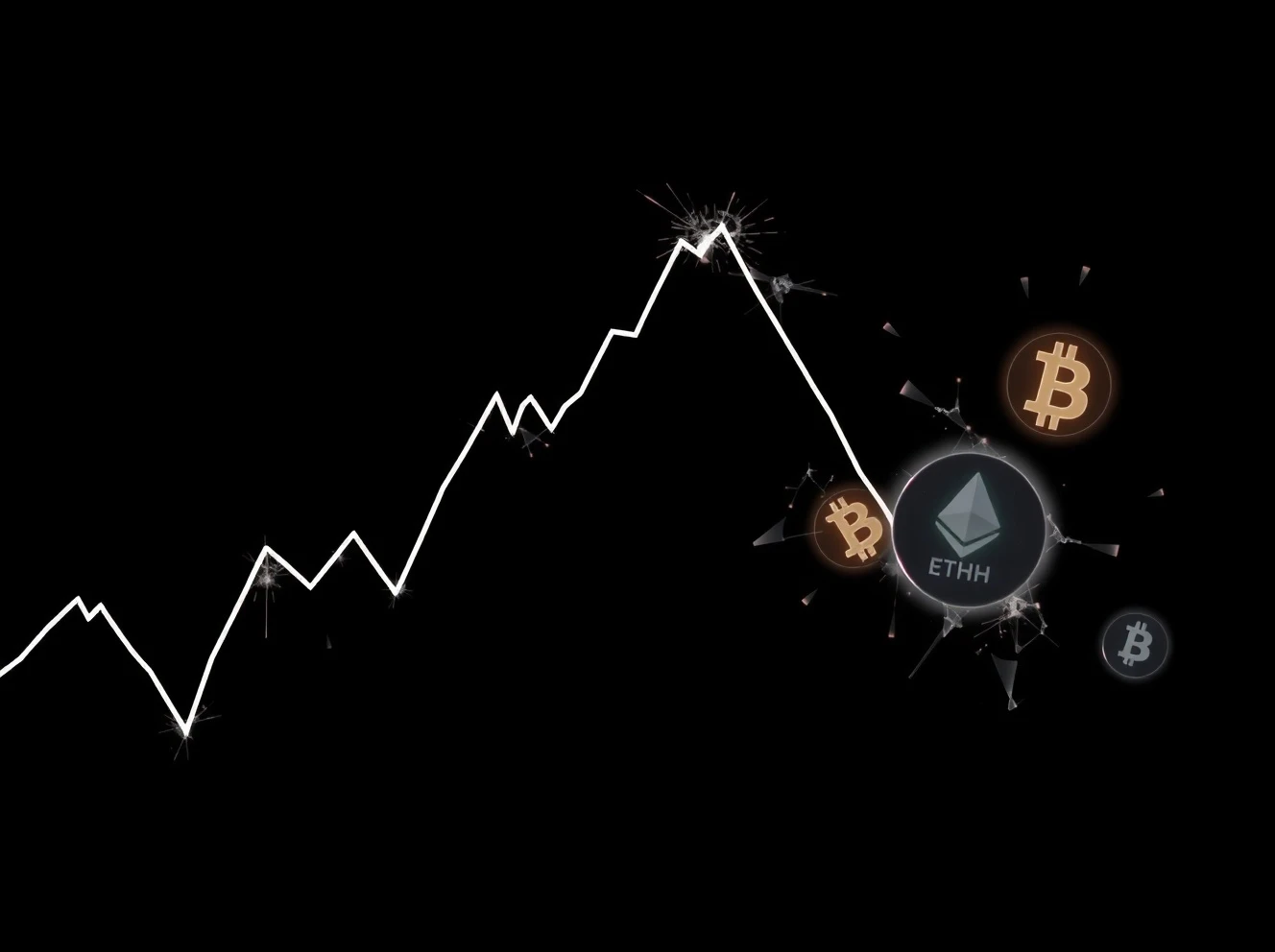
Large-scale liquidations do not occur in isolation. They can create a self-reinforcing feedback loop known as a ‘liquidation cascade.’ For instance, a wave of long liquidations forces exchanges to sell the underlying asset to close positions. This selling pressure can drive the price down further, triggering more margin calls and subsequent liquidations. This mechanism can lead to:
- Heightened Short-Term Volatility: Prices can swing wildly as automated systems execute orders.
- Spot Market Contagion: Pressure from futures markets often spills over into spot exchanges, affecting all holders.
- Liquidity Drying Up: Market makers may widen spreads or pull back in chaotic conditions, worsening slippage.
Essential Risk Management Strategies for Traders
The $90.7 million event underscores that survival in derivatives trading hinges on disciplined risk management, not just market prediction. Professional traders adhere to several core principles to mitigate liquidation risk.
Employ Conservative Leverage: Using high leverage (e.g., 10x, 25x, 100x) dramatically increases liquidation proximity. Lower leverage provides a larger buffer against market noise.
Utilize Stop-Loss Orders Religiously: A stop-loss order automatically exits a position at a predetermined price, defining maximum loss before a margin call occurs.
Monitor Margin Ratio Actively: Do not simply ‘set and forget’ a leveraged position. Consistently track your margin level relative to the maintenance requirement.
Diversify and Size Positions Appropriately: Never allocate a disproportionate amount of capital to a single, highly leveraged trade. Furthermore, understand that volatile events can correlate assets unexpectedly.
The Expert Perspective on Volatility
Seasoned analysts emphasize that liquidation events, while painful for affected traders, are a healthy market function. They flush out over-leveraged positions and help recalibrate prices. The key for participants is to structure trades where the potential reward justifies the calculated risk, ensuring they remain solvent through inevitable market turbulence.
Conclusion
The December 2025 crypto perpetuals liquidations event, wiping out $90.7 million, delivers a critical lesson for all market participants. It highlights the non-linear and often brutal nature of leveraged futures trading. The mixed data across Bitcoin, Ethereum, and PIPPIN proves that market narratives can shift violently in any direction. Ultimately, long-term success depends less on predicting every swing and more on implementing rigorous risk management, committing to continuous education, and maintaining emotional discipline. These tools form the essential defense against becoming a statistic in the next major liquidation report.
FAQs
Q1: What exactly are crypto perpetual futures contracts?
Crypto perpetuals are derivative contracts that allow traders to speculate on an asset’s future price without an expiration date. Traders hold positions indefinitely but must pay or receive a periodic ‘funding rate’ to keep the contract price aligned with the spot market.
Q2: How does the liquidation process work on an exchange?
When a trader’s margin balance falls below the maintenance margin requirement—due to an adverse price move—the exchange’s system automatically closes (liquidates) the position. The trader loses the margin they posted for that trade.
Q3: Why did Ethereum see predominantly long positions liquidated?
The 74.67% long liquidation rate for ETH strongly indicates the price fell sharply and rapidly. This move triggered margin calls for traders using leverage to bet on a price increase, as their collateral became insufficient.
Q4: Can large liquidations create buying opportunities?
Potentially, yes. A liquidation cascade can sometimes drive an asset’s price below its perceived fundamental value in the short term, creating a potential entry point for traders who believe the sell-off was overdone. However, this is highly speculative and risky.
Q5: What is the single most important rule to avoid liquidation?
Use conservative leverage. While high leverage amplifies potential gains, it exponentially increases risk and brings the liquidation price dangerously close to your entry point. Managing position size relative to your capital is the cornerstone of risk management.