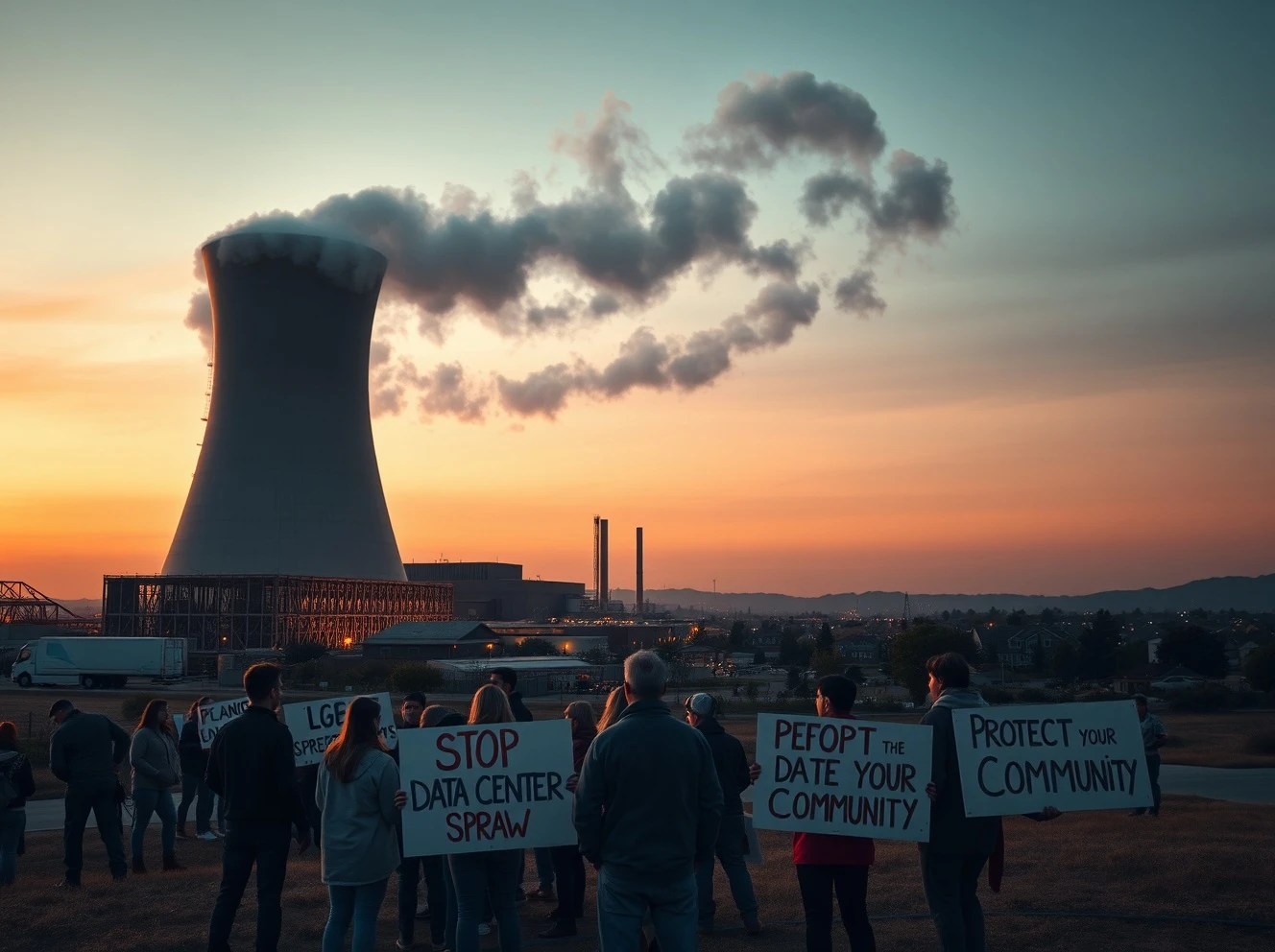
Across the United States in 2025, data centers have transformed from invisible infrastructure to frontline political battlegrounds. The explosive growth of artificial intelligence has triggered a server farm construction boom that now faces organized resistance in communities nationwide. According to activist tracking organization Data Center Watch, 142 different groups across 24 states are mobilizing against new developments, creating an unprecedented populist response to what was once a purely technical concern.
The Rapid Rise of Data Center Construction
Recent U.S. Census Bureau data reveals a staggering 331% increase in data center construction spending since 2021. This massive infrastructure push represents hundreds of billions in investment from major technology companies. Google, Meta, Microsoft, and Amazon have all announced significant capital expenditure projections for 2025, with the majority directed toward expanding their computing capabilities. The Trump administration’s Stargate Project, announced in January 2025, further accelerated this trend by framing AI infrastructure as central to national re-industrialization efforts.
Industry experts note that the proposed construction volume has reached unprecedented levels. Many analysts believe a significant portion of announced projects will never materialize due to practical constraints. Nevertheless, the building momentum shows no immediate signs of slowing. This rapid expansion has fundamentally changed how communities perceive and interact with data center infrastructure.
Community Concerns Driving Widespread Protests
Activists cite multiple interconnected concerns driving opposition to new data center developments. These include:
- Electricity Costs: Many communities report rising utility bills they attribute to data center power consumption
- Environmental Impact: Concerns about water usage, heat emissions, and carbon footprints
- Health Considerations: Questions about potential effects of electromagnetic fields and noise pollution
- Economic Priorities: Criticism of tax incentives and subsidies for tech companies
- AI Ethics: Broader concerns about artificial intelligence applications
Danny Candejas, an activist with MediaJustice, has participated in multiple actions against data centers. “I meet new people every week who want to organize against a data center in their community,” Candejas told StockPil. “The connection to everybody’s energy bills going up has made this a stark issue for people struggling month to month.”
Regional Resistance Movements Gain Momentum
Local opposition has achieved notable successes in several regions. In Wisconsin, community pressure reportedly influenced Microsoft’s decision regarding a proposed 244-acre data center development. Michigan has seen organized protests at the state capitol, with activists declaring “Michiganders do not want data centers in our yards.” Southern California’s Imperial Valley recently filed a lawsuit challenging county approval of a data center project based on environmental grounds.
Data Center Watch estimates that approximately $64 billion worth of developments have faced delays or cancellations due to grassroots opposition. These figures suggest that community activism is having measurable impacts on industry expansion plans.
The Political Dimension of Infrastructure Expansion
Political analysts note that data center controversies could influence upcoming elections. Rising electricity costs, frequently linked to AI infrastructure demands, may become a decisive issue in the 2026 midterm elections. Politicians at both local and national levels are increasingly forced to address constituent concerns about technology infrastructure.
The technology industry has responded with coordinated advocacy efforts. The newly formed National Artificial Intelligence Association (NAIA) has distributed talking points to congressional members and organized educational field trips to data center facilities. Major companies like Meta have launched advertising campaigns highlighting the economic benefits of data center investments, including job creation and local tax revenue.
| Region | Active Groups | Primary Concerns | Notable Actions |
|---|---|---|---|
| Midwest | 42 | Electricity costs, water usage | Michigan capitol protests |
| Northeast | 38 | Environmental impact, subsidies | Multiple zoning challenges |
| South | 35 | Health concerns, community character | Memphis protest against xAI project |
| West | 27 | Water scarcity, energy demands | California lawsuit filings |
The Economic and Energy Infrastructure Challenge
Data centers represent a significant strain on regional power grids. Industry analysts estimate that a single large-scale data center can consume as much electricity as a medium-sized city. This massive energy demand comes as many regions already face grid reliability challenges and transitioning energy portfolios.
Utility companies are grappling with how to accommodate exponential growth in computing infrastructure while maintaining stable service for residential customers. Some regions have implemented moratoriums on new data center connections until grid upgrades can be completed. These practical constraints may ultimately prove more limiting than activist opposition in determining the pace of expansion.
Industry Adaptation and Community Engagement
Technology companies are developing new approaches to community relations and infrastructure design. Some firms now emphasize:
- Advanced cooling technologies that reduce water consumption
- Renewable energy integration and carbon-neutral operations
- Community benefit agreements and local hiring commitments
- Transparent communication about operations and impacts
These efforts represent an industry recognition that social license has become as important as technical capability for continued expansion. The most successful projects now incorporate community feedback from initial planning stages rather than treating it as an obstacle to overcome.
Conclusion
The data center industry faces a fundamental transformation in 2025 as technical expansion meets organized community resistance. What began as specialized infrastructure for artificial intelligence development has become a mainstream political issue affecting energy costs, environmental policy, and community development decisions nationwide. The tension between technological advancement and community concerns will likely intensify through 2026, forcing both industry and policymakers to develop new frameworks for responsible infrastructure growth. The ultimate resolution will shape not only the future of AI development but also the relationship between technology companies and the communities hosting their critical infrastructure.
FAQs
Q1: Why are data centers suddenly facing so much opposition?
Data centers have expanded rapidly due to AI industry growth, moving into communities that previously had little exposure to such facilities. This expansion coincides with rising electricity costs that many residents attribute to increased industrial power consumption.
Q2: How many communities are actively organizing against data centers?
According to Data Center Watch, 142 activist groups across 24 states are currently organizing opposition to data center developments, representing widespread and coordinated resistance.
Q3: What specific concerns do protesters have about data centers?
Primary concerns include rising electricity costs for residents, environmental impacts from water usage and heat emissions, potential health effects, and the allocation of public subsidies to private technology companies.
Q4: Have protests actually stopped any data center projects?
Yes, Data Center Watch estimates that approximately $64 billion worth of developments have been delayed or cancelled due to grassroots opposition, with notable successes in Wisconsin, Michigan, and California.
Q5: How is the technology industry responding to this backlash?
Industry groups like the National Artificial Intelligence Association are organizing advocacy efforts, while individual companies are implementing community engagement programs, environmental improvements, and public education campaigns about data center benefits.