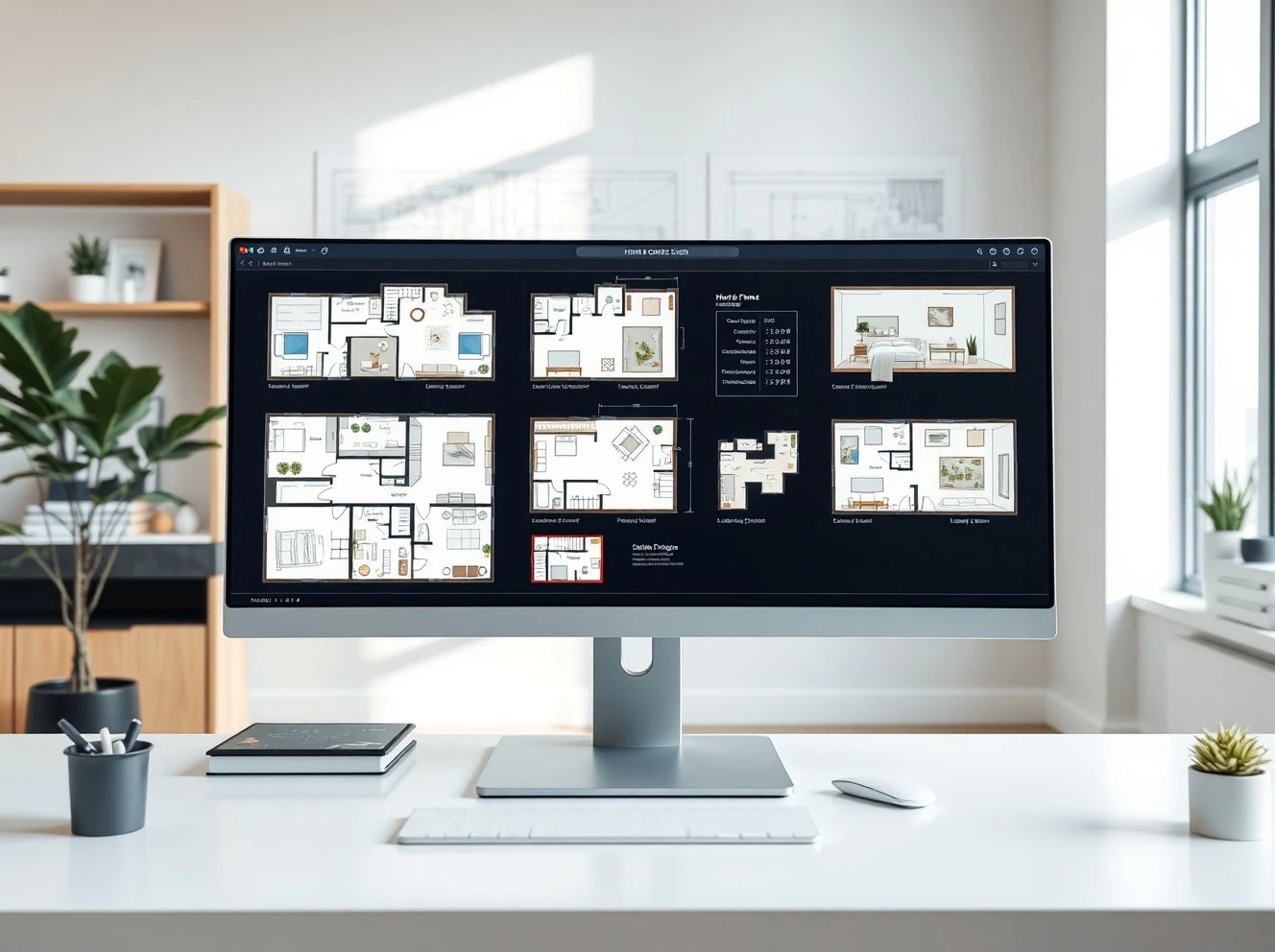
In a resilient second act within the turbulent proptech sector, founder Nick Donahue has secured $1.65 million in funding for Drafted, an AI-driven platform aiming to make custom home design radically affordable. This development follows the high-profile shutdown of his previous venture, Atmos, just nine months ago, highlighting a founder’s determined pivot from a human-heavy service model to a pure software solution. The funding round, led by Bill Clerico of Convective Capital and backed by notable figures like Stripe’s Patrick Collison, values the nascent San Francisco-based company at $35 million post-money as of December 2024.
From Family Roots to Startup Failure and AI Pivot
Nick Donahue’s journey into housing innovation is deeply personal. Growing up with parents in the construction business, he witnessed firsthand the industry’s inefficiencies. Consequently, he identified a persistent pain point: the exorbitant cost and slow pace of custom home design. After dropping out of NC State and moving to Silicon Valley, he launched Atmos. That company successfully raised $20 million from top-tier investors including Khosla Ventures and Sam Altman. It achieved $7 million in revenue and designed $200 million worth of homes. However, Donahue now describes it as a “glamorized architecture firm” that failed to fully replace human designers with technology.
Ultimately, the operational complexity proved unsustainable. Then, the Federal Reserve’s interest rate hikes delivered the final blow. Clients who had spent months designing homes could no longer secure affordable financing. Donahue made the difficult decision to shutter Atmos. Unlike many founders who might retreat after such a setback, Donahue immediately began analyzing the core lessons. He recognized that to truly scale and reduce costs, the solution required full automation, not just digitization of existing processes.
Introducing Drafted: The AI-Powered Architecture Alternative
Drafted, launched nearly five months ago, represents a fundamental strategic shift. The company employs a lean team of six, with four veterans from Atmos. Crucially, it employs no in-house designers. Instead, its proprietary AI model generates residential floor plans and exterior designs within minutes. Users simply input parameters like bedroom count, square footage, and style preferences. The software then produces multiple design options. Dissatisfied users can instantly generate new batches until they find a suitable plan.
The company’s economic model is compelling. A complete custom plan costs between $1,000 and $2,000. This positions Drafted squarely between hiring a traditional architect, which can cost tens of thousands, and purchasing a static online template with little flexibility. The affordability stems from its specialized AI infrastructure. Donahue claims the model costs “two-tenths of a penny” per generated floor plan, a stark contrast to the 13 cents required for general-purpose AI models like GPT-4. This efficiency is achieved by training the model exclusively on real, permitted house plans, ensuring practical and buildable outputs.
The Investor Bet on Market Creation
Bill Clerico, who led the funding round, was an early believer in Donahue’s vision, having also angel-invested in Atmos. His conviction stems from a classic chicken-and-egg market hypothesis. Currently, only about 300,000 of the one million new homes built annually in the U.S. are custom-designed. Clerico and Donahue argue that high cost and slow speed are the primary barriers, not lack of demand. By making the process fast and cheap, they aim to unlock a latent market, similar to how Uber expanded the total addressable market for ride-hailing beyond the traditional taxi user base.
“There’s really no reason in the future why everyone shouldn’t have a totally custom-designed home,” Clerico stated. This vision faces significant historical headwinds. The housing industry has repeatedly resisted technological disruption due to its regulatory complexity, high capital requirements, and entrenched professional practices. Furthermore, the core customer base remains highly price-sensitive, often opting for readily available tract homes from large builders.
Technical Moats and Competitive Landscape
A critical question for any AI startup is defensibility. When asked about potential competition from large language model providers or other vertical players, Donahue points to brand loyalty and execution speed. He draws a parallel to Midjourney, the AI image generation company founded by his friend David Holz. Despite numerous competing models, Midjourney maintains a dedicated user base due to its specific utility and community. Donahue believes Drafted can achieve a similar position by moving quickly and delighting early customers, becoming the default platform for AI home design.
The company’s initial dataset of real, built home plans provides a foundational advantage. However, replicating this data is not impossible for well-funded competitors. Therefore, Drafted’s roadmap includes expanding features to multi-story homes and lot-specific designs, thereby increasing complexity and value. Early traction shows promise, with the platform attracting approximately 1,000 daily users shortly after its public launch, indicating steady organic growth.
Conclusion
Nick Donahue’s journey from the operational challenges of Atmos to the software-centric promise of Drafted encapsulates a modern startup evolution. It demonstrates the critical lesson that true disruption often requires abandoning hybrid models for pure technological solutions. The $1.65 million in new funding validates investor belief in both the founder’s resilience and the specific AI approach to democratizing custom home design. While the housing market presents formidable challenges, Drafted’s early efficiency metrics and user growth suggest a viable path forward. The company’s success will ultimately test whether AI can genuinely expand the market for personalized architecture or simply serve a niche within the existing custom home ecosystem.
FAQs
Q1: What is Drafted and how does it work?
Drafted is an AI software platform that generates custom residential floor plans and exterior designs. Users input their requirements, and the AI produces multiple design options in minutes for a fee between $1,000 and $2,000.
Q2: How is Drafted different from Nick Donahue’s previous company, Atmos?
Atmos was a hybrid service that employed human designers supported by software, making it operationally complex. Drafted is a pure software product with no in-house designers, relying entirely on its proprietary AI model for automation and scale.
Q3: Who invested in Drafted’s recent funding round?
The $1.65 million round was led by Bill Clerico of Convective Capital. Other investors include Stripe co-founder Patrick Collison, Jack Altman, Josh Buckley, and Golden State Warriors player Moses Moody, valuing the company at $35 million.
Q4: What is the main challenge Drafted faces in the market?
The primary challenge is expanding the total market for custom-designed homes beyond its current niche. The company must convince price-conscious homeowners to choose custom AI designs over cheaper, pre-existing tract home plans.
Q5: What kind of homes can Drafted currently design?
As of its launch phase, Drafted’s AI model is optimized for generating plans for single-story homes. The company has announced that features for multi-story homes and lot-specific designs are in active development.