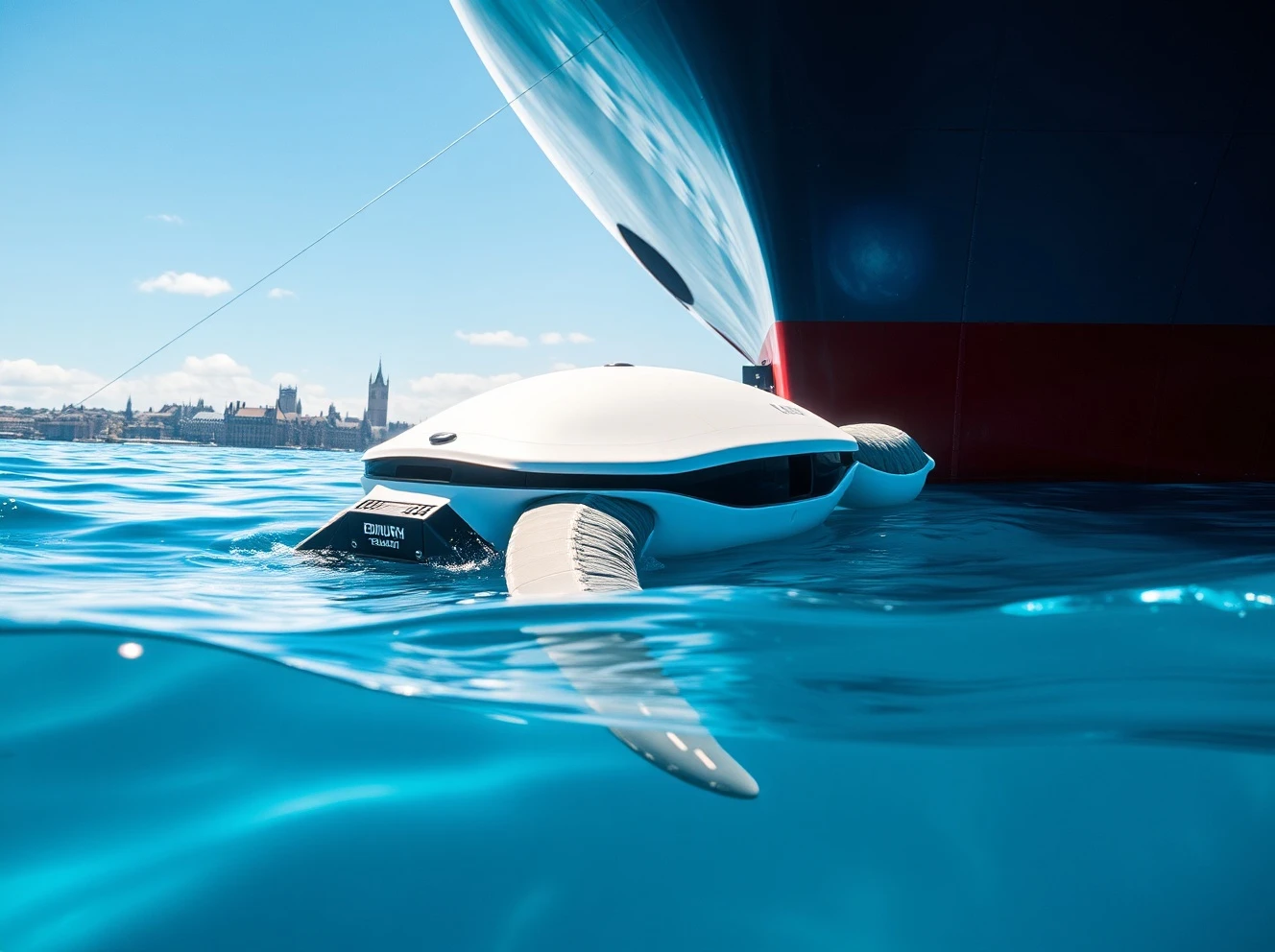
EDINBURGH, December 22, 2025 – A pioneering maritime robotics startup has secured substantial funding to tackle one of global shipping’s most persistent and costly challenges. ScrubMarine, founded by 22-year-old Rohith Devanathan while studying at Heriot-Watt University, has raised over £750,000 to develop autonomous robots that clean ships’ hulls. This innovative approach promises to significantly reduce fuel consumption, lower emissions, and eliminate hazardous underwater diving work that has plagued the maritime industry for decades.
Autonomous Hull Cleaning Robots Address $100 Billion Shipping Problem
The global shipping industry faces a hidden but massive financial burden. Biofouling – the accumulation of algae, barnacles, and marine organisms on ship hulls – increases drag dramatically. Consequently, vessels burn more fuel to maintain speed. Devanathan estimates this problem adds more than $100 billion annually to global shipping costs. Furthermore, biofouling significantly contributes to maritime emissions, making it both an economic and environmental challenge.
Traditional hull cleaning methods present serious limitations. Ships often require dry-docking, an expensive process that takes vessels out of service for extended periods. Alternatively, divers perform underwater cleaning alongside massive vessels. This approach involves substantial safety risks and operational complexities. According to maritime safety records, diving incidents during hull maintenance have resulted in numerous fatalities over the past decade.
ScrubMarine’s Robotic Solution: The Turtle and Whale Systems
ScrubMarine has developed two complementary robotic systems designed to revolutionize hull maintenance. The primary cleaning unit, named the Turtle, represents a breakthrough in maritime robotics. Weighing less than 50 kilograms, this lightweight autonomous system clings magnetically to ship hulls. It employs cavitation technology that uses microscopic water bubbles to implode on surfaces, effectively removing biofouling without damaging protective coatings.
The Turtle offers several advantages over existing systems:
- Lightweight design: Unlike car-sized competitors, it requires no cranes or support divers
- Dual functionality: Simultaneously cleans and captures inspection data
- Non-destructive cleaning: Preserves anti-fouling coatings while removing organisms
- Autonomous operation: Reduces human intervention and associated risks
For offshore applications, ScrubMarine developed the Whale deployment vehicle. This larger autonomous system transports multiple Turtle units to vessels operating far from port infrastructure. The Whale can retrieve cleaning robots without requiring crewed boats, making it ideal for offshore wind, oil and gas, and superyacht sectors.
Funding and Industry Validation
The recent £750,000 venture round demonstrates strong investor confidence in ScrubMarine’s technology. SFC Capital and PXN Ventures led the funding, with additional support from the Northern Powerhouse Investment Fund. Notably, private investors include Graham Westgarth, former president of the UK Chamber of Shipping, and Colin Greene, former Apple country chief executive. Their participation signals industry recognition of the technology’s potential impact.
This funding will accelerate several key developments:
| Allocation Area | Purpose |
|---|---|
| Prototype Completion | Finalize first commercial Turtle and Whale systems |
| Team Expansion | Grow engineering teams in Whitehaven and Edinburgh |
| Commercial Trials | Begin live testing with shipping customers |
| Technology Refinement | Enhance autonomy and cleaning efficiency |
The Environmental and Economic Impact of Robotic Hull Cleaning
Biofouling represents more than just a maintenance issue. The International Maritime Organization (IMO) has identified hull fouling as a significant contributor to greenhouse gas emissions in shipping. According to IMO data, a moderately fouled hull can increase fuel consumption by 10-20%. For large container ships, this translates to thousands of tons of additional fuel burned annually.
ScrubMarine’s technology addresses multiple sustainability goals simultaneously. By maintaining clean hulls, ships operate more efficiently, reducing both fuel costs and emissions. The company projects that widespread adoption could eliminate millions of tons of CO2 emissions annually. Additionally, the elimination of toxic anti-fouling paints represents another environmental benefit, as traditional coatings often leach harmful chemicals into marine ecosystems.
From an economic perspective, the potential savings are substantial. Shipping operators typically spend between $30,000 and $80,000 per vessel annually on hull cleaning and maintenance. Autonomous robotic systems could reduce these costs by 40-60% while minimizing vessel downtime. ScrubMarine’s business plan forecasts annual revenues of £56 million within five years, targeting applications across global shipping and marine energy markets.
The Founder’s Vision and Technical Background
Rohith Devanathan’s journey from teenage entrepreneur to maritime robotics innovator demonstrates the changing face of shipping technology. Born in Chennai and raised in Edinburgh, Devanathan began building websites and small businesses before enrolling in Heriot-Watt University’s robotics program at age 17. He founded ScrubMarine in 2024 while completing his robotics engineering degree.
During his studies, Devanathan met co-founder Clyne Albertelli, who was researching robotic systems for maritime applications. Their collaboration combined academic research with practical engineering solutions. “The diving issue isn’t just about cost,” Devanathan explained. “It’s also a serious safety concern. Divers do lose their lives in incidents like these, and that’s why we’re building robots to take people away from that risk.”
Industry Context and Competitive Landscape
The maritime robotics sector has experienced significant growth in recent years. According to market research, the global marine robotics market is projected to reach $7.2 billion by 2028, growing at a compound annual rate of 12.3%. Several factors drive this expansion, including increased automation demands, safety regulations, and environmental compliance requirements.
ScrubMarine enters a competitive but fragmented market. Existing hull cleaning solutions range from remotely operated vehicles (ROVs) to brush-based systems. However, most current technologies suffer from limitations:
- Size and weight: Many systems require substantial support infrastructure
- Coating damage: Some methods compromise protective hull coatings
- Limited autonomy: Most systems require constant human supervision
- High operational costs: Deployment often needs specialized vessels and crews
ScrubMarine’s lightweight, autonomous approach addresses these limitations directly. The company’s focus on cavitation technology rather than mechanical brushing represents a technological differentiation. This method has proven effective in laboratory testing while preserving the integrity of advanced anti-fouling coatings.
Regulatory Environment and Future Developments
The maritime industry operates within a complex regulatory framework. Recent International Maritime Organization regulations have tightened emissions standards and environmental requirements. The Energy Efficiency Existing Ship Index (EEXI) and Carbon Intensity Indicator (CII) regulations, implemented in 2023, have increased pressure on shipping companies to improve operational efficiency.
Clean hull maintenance directly contributes to compliance with these regulations. As vessels must demonstrate improved efficiency ratings, technologies that reduce fuel consumption gain importance. ScrubMarine’s robotic systems provide a practical solution for ship operators seeking to meet regulatory requirements while controlling costs.
Looking forward, the company plans to integrate additional capabilities into its robotic platforms. Future developments may include:
- Advanced sensor packages for hull integrity assessment
- Artificial intelligence algorithms for predictive maintenance
- Integration with ship management systems for automated scheduling
- Expanded deployment capabilities for different vessel types
Conclusion
ScrubMarine’s autonomous hull cleaning robots represent a significant advancement in maritime technology. By addressing the dual challenges of biofouling costs and diver safety, the Edinburgh startup has positioned itself at the forefront of shipping innovation. The substantial funding secured from experienced investors validates both the technology’s potential and the team’s execution capabilities. As the shipping industry faces increasing pressure to improve efficiency and reduce emissions, robotic solutions like ScrubMarine’s Turtle and Whale systems offer practical, scalable answers. With commercial trials approaching, the maritime industry may soon witness a transformation in how vessels maintain their hulls, potentially saving billions in operational costs while making shipping safer and more sustainable.
FAQs
Q1: What is biofouling and why is it a problem for ships?
Biofouling refers to the accumulation of marine organisms like algae, barnacles, and slime on ship hulls. This buildup increases drag, forcing vessels to burn more fuel to maintain speed. The problem costs the global shipping industry over $100 billion annually and significantly increases greenhouse gas emissions.
Q2: How do ScrubMarine’s robots clean hulls without damaging them?
The Turtle robot uses cavitation technology that creates microscopic water bubbles that implode on the hull surface. This process dislodges biofouling organisms without scraping or damaging the vessel’s protective anti-fouling coatings, unlike traditional brush-based methods.
Q3: What safety advantages do autonomous hull cleaning robots offer?
Traditional hull cleaning often requires divers to work underwater alongside large vessels, a dangerous occupation with documented fatalities. Autonomous robots eliminate human divers from hazardous underwater environments, significantly improving workplace safety in maritime maintenance.
Q4: How much can shipping companies save using robotic hull cleaning?
While exact savings vary by vessel size and operation, estimates suggest robotic hull cleaning could reduce maintenance costs by 40-60%. Additionally, clean hulls improve fuel efficiency by 10-20%, creating substantial operational savings beyond just maintenance expenses.
Q5: When will ScrubMarine’s technology be commercially available?
The company is currently completing its first commercial prototypes and preparing for live trials with customers. Based on their development timeline, commercial deployment could begin within 12-18 months, starting with offshore energy and specialized shipping sectors before expanding to broader maritime markets.