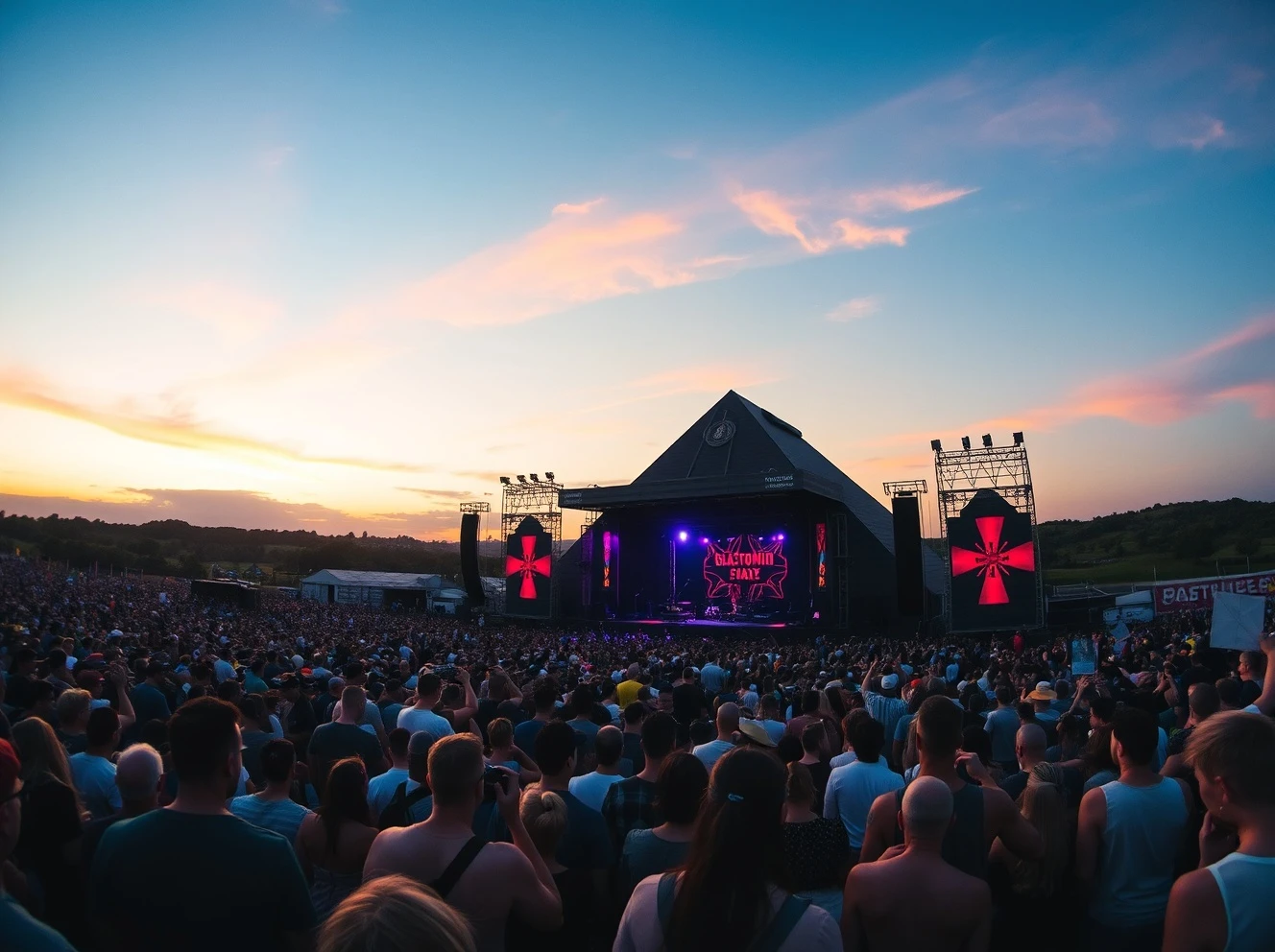
In a powerful demonstration of cultural and economic synergy, the world-renowned Glastonbury Festival has announced a significant financial uplift for its 2025 fiscal year, directly fueled by stellar performances from global icons Dua Lipa and Shania Twain. The event’s latest financial filings, submitted to Companies House in December 2025, reveal not only increased revenue and profits but also a substantial amplification of its philanthropic impact, channeling millions to hundreds of charitable causes worldwide from its base at Worthy Farm in Somerset.
Glastonbury Festival Posts Impressive Financial Growth
Glastonbury Festival Events Limited, the operating company, reported a revenue increase to £75.2 million for the year ending March 31, 2025. This figure marks a notable rise from the £68.4 million recorded the previous year. Consequently, pre-tax profits climbed robustly to £7.7 million, compared with £5.9 million in 2024. This financial growth occurred despite the organization’s stated commitment to maintaining accessible ticket pricing. A standard weekend ticket for the 2024 event cost £355 plus a £5 booking fee, a principle of price restraint the business actively upholds.
The 2024 festival lineup featured Dua Lipa, Coldplay, and SZA as Pyramid Stage headliners, while country-pop legend Shania Twain commanded the coveted Sunday afternoon ‘Legends’ slot. Industry analysts frequently correlate star power of this magnitude with heightened global viewership, merchandise sales, and secondary economic activity, all contributing factors to the revenue stream. Furthermore, the company operates two additional, smaller events on the Worthy Farm site: the Pilton Party and the Glastonbury Abbey Extravaganza.
| Metric | 2024 Financial Year | 2025 Financial Year | Change |
|---|---|---|---|
| Total Revenue | £68.4 million | £75.2 million | +9.9% |
| Pre-Tax Profit | £5.9 million | £7.7 million | +30.5% |
| Charitable Donations (FY) | Data Not Specified | >£2.7 million | N/A |
| Total Payments to Charities (by Dec 2025) | N/A | >£4.2 million | N/A |
Philanthropic Impact and Charitable Distribution
A defining characteristic of Glastonbury Festival is its deep-rooted philanthropic model. The 2025 financial year saw the festival make direct donations exceeding £2.7 million. Moreover, by December 2025, total payments distributed to charitable organizations surpassed £4.2 million, benefiting over 300 distinct groups. This mechanism transforms commercial success into direct humanitarian and environmental action.
The festival’s charity strategy operates on multiple tiers:
- Global Humanitarian Aid: A £100,000 donation was directed to Médecins Sans Frontières (Doctors Without Borders) specifically for relief efforts in Sudan and to support a surgical hospital in Amman, Jordan.
- Long-Standing Core Partners: Continued major support for Oxfam, Greenpeace, and WaterAid, organizations that have been festival partners for decades.
- Local Community & Environmental Projects: Significant funding for initiatives in Somerset and the surrounding region, including primary school enrichment programs, sustainable farming projects, and biodiversity schemes managed by the Somerset Wildlife Trust and Shepton Mallet Community Woodland.
The Eavis Legacy and Sustainable Event Model
Under the continued stewardship of 90-year-old founder Sir Michael Eavis, Glastonbury exemplifies a sustainable large-scale event model. The festival’s financial health enables its charitable mission, creating a virtuous cycle. Experts in festival economics note that this model enhances brand loyalty and participant engagement, as attendees directly contribute to a broader social good. The commitment to price restraint, despite inflationary pressures across the live events sector, further reinforces its ethical stance and accessibility goals.
Comparatively, other major UK festivals have faced criticism for steep price increases and perceived commercialism. Glastonbury’s publicly reported accounts and transparent donation structure provide a counter-narrative, demonstrating that commercial success and principled operation are not mutually exclusive. The festival’s ability to secure top-tier talent like Dua Lipa and Shania Twain, while maintaining its core values, is a studied benchmark in the industry.
Broader Economic and Cultural Ripple Effects
The festival’s financial performance has implications beyond Worthy Farm. The local economy in Somerset receives a substantial annual boost from visitor spending, temporary employment, and supply chain contracts. Additionally, the global broadcasting and streaming of headline sets, particularly from artists like Dua Lipa whose 2024 performance was widely televised, extends the festival’s cultural and economic reach internationally. This media footprint amplifies both the festival’s brand and the visibility of its charitable partners.
Organizers have consistently highlighted that post-festival charity distributions are a primary metric of success, equally important to artistic acclaim. This stakeholder-focused approach, prioritizing artists, attendees, the local community, and global causes, is integral to the event’s enduring reputation. The 2025 financial results provide concrete evidence that this philosophy can coexist with robust profitability.
Conclusion
The latest financial disclosures from Glastonbury Festival Events Limited confirm a triumphant year where world-class entertainment and social responsibility powerfully converged. Driven by the magnetic appeal of headliners like Dua Lipa and Shania Twain, the Glastonbury Festival achieved record revenues and profits. Most significantly, these financial gains have been efficiently channeled into a massive charitable output, supporting over 300 organizations from local Somerset initiatives to international humanitarian crises. This report solidifies Glastonbury’s unique position not merely as a music festival, but as a major philanthropic engine and a sustainable model for the global live events industry.
FAQs
Q1: How much did Glastonbury Festival’s profits increase in 2025?
Pre-tax profits for Glastonbury Festival Events Ltd rose to £7.7 million for the year ending March 2025, a significant increase from £5.9 million the previous year, marking growth of over 30%.
Q2: Which charities benefit from Glastonbury’s profits?
The festival supports over 300 organizations. Major beneficiaries include long-term partners Oxfam, Greenpeace, and WaterAid, alongside specific grants like £100,000 to Médecins Sans Frontières. Local projects with the Somerset Wildlife Trust also receive funding.
Q3: Did ticket prices rise to generate these higher profits?
Organizers emphasize a commitment to price restraint. The standard weekend ticket for the 2024 festival was £355 plus a £5 fee, indicating that profit growth was achieved through operational scale and revenue diversification, not significant ticket price hikes.
Q4: What role did Dua Lipa and Shania Twain play in this success?
As headline and ‘Legends’ slot performers respectively, Dua Lipa and Shania Twain were major draws for the 2024 festival. Their global appeal drives ticket demand, media coverage, and secondary spending, all contributing directly to the overall revenue and profit figures reported for the 2025 financial year.
Q5: How does Glastonbury’s charitable spending compare to other festivals?
Glastonbury is notable for the scale and transparency of its philanthropy. Distributing over £4.2 million to charity from a single year’s event is exceptionally high within the industry, reflecting its foundational ethos where profit generation is linked to charitable giving.