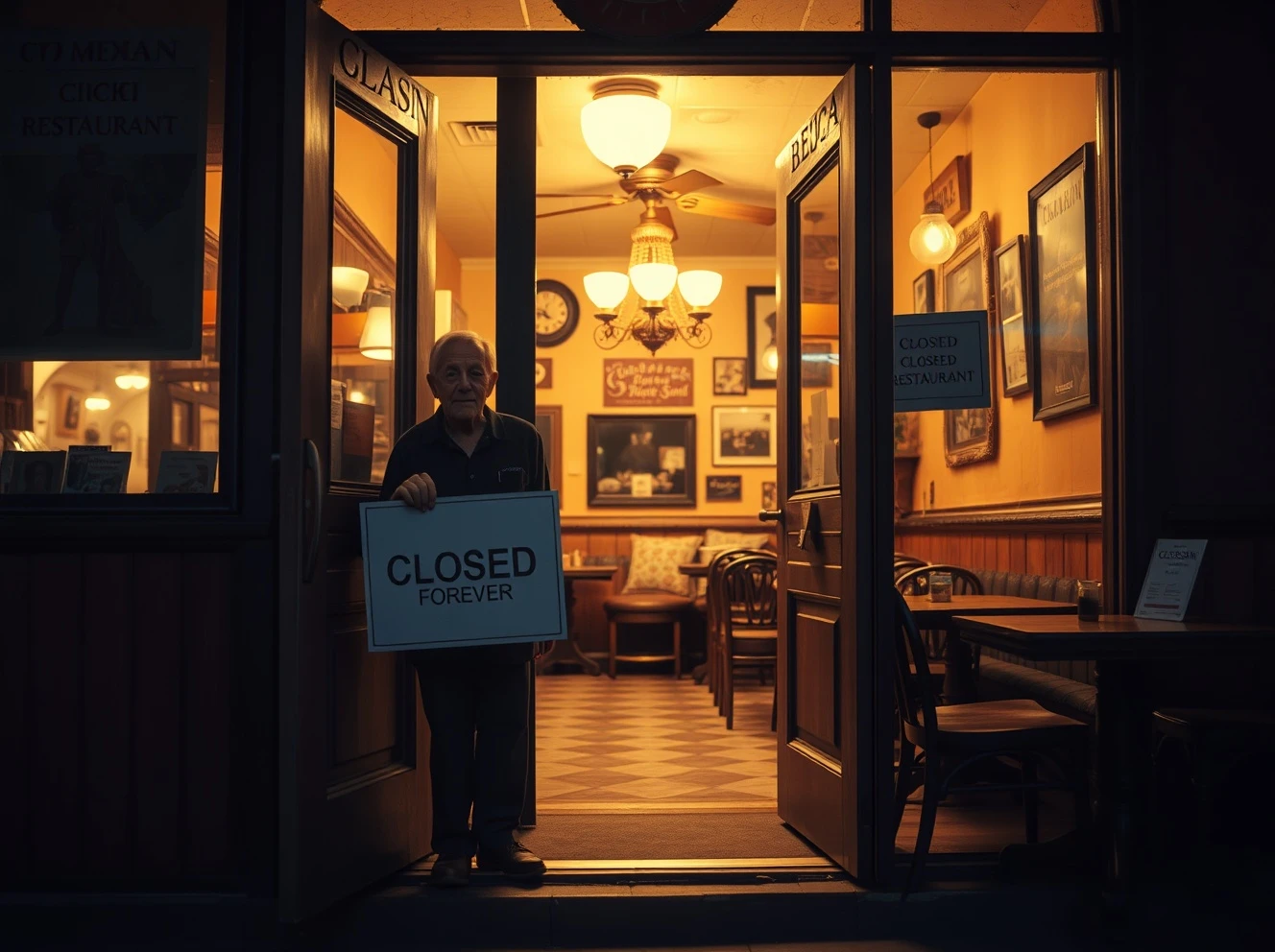
In a significant blow to culinary heritage and local tradition, a 92-year-old family-owned Mexican restaurant has announced its permanent closure, marking the end of nearly a century of continuous operation and multigenerational family stewardship. This family-owned Mexican restaurant closing represents more than just another business shutdown—it signifies the loss of living history, authentic recipes passed down through generations, and a community institution that survived economic depressions, cultural shifts, and global pandemics only to face insurmountable modern challenges.
Family-Owned Mexican Restaurant Closing Signals Cultural Shift
The announcement came on March 15, 2025, when the Martinez family confirmed their landmark establishment would serve its final meals next month. Originally founded in 1933 by Mexican immigrants Carlos and Maria Martinez, the restaurant became a cornerstone of the local dining scene through three generations of family management. Furthermore, this closure follows a troubling national trend affecting independent restaurants, particularly those with deep historical roots. According to the National Restaurant Association, approximately 15% of family-owned restaurants operating for more than 50 years have closed permanently since 2020. Consequently, each closure represents not just a business failure but the erosion of culinary diversity and local character.
Several interconnected factors contributed to this historic restaurant shutdown. First, rising operational costs have created unsustainable pressure on thin profit margins. Second, changing consumer dining habits accelerated during the pandemic have permanently altered the landscape. Third, workforce challenges have made consistent staffing nearly impossible. Finally, property tax increases in historic districts have disproportionately affected long-standing establishments. These economic realities have created a perfect storm that even beloved institutions cannot weather indefinitely.
The Human Impact Behind the Closure
Beyond the economic statistics, this multigenerational business ending affects real people with deep connections to the establishment. Current owner Miguel Martinez, grandson of the founders, explained the difficult decision during a recent interview. “We’ve served this community through good times and bad,” Martinez stated. “Our regulars aren’t just customers—they’re extended family. However, the financial realities have become impossible to ignore.” The restaurant currently employs 28 staff members, many of whom have worked there for decades. Additionally, local suppliers who have provided ingredients for generations will lose a significant portion of their business. This closure creates a ripple effect throughout the local economy that extends far beyond the restaurant’s four walls.
Historical Significance of 92-Year Culinary Institution
The restaurant’s history mirrors the broader story of Mexican-American culinary traditions in the United States. When Carlos and Maria Martinez opened their doors during the Great Depression, they offered simple, authentic dishes using family recipes from Guadalajara. Remarkably, the establishment survived World War II rationing, the economic boom of the 1950s, and the fast-food revolution of the 1970s by maintaining quality and consistency. During the civil rights movement of the 1960s, the restaurant served as an informal community center where diverse groups gathered. Throughout its history, the kitchen preserved cooking techniques and recipes that have largely disappeared from commercial Mexican cuisine.
The restaurant’s historical significance extends beyond its menu. The building itself represents a specific architectural style popular among immigrant-owned businesses in the early 20th century. The interior features original tile work, hand-painted murals, and family photographs documenting nearly a century of operation. Preservationists have expressed concern about what might replace the establishment, as historic buildings often undergo significant alterations when repurposed. Local historical societies have begun discussions about documenting the restaurant’s legacy before its final closure.
Comparative Analysis: Historic Restaurant Survival Rates
To understand the broader context of this closure, consider how similar establishments have fared in recent years:
| Restaurant Type | Average Lifespan | Survival Rate Past 50 Years | Primary Closure Reasons |
|---|---|---|---|
| Family-Owned Ethnic Restaurants | 42 years | 18% | Succession issues, rising costs |
| Fine Dining Establishments | 35 years | 22% | Changing tastes, high overhead |
| Casual Family Restaurants | 25 years | 31% | Competition, real estate costs |
| Fast Food Chains | 15 years | 45% | Market saturation, franchise issues |
This data reveals that family-owned ethnic restaurants face particularly challenging odds for long-term survival. The 92-year operation of this Mexican restaurant placed it in an exceptionally rare category, making its closure especially noteworthy. Moreover, establishments preserving authentic ethnic cuisine often struggle with modernization pressures while maintaining traditional methods.
Community Response to the Historic Closure
Since the announcement, community reaction has been overwhelmingly emotional and supportive. Longtime patrons have shared memories across social media platforms, creating virtual archives of personal connections to the establishment. A grassroots movement has emerged advocating for some form of preservation, whether through historical designation, recipe documentation, or support for the family’s potential future ventures. Local officials have acknowledged the cultural loss while recognizing the economic realities facing small businesses. This response highlights how restaurants function as more than commercial enterprises—they serve as repositories of collective memory and cultural continuity.
The impending closure has prompted several community initiatives:
- Oral history project: Local university students are interviewing family members and longtime staff
- Recipe preservation effort: Community cooks are documenting traditional techniques
- Final celebration events: Patrons are organizing farewell gatherings throughout the final month
- Historical marker campaign: Preservationists are advocating for official recognition
These efforts demonstrate how food establishments become woven into the social fabric of communities. They also show how communities attempt to salvage cultural heritage even when businesses cannot continue operating.
Expert Perspectives on Restaurant Preservation
Dr. Elena Rodriguez, culinary historian and author of “Immigrant Kitchens: Preserving American Food Heritage,” provides crucial context for understanding this closure’s significance. “When a multigenerational ethnic restaurant closes, we lose more than a dining option,” Rodriguez explains. “We lose living history—the embodied knowledge of techniques, the stories behind recipes, and the physical space where cultural exchange occurred organically.” Rodriguez emphasizes that while cookbooks and documentaries can preserve some aspects, they cannot capture the complete experience of these community institutions. Her research indicates that fewer than 8% of immigrant-founded restaurants from the early 20th century remain under original family ownership today.
Economic Realities Facing Legacy Restaurants
The financial challenges confronting historic restaurants have intensified dramatically in recent years. Several specific factors have created particularly difficult conditions for establishments like this 92-year-old Mexican restaurant. First, commercial property values in established neighborhoods have increased by an average of 200% over the past two decades, according to commercial real estate data. Second, food costs have risen approximately 35% since 2020, with particular increases in traditional ingredients like corn, chilies, and certain meats. Third, labor costs have increased due to minimum wage legislation and competitive hiring markets. Finally, insurance premiums for older buildings with commercial kitchens have become prohibitively expensive for many operators.
These economic pressures create impossible choices for family-owned establishments. They must either:
- Raise prices and risk alienating longtime customers
- Reduce portion sizes or ingredient quality and compromise their reputation
- Cut staff and diminish service quality
- Operate at a loss until reserves are exhausted
For the Martinez family, years of navigating these difficult choices ultimately led to the painful decision to close permanently. Their experience mirrors that of countless other family-owned restaurants facing similar pressures without the capital reserves or investor backing available to corporate chains.
The Succession Challenge in Family Businesses
Beyond immediate economic factors, many historic restaurants face generational transition challenges. Younger family members often pursue different career paths, leaving no clear successor to continue the business. Even when family members wish to continue the legacy, they may lack the specific business training needed to navigate modern restaurant economics. The Martinez family encountered this common dilemma, with the current owner’s children establishing careers in unrelated fields. This succession issue affects approximately 70% of family-owned restaurants that reach the third generation, according to family business research. Without clear succession planning, even profitable establishments may close when aging owners retire.
Preservation Efforts and Possible Alternatives
As the closure date approaches, various stakeholders are exploring potential preservation options. Historical preservation groups have initiated discussions about designating the building as a protected structure. Culinary organizations have proposed documenting the restaurant’s recipes and techniques for archival purposes. Community development advocates have suggested creating a cooperative ownership model that might allow the restaurant to continue under new management while preserving its essential character. However, each alternative faces significant practical challenges, from financing to implementation timelines.
Some successful preservation models from other cities include:
- Nonprofit stewardship: Community organizations assuming operation of historic establishments
- Hybrid business models: Combining restaurant operation with culinary education or event space
- Historical partnerships: Museums or cultural institutions operating restaurants as living exhibits
- Digital preservation: Comprehensive documentation for virtual access and educational use
While these models offer potential pathways for preservation, they require substantial community investment and organizational infrastructure that may not exist in every location. The timeline for implementing such solutions often exceeds the window available when a restaurant announces imminent closure.
Conclusion
The permanent closure of this 92-year-old family-owned Mexican restaurant represents a significant cultural and culinary loss that extends far beyond the local dining scene. This family-owned Mexican restaurant closing concludes nearly a century of continuous operation, multigenerational family stewardship, and community service. Its story reflects broader trends affecting historic restaurants nationwide while highlighting the specific challenges facing ethnic culinary establishments. As similar closures continue across the country, communities must grapple with how to preserve culinary heritage while acknowledging economic realities. The legacy of establishments like this Mexican restaurant reminds us that restaurants serve as living repositories of history, culture, and community connection—elements that cannot be easily replaced when the doors close for the final time.
FAQs
Q1: Why is this particular restaurant closure receiving significant attention?
This closure represents the end of 92 years of continuous family operation, making it an exceptionally long-running establishment. The restaurant survived multiple economic cycles, cultural shifts, and historical events while maintaining authentic recipes and techniques. Its longevity and cultural significance make its closure noteworthy beyond ordinary business closures.
Q2: What specific challenges led to this historic restaurant’s closure?
Multiple converging factors contributed, including rising operational costs, changing consumer dining patterns, workforce challenges, property tax increases in historic districts, and succession issues within the family. These economic pressures created unsustainable conditions despite the restaurant’s popularity and cultural importance.
Q3: Are other historic restaurants facing similar closure risks?
Yes, many family-owned restaurants with long histories face comparable challenges. According to industry data, approximately 15% of restaurants operating for more than 50 years have closed permanently since 2020. Those preserving ethnic culinary traditions face additional pressures related to ingredient costs, authentic technique preservation, and sometimes narrower customer bases.
Q4: What happens to the recipes and culinary knowledge when such restaurants close?
Without deliberate preservation efforts, recipes and techniques may be lost entirely or significantly altered. Some families choose to publish cookbooks or participate in oral history projects. Culinary historians increasingly advocate for systematic documentation of endangered food traditions before establishments close permanently.
Q5: Can anything be done to prevent similar closures of historic restaurants?
Several approaches show promise, including community investment models, historical preservation designations, hybrid business structures combining dining with education, and policy interventions addressing specific challenges like property taxes for historic businesses. However, each solution requires coordinated effort from multiple stakeholders including owners, communities, and local governments.