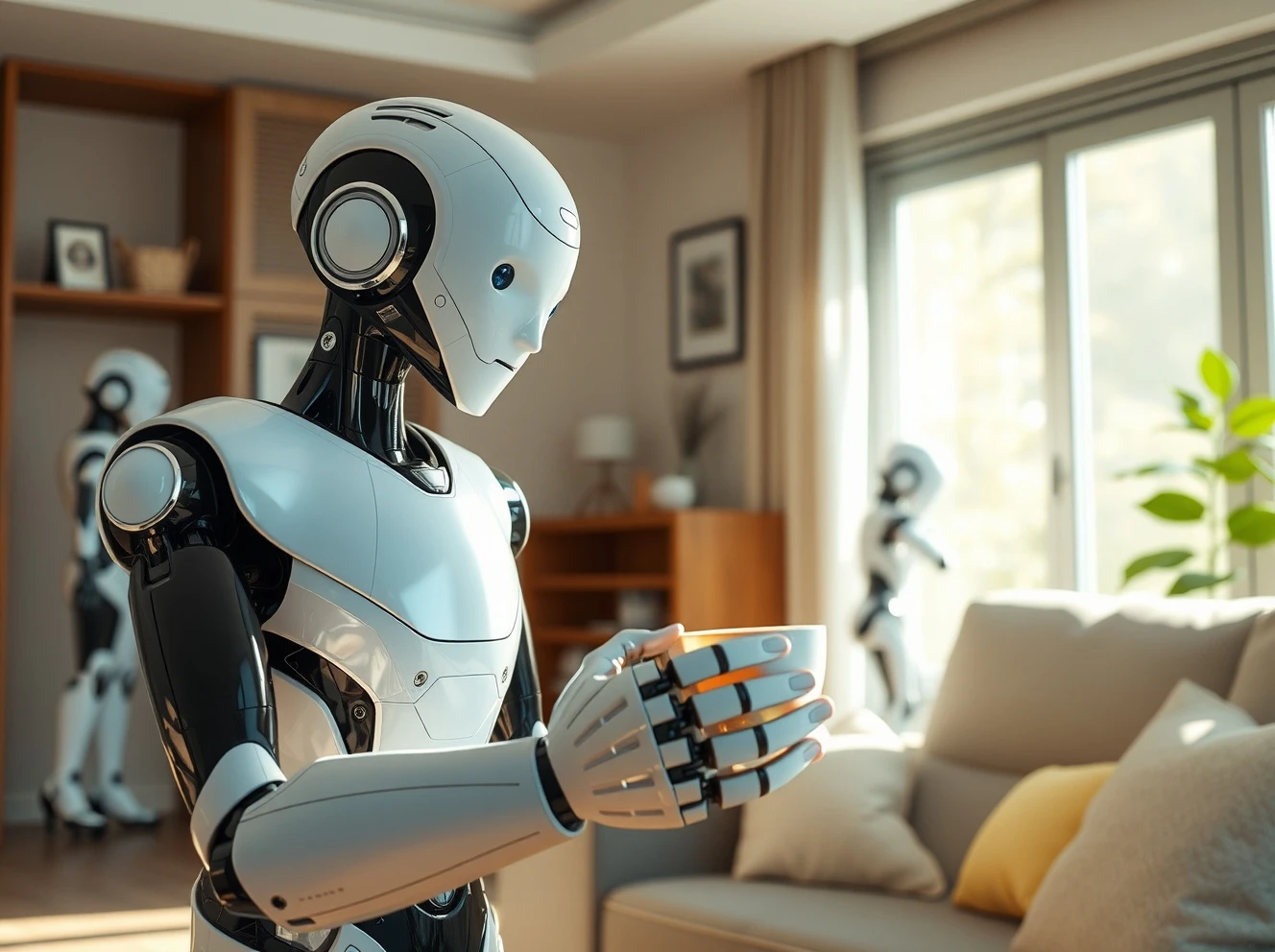
December 25, 2025 – The global landscape for automation is poised for a seismic shift, according to a groundbreaking report from the Royal Bank of Canada. The analysis projects the humanoid robot market could balloon to a staggering $9 trillion valuation by 2050. Crucially, China is forecast to dominate this technological revolution, potentially accounting for 60% of worldwide demand. This forecast signals a move from speculative technology to a core component of future economies and daily life.
The $9 Trillion Humanoid Robot Market Forecast
Royal Bank of Canada’s comprehensive research provides a detailed roadmap for the humanoid robotics sector. The report outlines a phased adoption curve, beginning with niche applications and evolving into a ubiquitous technology. Analysts base their projections on current manufacturing trends, demographic data, and investment patterns across major economies. The $9 trillion figure represents a total addressable market, encompassing hardware, software, and service revenues. This valuation suggests humanoid robots could achieve an economic impact comparable to major contemporary industries like global automotive or telecommunications.
Market segmentation reveals insightful patterns. The household sector alone is forecast to capture roughly $2.9 trillion of the total. This segment includes robots for domestic chores, companionship, and personal assistance. Industrial and commercial applications, spanning manufacturing, logistics, and healthcare, are expected to constitute the remainder. The report’s timeline is explicit: basic household models may enter homes within five years, while advanced models capable of complex tasks are 20 years away from widespread use.
China’s Pivotal Role in Robotics Adoption
China’s expected dominance is not incidental but driven by powerful structural forces. The nation faces profound demographic challenges, including a rapidly ageing population and a shrinking workforce. Consequently, policymakers and consumers view humanoid robots not as novelties but as practical solutions. Tom Narayan, an RBC Global Markets analyst and report co-author, emphasizes this cultural distinction. He notes that in many Asian economies, robotics is framed within the context of necessity and societal support.
This perspective accelerates adoption. The report suggests multiple robots could become standard in Chinese households, performing roles from elderly care to mundane domestic duties. However, rapid growth has triggered regulatory caution. China’s National Development and Reform Commission has warned of a potential investment bubble, noting over 150 companies are developing similar humanoid technologies. Officials worry that duplicated efforts could stifle meaningful innovation despite the sector’s obvious potential.
Labor Market Transformation and Economic Impact
The economic implications are profound. By 2050, humanoid robots could replace up to 40% of labor-intensive roles in sectors like agriculture, manufacturing, and cleaning. Proponents argue this displacement could free human workers from repetitive, physically demanding jobs. The transition may allow a societal shift toward higher-value, creative, or fulfilling work. Conversely, this shift necessitates significant investment in retraining and social support systems to manage the transition smoothly.
Investment momentum is already building globally. In the United States, Silicon Valley is a key hub. Sam Altman, CEO of OpenAI, has backed startups like 1X Technologies and Figure AI. Simultaneously, Elon Musk is advancing Tesla’s Optimus robot, with production slated for 2026 and an ambitious goal of one million units within five years. This parallel development in the West indicates a competitive, multi-polar race to define the future of robotics.
Design Debates and the Path to Scale
A central debate within the industry questions the efficiency of the humanoid form. Some experts argue specialized, task-specific robots may be more effective for many jobs. However, Narayan and the RBC report posit that economies of scale could make the general-purpose humanoid the most cost-effective long-term solution. The primary advantage lies in versatility; a humanoid design can operate seamlessly in environments already built for humans, using existing tools and infrastructure.
The envisioned business model draws a direct parallel to the smartphone revolution. Hardware could be sold at scale with relatively low margins, while ongoing revenue is generated through software, applications, and subscription services. This ecosystem approach, similar to Apple’s iOS model, could create sustained value and drive continuous innovation. The success of this model depends on achieving interoperability and fostering a vibrant developer community.
Global Implications and Strategic Considerations
The rise of a multi-trillion dollar humanoid robot industry will reshape global supply chains, trade dynamics, and geopolitical influence. China’s anticipated leadership in both production and consumption could solidify its position in advanced manufacturing. Other nations must develop strategic responses, investing in research, domestic production capabilities, and ethical frameworks for deployment. The technology also raises important questions about data privacy, security, and the ethical treatment of AI in caregiving roles.
International collaboration on standards and safety protocols will be essential. Furthermore, the environmental impact of manufacturing and disposing of millions of sophisticated robots requires careful lifecycle management. The report underscores that while the economic opportunity is immense, responsible stewardship is critical to ensuring the technology benefits society broadly.
Conclusion
The RBC report presents a compelling, evidence-based vision of a future transformed by the humanoid robot market. The projected $9 trillion valuation by 2050, led by China’s adoption, marks a pivotal evolution in automation. This transition from concept to commodity will redefine households, labor markets, and global economic hierarchies. While challenges around regulation, design, and societal impact remain, the trajectory suggests humanoid robots are on a path from novelty to necessity, promising to become as integral to daily life as the smartphone is today.
FAQs
Q1: What is driving the massive growth forecast for the humanoid robot market?
The growth is primarily driven by demographic pressures like ageing populations, shrinking workforces, and the need for cost-effective care and labor solutions. Technological advancements in AI and mechanics are making development feasible.
Q2: Why is China expected to be the largest market for humanoid robots?
China faces acute demographic challenges, including one of the world’s fastest-ageing populations. Cultural attitudes view robots as practical tools for elderly care and domestic support, making adoption a societal priority rather than just a technological interest.
Q3: When can we expect to see humanoid robots in ordinary homes?
According to the report, basic models for limited roles (like entertainment or simple reminders) could enter homes within the next five years. However, robots capable of complex household tasks and care duties are unlikely to see widespread adoption for 20 years.
Q4: What are the main concerns about the rapid growth of this industry?
Policymakers, particularly in China, warn of a potential investment bubble due to many companies working on similar technology. Other concerns include job displacement, ethical use in caregiving, data privacy, and ensuring innovation is not diluted by duplication.
Q5: How could humanoid robots affect the global job market?
The report suggests they could replace up to 40% of labor-intensive jobs in sectors like manufacturing and cleaning. While this may displace some workers, it could also free humans for higher-value, creative, or interpersonal roles, necessitating significant workforce retraining.