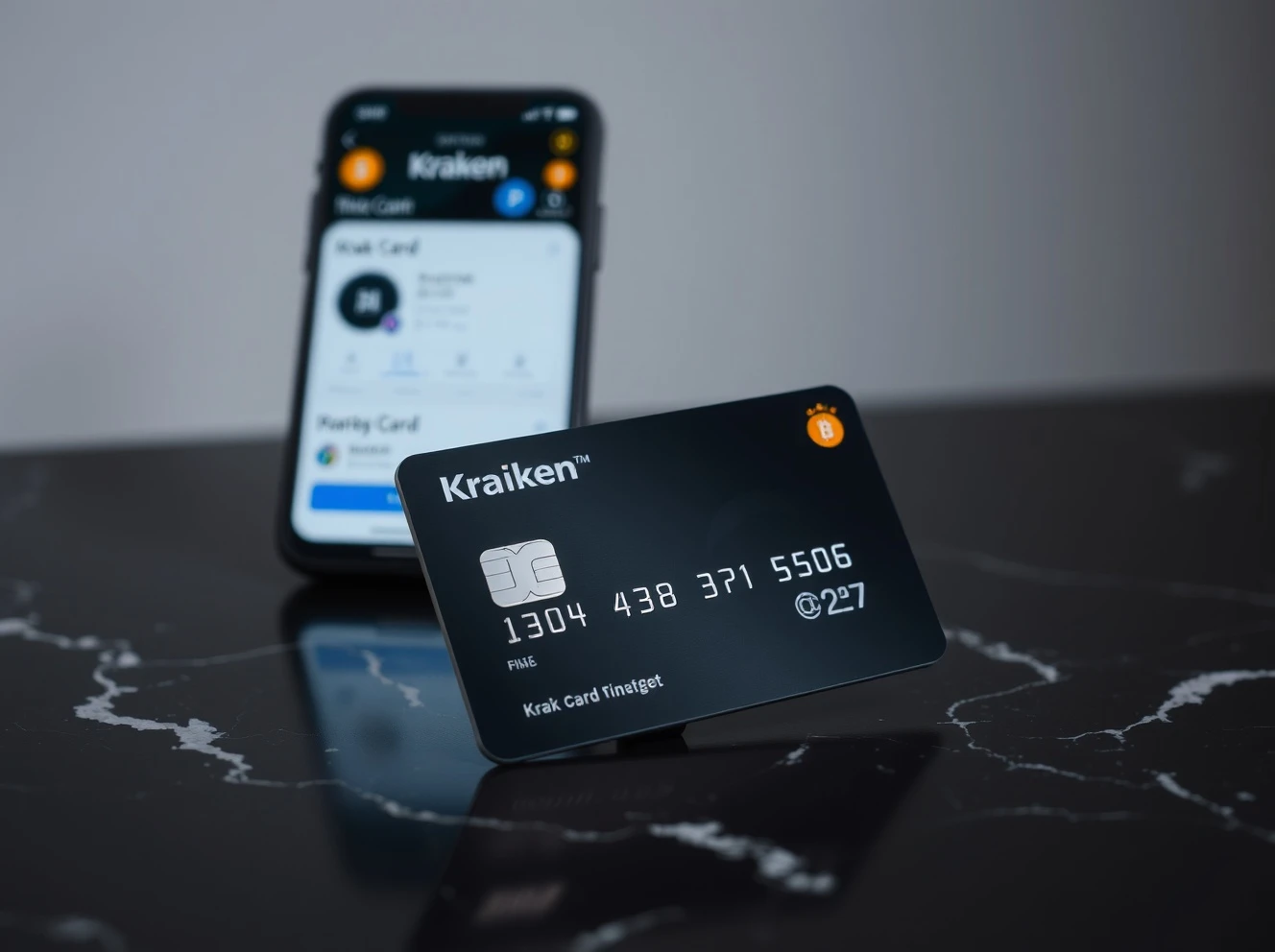
In a landmark move for European crypto adoption, leading cryptocurrency exchange Kraken has officially launched the Krak Card, a Mastercard debit card designed to bridge the gap between digital assets and real-world commerce. Announced on November 25, 2025, this no-fee card allows residents of the European Union and the United Kingdom to spend directly from a wallet holding over 400 different cryptocurrencies and fiat currencies. Consequently, this launch represents a significant strategic push by Kraken to position itself not just as a trading platform, but as a comprehensive alternative to traditional banking services. The timing is crucial, arriving just months after the full implementation of the EU’s Markets in Crypto-Assets (MiCA) regulation, which provides a clearer framework for such financial innovations.
Kraken Krak Card: A No-Fee Gateway to Multi-Asset Spending
The core innovation of the Krak Card lies in its multi-asset flexibility and aggressive fee structure. Backed by the global Mastercard network, the card is accepted at over 150 million merchants worldwide. Unlike many competitors that limit spending to a single currency or a handful of major cryptos, Kraken’s solution enables payments from a combined pool of assets. Users can hold Bitcoin (BTC), Ethereum (ETH), Solana (SOL), various stablecoins, and traditional currencies like euros and pounds sterling in a single wallet. When a transaction occurs, the card’s intelligent system can automatically draw from multiple sources to cover the cost. For instance, if a €100 purchase is made and a user’s Bitcoin balance only covers €80, the system seamlessly pulls the remaining €20 from another designated asset, such as euros or a stablecoin. This feature effectively eliminates the friction of manual pre-conversion, a common pain point for crypto users.
Kraken has adopted a compelling pricing strategy to attract users. The company charges no monthly, transaction, or exchange fees for using the Krak Card. The only cost to the user is the spread applied during the real-time conversion of a cryptocurrency to fiat at the point of sale. This transparent model contrasts with some competitors that embed various hidden charges. Furthermore, the card offers a cashback reward program of up to 1% on purchases. Users can choose to receive this cashback in euros, British pounds, or directly in Bitcoin, providing an incentive for long-term crypto accumulation. The cashback rate itself is tiered, scaling with the total value of assets a user holds across Kraken’s ecosystem, encouraging customer loyalty and consolidation of funds.
The Regulatory Foundation: MiCA and Beyond
The successful launch of the Krak Card is underpinned by a robust regulatory framework that Kraken has meticulously built throughout 2025. In June, the exchange secured a pivotal MiCA license from the Central Bank of Ireland. This license acts as a passport, allowing Kraken to offer regulated crypto services across all 30 nations of the European Economic Area under a single authorization. Arjun Sethi, co-CEO of Kraken, emphasized the significance, stating that securing a license from the historically rigorous Central Bank of Ireland signals a “commitment to expanding the crypto ecosystem through responsible innovation.” Prior to this, Kraken obtained an Electronic Money Institution (EMI) license in March and a Markets in Financial Instruments Directive (MiFID) license in February. In the UK, Kraken has maintained registration with the Financial Conduct Authority (FCA) for over a decade. This multi-jurisdictional compliance provides a layer of trust and stability for users concerned about the regulatory standing of their crypto service providers.
How the Krak Card Stacks Up Against the Competition
The crypto debit card market in Europe has become increasingly crowded. To differentiate itself, Kraken’s Krak Card leverages several key advantages. The most prominent is its support for an unparalleled number of spendable assets—over 400 compared to the dozens typically offered by rivals. The multi-source payment feature is another significant differentiator, as most competitors require a transaction to be funded from a single, pre-selected currency wallet. The absence of mandatory staking requirements to access basic benefits like cashback also makes the card more accessible to casual users. However, it is important to note that Kraken clearly states Krak is not a bank. Therefore, user deposits do not benefit from national deposit guarantee schemes like the UK’s FSCS. Kraken mitigates this by holding all customer fiat funds in segregated accounts with regulated partner banks, a standard practice for Electronic Money Institutions.
| Feature | Detail |
|---|---|
| Availability | European Union & United Kingdom |
| Network | Mastercard |
| Spendable Assets | 400+ cryptocurrencies & fiat |
| Key Fee | No monthly, transaction, or exchange fees |
| Cashback | Up to 1% in BTC, EUR, or GBP |
| Formats | Free virtual & physical cards |
| Regulatory Base | MiCA, EMI, MiFID licenses |
User Experience: Activation, Security, and Future Features
Kraken has designed the Krak Card for immediate utility. Users can activate a virtual card within minutes through the dedicated Krak app. This virtual card can then be added to Apple Pay or Google Wallet for instant contactless payments. For physical card users, Kraken offers both orange and black designs free of charge, with no issuance fees. Security is managed through real-time transaction monitoring. In the event a user reports a suspicious transaction, Kraken’s policy is to issue a provisional credit within 24 hours while an investigation is conducted. The app also provides granular control, allowing users to set the priority order of assets used for payments and to exclude specific assets (like a long-term Bitcoin holding) from being spent.
Looking ahead, Kraken has announced the upcoming launch of Krak Vaults, a feature that will allow users to generate yield on their idle assets. These Vaults will connect to independently audited DeFi lending protocols, with potential yields exceeding 10% APY. However, in a nod to regulatory boundaries, this feature will not be available to residents of the European Economic Area at launch due to local restrictions. Users in the UK will have access, but with yields capped at around 3.6% APY for certain balances, reflecting a more conservative, regulated approach.
The Practical Impact for European Crypto Users
For the average European crypto holder, the Krak Card simplifies the process of using digital assets in daily life. It removes the need to pre-sell cryptocurrency on an exchange, transfer the fiat to a bank account, and then spend it—a process that can take days. Now, payment is instantaneous. The card also supports receiving salaries via SEPA Instant Credit Transfer, reinforcing its role as an all-in-one financial account. Nevertheless, a critical consideration remains: each crypto spend is a taxable event in most jurisdictions, potentially realizing a capital gain or loss. Users are strongly advised to consult with a tax professional to understand their reporting obligations. This reality underscores that while spending crypto is becoming easier, the associated financial responsibilities persist.
Conclusion
The launch of the Kraken Krak Card marks a pivotal moment in the maturation of cryptocurrency for everyday use in Europe. By combining multi-asset spending, a zero-fee structure, and a robust regulatory foundation under MiCA, Kraken is delivering a product that addresses both utility and trust. The Kraken Krak Card is more than just a payment tool; it is a strategic bridge designed to integrate digital assets seamlessly into the conventional financial system. As competition in the crypto card space intensifies, Kraken’s focus on asset diversity, user control, and regulatory clarity positions the Krak Card as a formidable contender, potentially accelerating mainstream crypto adoption across the continent.
FAQs
Q1: Who is eligible to apply for the Kraken Krak Card?
Currently, the Krak Card is available to residents of the European Union and the United Kingdom who have successfully completed the identity verification (KYC) process on either the Kraken exchange or the dedicated Krak app.
Q2: Are there any hidden fees associated with the Krak Card?
Kraken promotes the card as having no monthly, transaction, or currency exchange fees. The primary cost to the user is the spread, which is the difference between the buy and sell price, applied when a cryptocurrency is automatically converted to fiat at the point of sale to settle a transaction.
Q3: How does the cashback reward program work?
Each eligible purchase generates cashback of up to 1%. The user selects their preferred reward currency: Bitcoin, euros, or British pounds. The exact cashback percentage tiers up based on the total value of assets the user holds across Kraken’s platforms. ATM withdrawals are excluded from the cashback program.
Q4: Is my money safe with Kraken and the Krak Card?
Kraken is not a bank, so funds are not protected by national deposit guarantee schemes like the FSCS. However, in compliance with its EMI license, Kraken holds all customer fiat currency in segregated accounts with regulated banking partners. Cryptocurrency holdings are stored in Kraken’s secure custody systems.
Q5: What happens if I need to dispute a transaction made with the card?
Kraken provides real-time transaction monitoring. If a user reports an unauthorized or suspicious transaction, Kraken’s policy is to issue a provisional credit to the user’s account within 24 hours while the company conducts a formal investigation into the disputed charge.