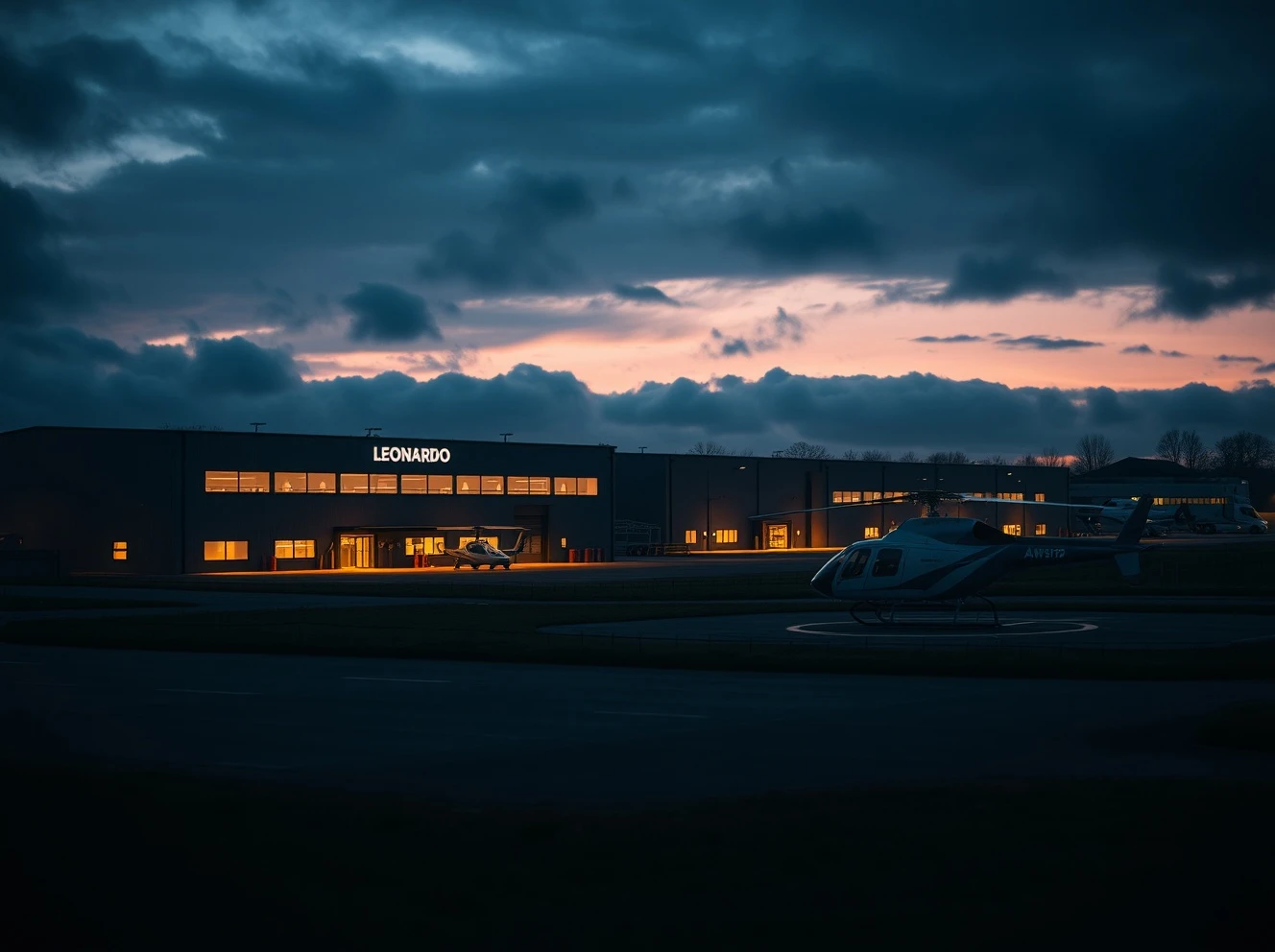
In a stark warning that could reshape Britain’s defence industrial landscape, Leonardo has declared it may exit UK helicopter manufacturing entirely without securing a flagship £1bn Ministry of Defence contract. The Italian defence group’s ultimatum, delivered directly to Defence Secretary John Healey in December 2025, places the future of the country’s last remaining helicopter factory and its 3,300 skilled workers in immediate jeopardy. This development represents not merely a corporate negotiation but a fundamental test of the UK’s commitment to maintaining sovereign aerospace manufacturing capabilities amid global defence realignments.
Leonardo UK helicopter manufacturing at a crossroads
The Yeovil facility in Somerset stands as the direct successor to Westland Helicopters, representing a continuous British helicopter manufacturing lineage spanning decades. Currently, the site builds and supports over 100 helicopters for British armed forces, including the advanced Merlin and Wildcat fleets. Furthermore, it services export orders for customers across the Middle East and North Africa. However, senior executives have consistently emphasized that overseas work alone cannot sustain the factory’s long-term viability. Roberto Cingolani, Leonardo’s Chief Executive, articulated this precarious position clearly in his letter to the defence secretary, stating the £1bn contract to replace the aging Puma helicopter fleet forms the cornerstone of the company’s continued British investment.
Industry analysts note that Leonardo has operated for more than a decade without securing a major new helicopter manufacturing contract from the UK government. This prolonged gap in domestic orders has created what Cingolani described to investors as an unsustainable situation. “We cannot subsidise Yeovil forever,” he stated bluntly last month, highlighting the commercial realities facing the multinational corporation. The absence of the Puma replacement programme, formally known as the New Medium Helicopter (NMH) programme, would compel a comprehensive reassessment of Leonardo’s entire UK footprint. This reassessment would extend beyond helicopter assembly to encompass advanced electronics and cybersecurity divisions, potentially triggering a wider industrial retreat.
The £1bn defence contract showdown
The procurement process for the Puma replacement has narrowed dramatically, leaving Leonardo’s AW149 as the sole remaining contender. Both Airbus, with its H175M, and Lockheed Martin withdrew from the competition last year, citing complex tender requirements and strategic realignments. Leonardo submitted its final, binding bid in April 2025, placing the decision squarely in the hands of ministers. The Ministry of Defence has sought to manage expectations, with a spokesperson confirming the business case remains under “active evaluation” and no final procurement decision has been made. Defence Minister Luke Pollard reinforced this position in the House of Commons, citing commercial sensitivity as the reason for withholding details on aircraft numbers, delivery schedules, or final contract value.
This high-stakes procurement unfolds against a specific political backdrop. Prime Minister Sir Keir Starmer has publicly pledged to significantly increase UK defence spending, committing to raise it to 3% of GDP in the next parliament and to 3.5% by 2035 to meet NATO obligations. Consequently, the Leonardo decision serves as an early, tangible test of whether this political rhetoric will translate into concrete, sustained investment in Britain’s defence manufacturing base. Defence economists point to a critical timing element: delaying the decision risks creating a capability gap as the current Puma fleet, which entered service in the 1970s, approaches obsolescence, while also potentially causing irreversible damage to the UK’s industrial supply chain.
Strategic implications for UK sovereign capability
The potential closure of Yeovil would represent more than the loss of a single factory. It would signify the end of the UK’s sovereign ability to design, manufacture, and upgrade medium and heavy lift military helicopters independently. This capability carries significant strategic weight, ensuring operational sovereignty, controlling technology transfer, and maintaining critical skills during conflicts or geopolitical tensions. A comparative analysis reveals the stark reality:
| Capability | With Yeovil Operational | Without Yeovil |
|---|---|---|
| Frontline Support | Onshore maintenance & upgrade | Dependent on foreign OEMs |
| Technology Control | UK retains design authority | Critical IP held abroad |
| Supply Chain | Integrated UK-wide network | Fragmented or overseas |
| Export Potential | UK can market sovereign product | Limited to broker role |
The site also functions as a central hub for a nationwide network of hundreds of SMEs supplying precision components, avionics, and specialized engineering services. The collapse of this anchor tenant would therefore have a ripple effect far beyond Somerset, threatening high-value engineering jobs across the country. Experts from the Aerospace Technology Institute warn that once such a complex manufacturing ecosystem is dismantled, reconstituting it would be prohibitively expensive and take decades, effectively ceding this sector permanently to international competitors in Italy, the United States, and France.
Economic and employment impacts in focus
The direct employment of 3,300 people at Yeovil represents only the visible portion of the potential economic impact. According to standard aerospace industry multipliers, each direct manufacturing job supports approximately 2.5 additional jobs in the wider supply chain and local economy. This suggests a total employment footprint exceeding 8,000 roles. The factory also serves as a vital apprenticeship provider, training the next generation of aerospace engineers and technicians—skills that are not easily transferable to other UK sectors if the site closes.
Local authorities in Somerset have expressed profound concern, highlighting Yeovil’s identity as an aerospace town for generations. The potential loss would devastate the regional economy, reduce the local tax base, and depopulate skilled workers. Conversely, securing the contract would likely trigger further investment, not only in helicopter assembly but in adjacent high-tech fields like:
- Advanced Composites: Research into next-generation lightweight materials.
- Digital Twins: Developing virtual models for predictive maintenance.
- Autonomous Systems: Integrating AI and drone teaming technologies.
- Sustainable Aviation: Pioneering hybrid-electric propulsion systems.
This innovation pipeline depends critically on the stability provided by a major production contract. Without it, Leonardo’s UK-based research and development would inevitably follow manufacturing capacity overseas, following a pattern witnessed in other former industrial sectors. The Treasury will undoubtedly weigh the immediate cost of the £1bn contract against the long-term fiscal implications of lost corporate taxes, increased welfare costs, and diminished export earnings from a defunct aerospace sector.
Global context and competitor landscape
Leonardo’s warning emerges within a fiercely competitive global defence market. Major nations are actively investing in sovereign aerospace capabilities as geopolitical tensions underscore the strategic risk of over-reliance on foreign suppliers. France, through Airbus Helicopters, maintains a robust domestic manufacturing base. Similarly, the United States protects its industrial base through legislation like the Berry Amendment. The UK’s decision will signal its position in this global realignment. If Yeovil closes, future British military helicopter requirements would almost certainly be met by off-the-shelf purchases from foreign original equipment manufacturers (OEMs), transferring economic value and strategic control abroad permanently.
The AW149 itself is a proven platform, already in service with several international militaries. Selecting it would ensure commonality with allied forces and leverage existing global support networks. However, the core issue transcends the merits of a single aircraft. It concerns the principle of maintaining a minimum viable sovereign industrial capability—a concept that defence planners refer to as “warfighting resilience.” The decision timeline remains opaque, but industry observers suggest a verdict is required within months to prevent Leonardo from initiating contingency plans that could become irreversible, such as diverting capital expenditure to other international facilities or beginning consultations on redundancy procedures.
Conclusion
The ultimatum from Leonardo over UK helicopter manufacturing presents the UK government with a defining choice. On one side rests the substantial financial commitment of a £1bn defence contract for the Puma replacement. On the other lies the probable demise of the nation’s last helicopter factory and the irreversible loss of sovereign aerospace capability. The decision will reveal the practical substance behind political commitments to increased defence spending and industrial strategy. For the 3,300 workers in Yeovil and thousands more in the supply chain, the outcome will determine their economic futures. For the UK’s strategic autonomy, it will answer whether the country intends to remain a manufacturer of advanced military platforms or transition permanently to a buyer and operator of foreign-made equipment. The clock is now ticking on a decision that will echo through Britain’s industrial history for decades to come.
FAQs
Q1: What exactly is Leonardo threatening to do?
Leonardo has warned the UK government that it may be forced to shut down its entire helicopter manufacturing operations in Britain, centered on its Yeovil factory in Somerset, if it fails to win the £1bn contract to replace the Royal Air Force’s Puma helicopter fleet.
Q2: How many jobs are at risk at the Yeovil factory?
Approximately 3,300 people are directly employed at Leonardo’s Yeovil manufacturing site. Industry analysts estimate that an additional 4,000-5,000 jobs in the wider UK supply chain and local economy are indirectly supported by the factory’s operations.
Q3: Why is this contract so critical for Leonardo’s UK operations?
Leonardo has not secured a major new helicopter manufacturing contract from the UK government for over a decade. The Puma replacement programme is viewed as essential for providing the long-term order book and financial certainty needed to justify continued investment in the Yeovil facility and its skilled workforce.
Q4: What helicopter is Leonardo offering for the contract?
Leonardo is offering its AW149 multi-role medium lift helicopter for the New Medium Helicopter (NMH) programme. It is now the sole remaining contender after Airbus and Lockheed Martin withdrew their bids from the competition in 2024.
Q5: When will the UK government make its final decision?
The Ministry of Defence has not announced a specific decision date. Officials state the business case and Leonardo’s bid are under “active evaluation.” Given Leonardo’s public warning and the aging state of the current Puma fleet, a decision is expected to be required within the coming months to prevent irreversible actions by the company.