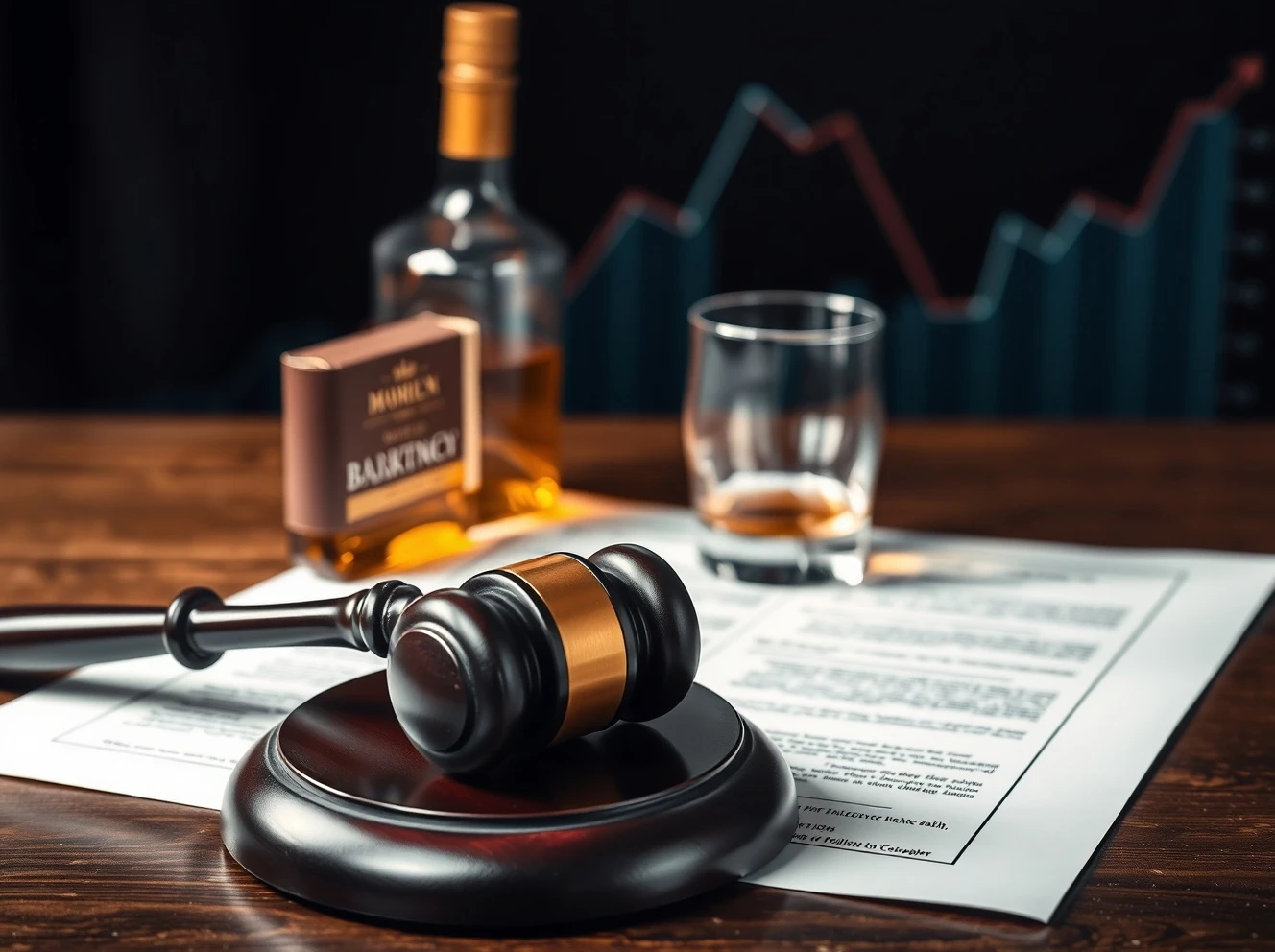
Another U.S. liquor brand files Chapter 11 bankruptcy this month, marking a concerning trend in the American spirits industry as established companies face unprecedented financial pressures. This development follows several high-profile alcohol industry bankruptcies in recent years, signaling deeper structural challenges beyond temporary market fluctuations. Industry analysts now question whether changing consumer preferences, rising production costs, and aggressive competition have created a perfect storm for traditional liquor brands.
Liquor Brand Bankruptcy Signals Industry-Wide Challenges
The recent Chapter 11 filing represents more than just another business failure. It highlights systemic issues affecting alcohol producers nationwide. According to bankruptcy court documents filed in Delaware, the company cited multiple contributing factors. These include declining sales volumes, increased debt burdens, and changing market dynamics. The filing specifically mentions challenges from premiumization trends and direct-to-consumer competition.
Industry data reveals troubling patterns for traditional liquor brands. The Distilled Spirits Council of the United States reports slowing growth in several key categories. Meanwhile, consumer preferences continue shifting toward craft spirits and ready-to-drink alternatives. This particular bankruptcy follows similar filings by other alcohol producers in 2023 and 2024. These cases collectively suggest broader industry distress rather than isolated incidents.
Understanding Chapter 11 Bankruptcy in Alcohol Industry
Chapter 11 bankruptcy provides struggling businesses with legal protection from creditors. This process allows companies to reorganize operations while continuing normal business activities. For liquor brands, this protection is particularly crucial. They must maintain distribution networks and production facilities throughout restructuring. The Alcohol and Tobacco Tax and Trade Bureau (TTB) also plays a significant role in these proceedings.
The bankruptcy process for alcohol companies involves unique regulatory considerations. Federal and state alcohol regulations continue applying during Chapter 11 proceedings. License transfers and approvals require special attention from bankruptcy courts. Additionally, three-tier distribution systems complicate restructuring efforts. Brands must navigate relationships with distributors, retailers, and regulatory bodies simultaneously.
Financial Experts Analyze Liquor Industry Pressures
Financial analysts identify several converging pressures on liquor brands. Rising production costs have significantly impacted profitability across the industry. Glass, packaging, and transportation expenses have increased 15-20% since 2022. Labor costs and energy prices further squeeze margins. Meanwhile, consumer spending patterns show noticeable shifts toward value-oriented purchases.
Market consolidation presents another major challenge. Large conglomerates increasingly dominate shelf space and distribution channels. Smaller and mid-sized brands struggle to maintain visibility and market access. Private equity investments during expansion phases have created additional debt burdens. Many companies now face difficult refinancing situations amid higher interest rates.
Consumer Trends Reshaping Spirits Market Landscape
Changing consumer preferences fundamentally alter the spirits landscape. Health-conscious movements drive reduced alcohol consumption among younger demographics. The “sober curious” trend gains momentum across multiple age groups. Premiumization continues reshaping the market, but not uniformly across all categories. Consumers increasingly seek unique experiences rather than traditional brand loyalty.
The ready-to-drink (RTD) category experiences explosive growth, capturing market share from traditional spirits. Hard seltzers, canned cocktails, and low-alcohol alternatives attract new consumer segments. Craft and local spirits gain popularity at the expense of national brands. These shifts create particular challenges for established liquor companies with legacy product portfolios.
Recent consumer survey data reveals significant behavioral changes:
- Premiumization focus: Consumers trade up within categories but reduce overall consumption
- Experience-driven purchases: Storytelling and authenticity outweigh traditional advertising
- Health considerations: 42% of millennials actively moderate alcohol intake
- Convenience preference: RTD category grows 58% faster than traditional spirits
Historical Context: Alcohol Industry Bankruptcies Timeline
The current liquor brand bankruptcy continues a pattern emerging in recent years. Several notable alcohol companies have sought Chapter 11 protection since 2020. Each case reveals different aspects of industry challenges while sharing common themes. The table below illustrates this troubling progression:
| Year | Company | Primary Factors | Outcome |
|---|---|---|---|
| 2021 | Craft Distillery Group | COVID-19 closures, distribution challenges | Acquired by larger competitor |
| 2022 | Premium Whiskey Producer | Debt from expansion, slowing growth | Successful reorganization |
| 2023 | Vodka Brand Portfolio | Changing preferences, inventory issues | Liquidation of assets |
| 2024 | Regional Gin Distiller | Rising costs, competition | Ongoing proceedings |
| 2025 | Current Filing | Multiple converging pressures | To be determined |
This pattern suggests structural rather than cyclical challenges. Traditional business models face increasing pressure from multiple directions. Companies that expanded aggressively during low-interest periods now confront difficult refinancing environments. Consumer loyalty proves more fragile than many established brands anticipated.
Regulatory Environment and Compliance Costs
Alcohol producers navigate one of America’s most complex regulatory landscapes. The three-tier system creates significant compliance costs and operational challenges. Federal, state, and local regulations often conflict or create contradictory requirements. Recent changes to trade practice regulations further complicate market access for struggling brands.
Tax considerations represent another substantial burden for liquor companies. Federal excise taxes apply to alcohol production and importation. State taxes vary dramatically across jurisdictions. These costs have increased steadily while market prices face downward pressure. Smaller producers particularly struggle with compliance costs relative to their scale.
Distribution regulations present additional hurdles during financial restructuring. Many states prohibit direct changes to distribution agreements during bankruptcy. This limitation complicates necessary operational adjustments. Brands must maintain relationships with distributors while renegotiating other aspects of their business.
Supply Chain and Production Cost Analysis
Production costs have escalated across every aspect of spirits manufacturing. Agricultural inputs face volatility from climate change and global market shifts. Glass bottle production encounters energy-intensive processes with rising fuel costs. Transportation and logistics expenses increased significantly post-pandemic. These factors collectively pressure already thin margins.
Aging requirements for certain spirits create unique financial challenges. Whiskey and other aged products tie up capital for extended periods. This inventory represents significant working capital that cannot be quickly adjusted. Market shifts during aging periods create mismatches between production decisions and consumer preferences.
Impact on Employees, Communities, and Local Economies
Liquor brand bankruptcies affect more than corporate balance sheets. Distilleries often serve as important employers in their communities. These operations frequently support local agriculture through grain purchases. Tourism and hospitality connections create additional economic linkages. Bankruptcy proceedings inevitably create uncertainty for all stakeholders.
Employees face particular challenges during Chapter 11 restructuring. While operations typically continue, workforce reductions often accompany reorganization plans. Benefit programs may be modified or reduced. The uncertainty of bankruptcy proceedings affects morale and retention. Skilled workers in distillation and production may seek more stable employment elsewhere.
Local communities experience ripple effects from distillery financial troubles. Tourism declines when flagship brands struggle financially. Restaurant and bar partnerships suffer from supply uncertainty. Agricultural suppliers lose consistent buyers for their products. These interconnected relationships magnify the impact of a single company’s financial distress.
Future Outlook for Spirits Industry and Potential Adaptations
The current liquor brand bankruptcy may signal necessary industry evolution. Successful companies increasingly demonstrate agility and consumer responsiveness. Digital transformation plays growing roles in direct consumer engagement. Sustainability initiatives address both consumer preferences and operational efficiency. Portfolio diversification helps mitigate category-specific risks.
Several adaptation strategies show promise for traditional spirits companies:
- Portfolio innovation: Developing products for emerging consumer segments
- Direct-to-consumer expansion: Leveraging regulatory changes in key states
- Experiential offerings: Creating destination experiences beyond product sales
- Strategic partnerships: Collaborating with complementary brands and businesses
- Operational efficiency: Implementing technology to reduce production costs
Industry consolidation will likely continue as stronger companies acquire distressed assets. Private equity may play reduced roles given current interest rate environments. Strategic buyers with existing distribution networks hold advantages in acquisition scenarios. The resulting industry structure may feature fewer but more resilient competitors.
Conclusion
Another U.S. liquor brand files Chapter 11 bankruptcy amid challenging market conditions that extend beyond individual company circumstances. This development reflects broader industry transformations as consumer preferences evolve and economic pressures intensify. The spirits sector faces fundamental restructuring as traditional business models confront new realities. While the immediate focus remains on this specific liquor brand bankruptcy, the implications extend throughout the alcohol industry. Companies that successfully adapt to changing conditions may emerge stronger, but the transition period will undoubtedly see further financial distress among less agile competitors. The coming months will reveal whether this represents a temporary correction or permanent industry realignment.
FAQs
Q1: What does Chapter 11 bankruptcy mean for a liquor brand?
Chapter 11 bankruptcy allows a liquor brand to continue operations while reorganizing debts under court supervision. The company maintains control of business decisions but must follow a court-approved plan to repay creditors over time. Production and distribution typically continue throughout the process.
Q2: How common are bankruptcies in the alcohol industry?
Bankruptcies have become increasingly common since 2020, with several notable filings across different spirits categories. While historically rare, changing consumer preferences, rising costs, and market consolidation have created challenging conditions for many traditional brands.
Q3: Can consumers still purchase products from a bankrupt liquor brand?
Yes, consumers can typically still purchase products during Chapter 11 proceedings. Companies usually continue normal operations while restructuring. However, availability may vary by market as distributors adjust to the financial situation.
Q4: What happens to employees when a liquor brand files bankruptcy?
Employees generally continue working during Chapter 11, but the company may implement restructuring that includes workforce reductions. Benefits and compensation may be modified as part of the reorganization plan approved by the bankruptcy court.
Q5: What factors typically lead to liquor brand bankruptcies?
Multiple converging factors often contribute, including declining sales, excessive debt from expansion, rising production costs, changing consumer preferences, increased competition, and regulatory challenges. Most bankruptcies result from several of these pressures occurring simultaneously.