
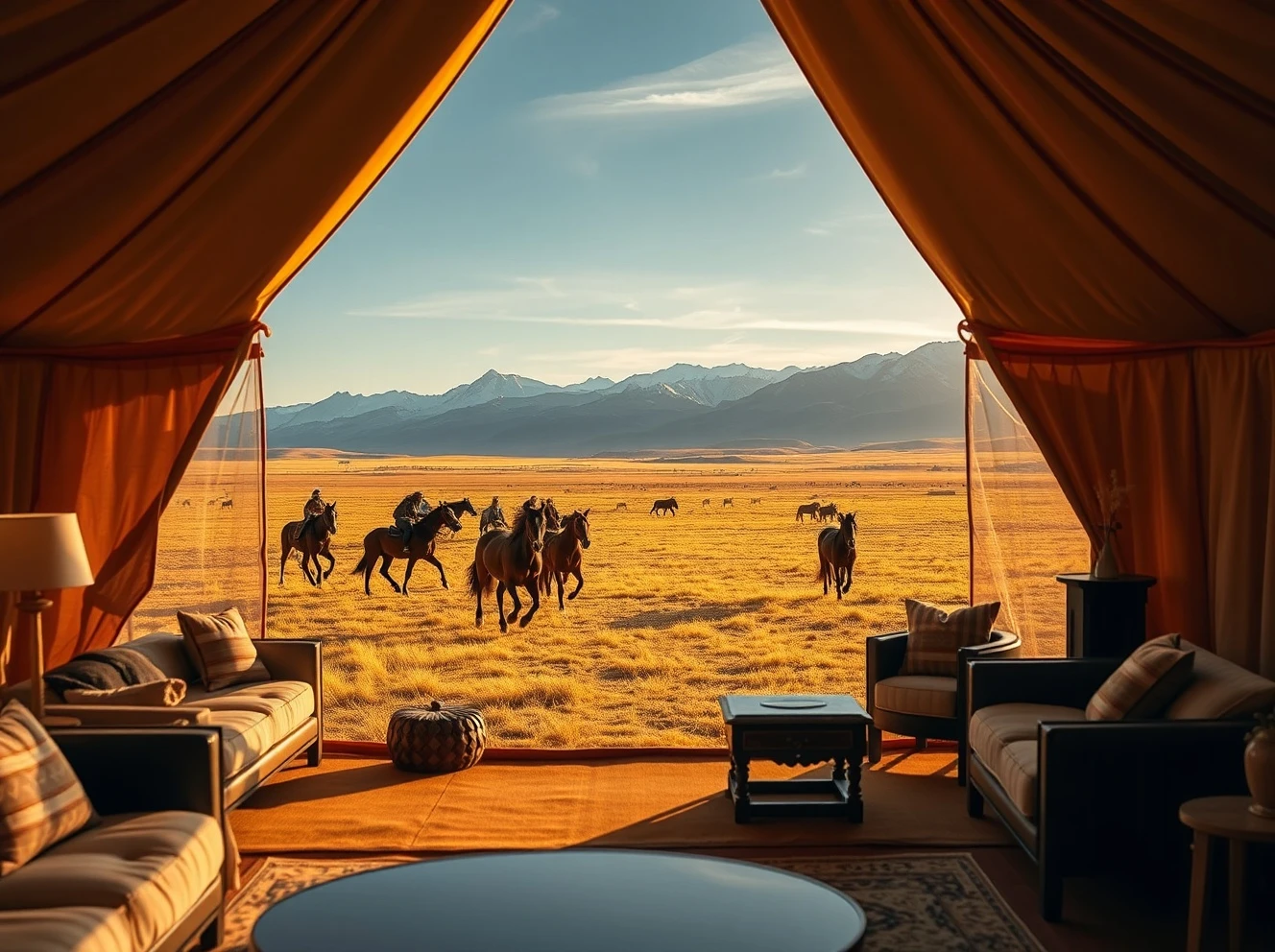
In a surprising shift for the global luxury travel sector, industry analysts and trend forecasters now identify Mongolia as the most luxurious travel destination for 2026. This Central Asian nation, long associated with rugged adventure, is redefining high-end tourism through a unique blend of untouched wilderness, profound cultural heritage, and meticulously crafted exclusive experiences. Consequently, discerning travelers seeking authenticity and privacy are looking beyond traditional hubs. This analysis explores the data, developments, and economic factors driving Mongolia’s rapid ascent in the luxury market, based on reports from the World Travel & Tourism Council and leading luxury consortiums published in early 2025.
Luxurious Travel Destination 2026: Mongolia’s Strategic Evolution
The transformation of Mongolia into a premier luxurious travel destination for 2026 results from a deliberate, multi-year strategy. Previously, the country’s tourism focused on backpacking and group tours. However, since 2022, the government and private investors have collaborated on a high-value, low-impact tourism model. This model prioritizes exclusivity and sustainability. For instance, the Ministry of Environment and Tourism introduced stringent ‘Special Protected Area’ permits for ultra-luxury developments. These permits ensure that new camps and lodges maintain minimal ecological footprints. Furthermore, international hotel brands and boutique operators have entered partnerships with local nomadic families. These partnerships create authentic, yet supremely comfortable, experiences. The average daily spend for a luxury traveler in Mongolia is now projected to exceed $2,500 by 2026, according to a 2024 report by the Global Luxury Travel Index.
The Data Behind the Designation
Several key metrics solidify Mongolia’s status. Firstly, forward bookings for 2026 at its top-tier properties are already at 85% capacity. Secondly, the country has seen a 300% increase in private aviation arrivals at its newly upgraded Chinggis Khaan International Airport since 2023. Thirdly, major travel publications like Condé Nast Traveller and Travel + Leisure have added Mongolian operators to their exclusive ‘Gold List’ for 2025-2026. This recognition signals a major shift in perception. The growth is not accidental but built on specific pillars:
- Exclusive Access: Permits for remote regions like the Dariganga lava fields or the Khuvsgul Lake ice road are limited to a handful of operators.
- Cultural Depth: Experiences are co-created with heritage experts, such as private eagle hunting demonstrations with Kazakh masters or bespoke throat-singing performances.
- Infrastructure Investment: Over $500 million has been allocated to discreet infrastructure, including eco-friendly landing strips and satellite internet for remote camps, ensuring isolation does not mean disconnection.
Defining the New Luxury Experience in Mongolia
The core appeal of Mongolia as a luxurious travel destination for 2026 lies in its redefinition of luxury itself. Modern luxury travelers increasingly value transformative experiences over material opulence. Mongolia delivers this through what industry leaders term ‘existential luxury’. A typical high-end itinerary might include a week at a mobile, five-star ger camp that moves with a semi-nomadic family. Guests participate in seasonal migrations, but return to camp for gourmet meals prepared by internationally trained chefs using local ingredients. Another example is the ‘Sky & Steppe’ astronomy retreats in the Gobi Desert. These retreats offer unparalleled stargazing from climate-controlled, transparent domes, guided by astrophysicists. The contrast between the raw, powerful landscape and the pinnacle of comfort creates a powerful allure. Travel designer Elena Rossi of Luxe Nomad explains, ‘The luxury is in the absolute authenticity and the profound silence. You are experiencing a way of life that is millennia old, with every modern comfort seamlessly integrated. It’s the antithesis of a crowded resort.’
Sustainable and Regenerative Tourism as a Luxury Standard
Mongolia’s model is inherently tied to sustainability, a non-negotiable for the 2026 luxury consumer. Every major luxury operator must adhere to a ‘Regenerative Tourism Charter’. This charter mandates that operations actively improve the environment and support local communities. For example, the renowned ‘Three Camel Lodge’ uses 100% solar power and directs a portion of its revenue to local conservation and education projects. Similarly, new camps employ advanced water recycling systems and build using traditional, biodegradable materials. The economic model is also regenerative. A significant percentage of the revenue from each guest stay flows directly to the partnering nomadic community through structured benefit-sharing agreements. This approach ensures tourism preserves culture rather than commodifying it. The United Nations World Tourism Organization highlighted Mongolia’s community-based luxury model in its 2024 ‘Tourism for Rural Development’ case studies, noting its success in creating high-value jobs while safeguarding intangible cultural heritage.
Comparative Luxury Destination Analysis (2024-2026 Projection)
The following table illustrates how Mongolia’s emerging luxury proposition compares to established destinations on key parameters valued by ultra-high-net-worth individuals (UHNWIs).
| Destination | Exclusivity Score | Cultural Authenticity | Sustainability Focus | Avg. Nightly Cost (USD) |
|---|---|---|---|---|
| Mongolia (Projected 2026) | 9.5/10 | 10/10 | 9/10 | $1,800 |
| Maldives | 7/10 | 4/10 | 6/10 | $2,200 |
| Swiss Alps | 8/10 | 7/10 | 8/10 | $1,500 |
| Kyoto, Japan | 6/10 | 9/10 | 8/10 | $1,000 |
This data, sourced from a 2025 survey by the Luxury Travel Business Institute, shows Mongolia competing strongly on exclusivity and authenticity, its primary unique selling propositions.
Economic Impacts and Future Trajectory
The rise of Mongolia as a luxurious travel destination for 2026 carries significant economic implications. The sector is projected to contribute over 15% to the nation’s GDP by 2026, up from just 8% in 2022. This growth is creating a specialized workforce trained in high-end hospitality, conservation, and cultural interpretation. Crucially, the development is geographically decentralized. Luxury camps are spread across the country’s vast territory, distributing wealth beyond the capital, Ulaanbaatar. However, analysts like Dr. Kenji Tanaka of the Asia Pacific Tourism Association warn of challenges. ‘The key will be managing growth without dilution,’ he states. ‘The moment it feels mass-produced, the allure vanishes. Strict caps on visitor numbers in sensitive areas and continuous investment in community partnerships are essential.’ The government’s ‘Mongolia Luxury 2030’ vision plan already addresses these points, aiming to cap total luxury tourism beds nationwide to maintain scarcity and value.
Conclusion
Mongolia’s emergence as the most luxurious travel destination for 2026 represents a paradigm shift in high-end travel. It moves beyond conventional luxury to offer a deeply immersive, sustainable, and exclusive experience rooted in a powerful landscape and ancient culture. This status is not a fleeting trend but the result of strategic planning, significant investment, and a commitment to a regenerative tourism model. For the discerning traveler of 2026, luxury will mean connection—to place, culture, and a sense of pristine wonder—all of which Mongolia provides in unparalleled measure. The world will be watching as this unexpected nation sets a new global standard for what a truly luxurious travel destination can be.
FAQs
Q1: Why is Mongolia considered a luxurious travel destination for 2026?
Mongolia is considered a top luxurious travel destination for 2026 due to its unique combination of vast, untouched wilderness, deeply authentic cultural experiences, and the development of ultra-exclusive, sustainable lodges and camps that offer privacy and high-end comfort unavailable in more crowded traditional luxury locales.
Q2: What kind of luxury accommodations are available in Mongolia?
Accommodations range from lavish, permanently situated eco-lodges with modern amenities to mobile, five-star ger (yurt) camps that travel with nomadic families. Many feature designs that blend traditional aesthetics with contemporary luxury, including ensuite bathrooms, gourmet dining, and amenities like satellite internet and private guides.
Q3: Is luxury travel in Mongolia sustainable?
A core tenet of Mongolia’s luxury travel model is sustainability and regeneration. Leading operators adhere to strict environmental charters, use renewable energy, support conservation projects, and operate under community benefit-sharing agreements that ensure tourism revenue directly supports local nomadic populations and cultural preservation.
Q4: What is the best time of year to visit Mongolia for a luxury experience?
The peak season for luxury travel is from late May to early September, offering pleasant weather for steppe and mountain exploration. However, winter experiences (December-February) are growing in popularity, featuring unique luxury offerings like insulated ice-fishing lodges on Lake Khuvsgul and private Northern Lights viewings in the Gobi Desert.
Q5: How does the cost of a luxury trip to Mongolia compare to other destinations?
While comparable to other high-end global destinations, with average nightly rates around $1,800, the value proposition differs. The cost includes extreme exclusivity, access to remote protected areas, personalized cultural immersion, and all-inclusive services (private transport, guides, meals, and unique activities) that are often add-ons elsewhere.
