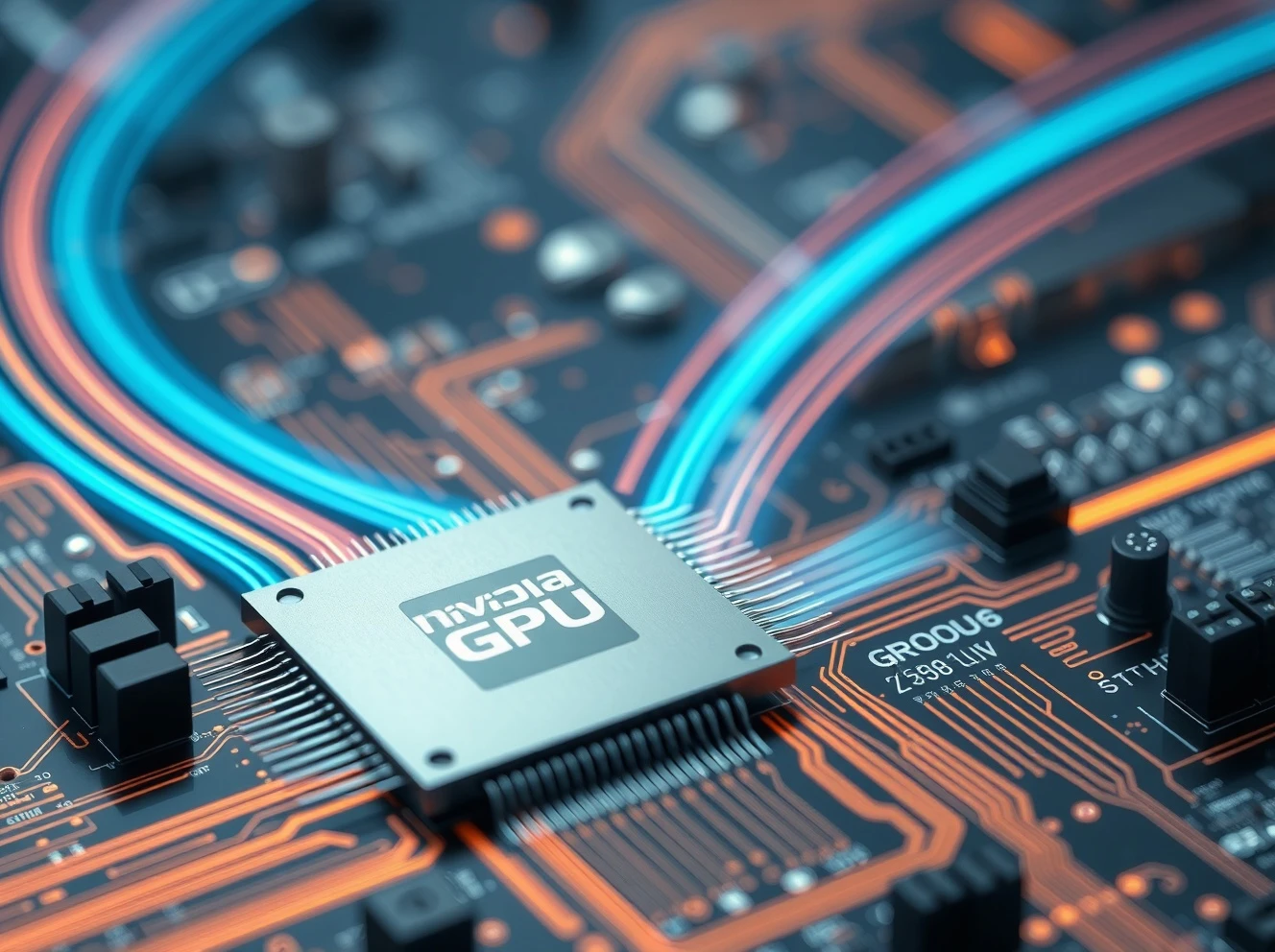
In a landmark move that solidifies its hegemony, Nvidia has strategically acquired the core assets of AI chip startup Groq for a staggering $20 billion. This transaction, announced on December 20, 2025, represents the largest acquisition in Nvidia’s history and a pivotal moment for the global semiconductor industry. Consequently, the deal neutralizes a rising competitor and integrates groundbreaking LPU technology into Nvidia’s portfolio, potentially accelerating AI infrastructure and impacting adjacent sectors like cryptocurrency.
Nvidia’s $20 Billion Groq Deal: The Strategic Imperative
Nvidia’s acquisition of Groq’s assets, including its patents, LPU (Language Processing Unit) technology, and key engineering talent, follows the chipmaker’s ascent to a $4 trillion market capitalization. The $20 billion price tag is nearly triple Groq’s valuation from September 2025, which stood at $6.9 billion after a $750 million funding round. Significantly, this is not a full company buyout; Groq’s cloud division, GroqCloud, will continue to operate independently. However, Nvidia gains control over the revolutionary chip architecture developed by former Google engineers.
This strategic purchase serves multiple objectives for Nvidia. Primarily, it eliminates a direct technological threat. Groq’s LPUs had demonstrated performance claims of being ten times faster and more energy-efficient than traditional GPUs for specific AI workloads, particularly inference for large language models. By integrating this technology, Nvidia can now offer a more comprehensive and dominant suite of AI accelerators. Furthermore, the deal allows Nvidia to onboard Groq’s CEO, Jonathan Ross, and his specialized team, absorbing their expertise in processor design.
Groq’s LPU Technology: The Game-Changer in AI Acceleration
Groq distinguished itself in the crowded AI chip market with its unique LPU architecture. Unlike General-Purpose GPUs (GPGPUs) from Nvidia, which are versatile but can be inefficient for specific tasks, Groq’s LPUs were designed from the ground up for deterministic, low-latency AI inference. This design philosophy resulted in chips that promised significantly higher throughput for running models like ChatGPT or Stable Diffusion while consuming substantially less power.
The technical advantages of LPUs presented a clear challenge to Nvidia’s dominance. For instance, data centers facing skyrocketing electricity costs found Groq’s efficiency claims highly compelling. The table below outlines a simplified comparison of the core architectures:
| Feature | Nvidia GPU (e.g., H100) | Groq LPU (e.g., GroqChip) |
|---|---|---|
| Primary Design | General-purpose parallel computing | Deterministic sequence processing |
| Optimal Use Case | AI Training & Broad HPC | AI Inference & Specific Model Serving |
| Key Claim | Versatility and Ecosystem | Extreme Low Latency & Power Efficiency |
| Programming Model | CUDA (Proprietary) | GroqWare (Software-defined Hardware) |
Analysts note that by acquiring Groq, Nvidia not only gains this technology but also prevents it from being leveraged by other major cloud providers or competitors like AMD or Intel. This consolidation raises Nvidia’s estimated market share in data center AI accelerators even further beyond 80%.
Regulatory Scrutiny and Market Implications
The scale of this acquisition inevitably draws comparisons to Nvidia’s failed $40 billion attempt to acquire Arm in 2022, which was blocked by regulators on antitrust grounds. While the Groq deal involves assets rather than an entire company with a pervasive ecosystem like Arm, it will likely attract scrutiny from bodies like the U.S. Federal Trade Commission and the European Commission. Regulators will examine whether this move stifles innovation in a critical sector for economic and national security.
Market implications are immediate. Investors in Groq, including BlackRock, Samsung, and Cisco, realize an exceptional return. For the broader AI industry, the deal signals that Nvidia is willing to spend aggressively to maintain its pace of innovation and market control. This could lead to increased investment in competing startups, as venture capitalists seek the next disruptive technology, or it could have a chilling effect, discouraging competition against such a formidable and acquisitive leader.
Cryptocurrency Ripple Effect: The Render (RNDR) Connection
The ramifications of Nvidia’s expansion extend into the cryptocurrency ecosystem, particularly for projects reliant on GPU computing power. Render Network (RNDR), a decentralized platform for 3D rendering and AI computation, stands as a prime example. The Render network utilizes a global pool of GPUs, predominantly from Nvidia, to perform complex rendering tasks. Therefore, advancements in Nvidia’s chip performance and efficiency directly benefit the network’s capabilities and cost structure.
Historically, RNDR’s token price has shown sensitivity to Nvidia-related news. A partnership announcement in 2024 correlated with a 60% price increase. Analysts suggest the Groq acquisition could catalyze similar momentum for several key reasons:
- Enhanced Network Performance: Future Nvidia chips integrating LPU efficiencies could make Render node operators more competitive, offering faster or cheaper rendering and AI services.
- Increased AI Workloads: As Nvidia strengthens the AI infrastructure stack, demand for decentralized AI inference and training could grow, opening new use cases for the Render Network.
- Market Sentiment: The deal reinforces Nvidia’s central role in the compute economy, boosting confidence in projects closely aligned with its technology roadmap.
Consequently, some market observers project a potential 20% to 40% appreciation for RNDR if Nvidia’s post-acquisition product cycles lead to tangible improvements in GPU performance for distributed computing. However, this remains speculative and dependent on broader crypto market conditions and the specific integration of Groq’s technology into Nvidia’s consumer and data center lines.
Conclusion
Nvidia’s $20 billion acquisition of Groq’s assets is a defining event in the semiconductor industry. This strategic maneuver consolidates Nvidia’s dominance in AI chips by assimilating a disruptive competitor’s technology. While boosting its own product roadmap, the deal triggers significant regulatory, market, and technological consequences. Furthermore, it illustrates the deepening interconnection between advanced computing hardware and emerging digital economies, including cryptocurrency platforms like Render Network. The ultimate impact will unfold as Nvidia integrates LPU innovations and the market responds to an even more concentrated AI chip landscape.
FAQs
Q1: What did Nvidia actually acquire from Groq?
Nvidia acquired Groq’s key assets, including its LPU (Language Processing Unit) chip technology, related patents, and its core team of engineers and executives. Groq’s cloud service division, GroqCloud, was not part of the deal and will continue to operate separately.
Q2: Why is Groq’s LPU technology considered a threat to Nvidia?
Groq’s LPU chips were designed specifically for AI inference, claiming to be up to ten times faster and more energy-efficient than traditional GPUs for tasks like running large language models. This specialized performance posed a competitive threat in a high-growth segment of the AI chip market where Nvidia dominates.
Q3: Could this acquisition face regulatory blocks like Nvidia’s attempt to buy Arm?
It is possible. Antitrust regulators in the U.S. and EU will scrutinize the deal due to Nvidia’s already dominant market position. However, because it is an asset purchase (not a full company acquisition) of a smaller player, it may face less resistance than the Arm transaction, which involved a foundational semiconductor IP company.
Q4: How does this deal affect cryptocurrency projects like Render (RNDR)?
Render Network relies on GPU compute power, largely from Nvidia hardware. If the acquired Groq technology leads to more powerful and efficient Nvidia GPUs, it could improve the performance and reduce the cost of the Render network, potentially increasing its utility and value. The deal has historically boosted positive sentiment around RNDR.
Q5: What are the long-term implications for the AI industry?
The acquisition further consolidates cutting-edge AI chip development under Nvidia, potentially raising barriers to entry for new competitors. It may drive other tech giants (e.g., Google, Amazon, Microsoft) to intensify their in-house chip design efforts. The industry could see accelerated innovation in specialized AI processors but within a more concentrated market structure.