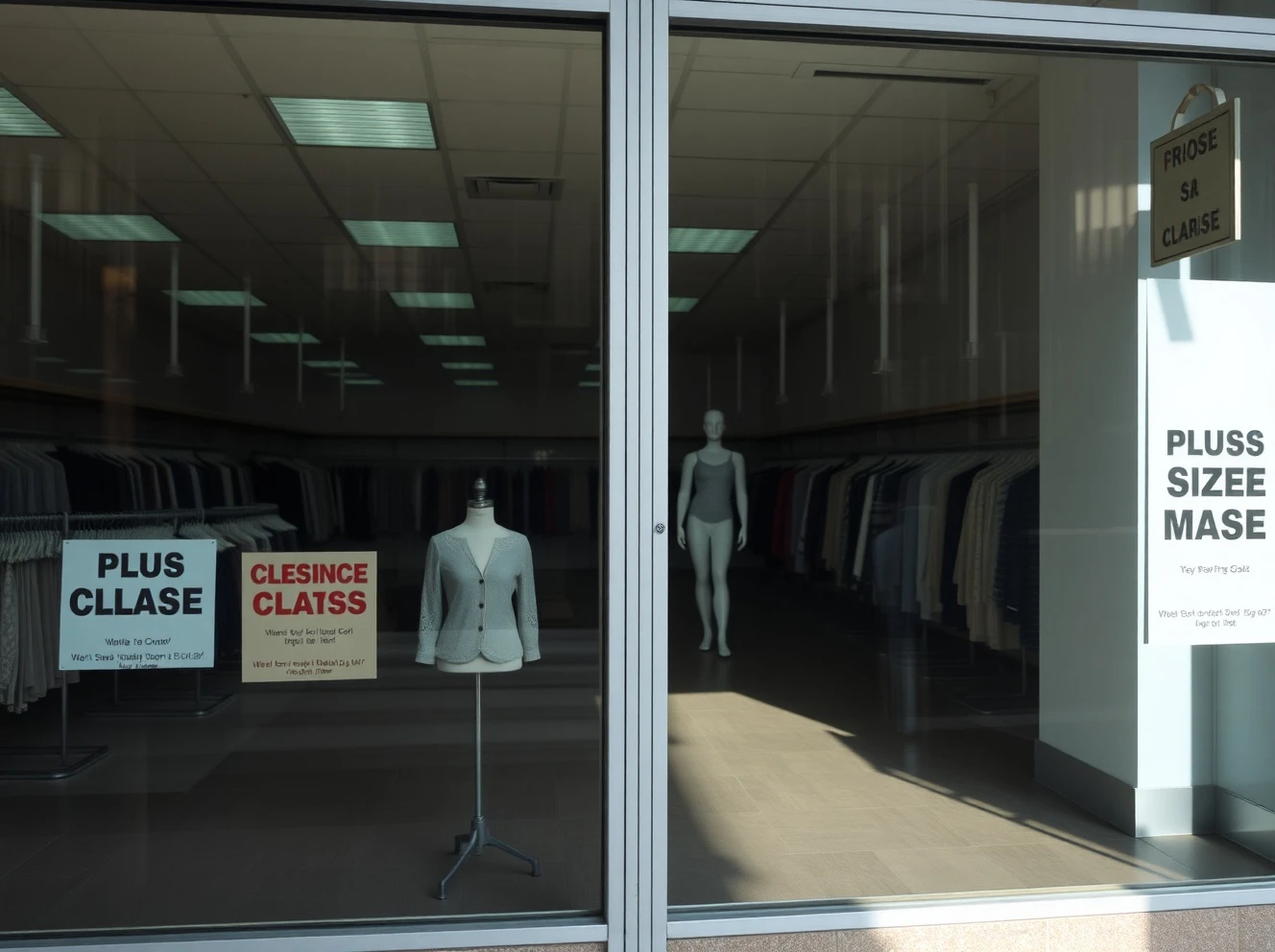
NEW YORK, March 2025 – A federal bankruptcy judge delivered a crushing blow to struggling plus-sized retailer CurveStyle Inc. yesterday, rejecting the company’s Chapter 11 petition and effectively forcing immediate liquidation proceedings. This pivotal ruling represents one of the most significant retail collapses of 2025, potentially affecting thousands of employees and millions of loyal customers nationwide.
Plus-Sized Retailer Bankruptcy Petition Meets Judicial Resistance
U.S. Bankruptcy Judge Eleanor Richardson dismissed CurveStyle’s reorganization plan during a tense hearing in Manhattan’s Southern District. Consequently, the company now faces complete dissolution rather than the restructuring it desperately sought. Judge Richardson cited “insufficient evidence of viability” and “unrealistic financial projections” in her 42-page ruling. Furthermore, she noted that the retailer failed to demonstrate how it would overcome the systemic challenges plaguing specialty apparel sectors.
Court documents reveal that CurveStyle filed for Chapter 11 protection last month with approximately $340 million in debt against only $85 million in assets. The company operated 217 stores across 38 states and maintained a substantial e-commerce presence. However, quarterly reports showed twelve consecutive periods of declining revenue, culminating in a 34% year-over-year sales drop in the most recent quarter.
Retail Liquidation 2025: Broader Sector Implications
This bankruptcy court ruling arrives during a particularly turbulent period for mid-market apparel retailers. Industry analysts observe that several factors converged to create perfect storm conditions. First, shifting consumer preferences toward value-oriented and sustainable fashion eroded traditional brand loyalty. Second, persistent supply chain disruptions increased operational costs by approximately 22% industry-wide. Third, the accelerated shift to digital shopping necessitated technology investments that strained already tight margins.
Retail expert Dr. Marcus Chen of the Global Retail Institute commented, “The CurveStyle case illustrates a fundamental market realignment. Specialty retailers lacking either scale advantages or niche differentiation face existential threats. The judge’s decision reflects judicial skepticism toward turnaround plans that don’t address core competitive weaknesses.”
Timeline of a Retail Collapse
The retailer’s decline followed a predictable but rapid pattern common in recent retail failures:
- 2022: CurveStyle reports peak revenue of $420 million with modest 3% growth
- 2023 Q2: First quarterly loss reported ($4.2 million)
- 2024 Q1: CEO resigns amid restructuring rumors
- 2024 Q3: Credit lines reduced by 40% by major lenders
- 2025 January: Chapter 11 bankruptcy filing
- 2025 March: Bankruptcy petition rejected, liquidation ordered
This timeline demonstrates how quickly market conditions can deteriorate for retailers operating with thin margins and high fixed costs. Notably, the company attempted several turnaround strategies including store closures, private label expansion, and loyalty program enhancements. However, these measures proved insufficient against broader market headwinds.
Fashion Retail Collapse: Consumer and Employment Impacts
The immediate liquidation will trigger several consequential developments. Approximately 3,200 employees will lose their positions, though union representatives indicate some may receive severance packages negotiated during bankruptcy proceedings. Additionally, customers holding gift cards and merchandise credits face uncertain recovery prospects, with unsecured creditors typically receiving pennies on the dollar during liquidation.
Market analysts predict the void in plus-sized fashion retail will create opportunities for remaining competitors. Major retailers like Target and Walmart have expanded their inclusive size offerings in recent years. Meanwhile, direct-to-consumer brands specializing in extended sizing report increased web traffic following the bankruptcy news. This suggests market demand persists despite individual business failures.
The liquidation process will involve several distinct phases:
| Phase | Timeline | Key Activities |
|---|---|---|
| Asset Assessment | 30-45 days | Inventory valuation, lease evaluations, IP assessment |
| Going-Out-of-Business Sales | 60-90 days | Store clearance events, online liquidation |
| Creditor Distribution | 6-12 months | Asset monetization, secured creditor payments |
| Final Dissolution | 12-18 months | Corporate winding down, final filings |
Legal Precedent and Future Implications
Legal scholars highlight this ruling’s potential to influence future bankruptcy proceedings. Judge Richardson emphasized that “speculative recovery projections unsupported by market evidence” cannot form the basis for Chapter 11 approval. This standard may raise the evidentiary bar for other struggling retailers seeking bankruptcy protection. Moreover, the decision reinforces judicial authority to reject reorganization plans that appear destined for failure, potentially saving creditors from prolonged uncertainty.
Bankruptcy attorney Samantha Reyes noted, “This ruling signals that judges are scrutinizing retail turnaround plans with unprecedented rigor. Retailers can no longer assume bankruptcy courts will approve optimistic projections without concrete evidence of market demand and operational viability.”
Conclusion
The rejection of CurveStyle’s plus-sized retailer bankruptcy petition marks a significant moment in 2025’s retail landscape. This development underscores the harsh realities facing mid-market apparel companies in an increasingly competitive and digitally-driven marketplace. While liquidation proceedings will provide some recovery for creditors, the human and economic impacts will reverberate through communities nationwide. Ultimately, this case serves as a cautionary tale about the necessity of continuous adaptation in the volatile retail sector, where consumer preferences and market conditions evolve with accelerating speed.
FAQs
Q1: What happens to gift cards when a retailer enters liquidation?
Customers holding gift cards typically become unsecured creditors. They can file claims during liquidation proceedings but usually receive minimal recovery, often less than 10% of card value.
Q2: How does liquidation differ from bankruptcy restructuring?
Liquidation involves selling all assets to pay creditors before dissolving the business entirely. Restructuring (Chapter 11) allows companies to continue operating while reorganizing debts under court supervision.
Q3: What factors led to this bankruptcy court rejection?
Judge Richardson cited unrealistic financial projections, insufficient evidence of operational viability, and failure to address fundamental competitive weaknesses in the market.
Q4: Will other plus-sized retailers benefit from this closure?
Market analysts predict competitors will capture some displaced demand, particularly value-oriented retailers and direct-to-consumer brands with established plus-sized offerings.
Q5: What protections exist for employees during liquidation?
The WARN Act requires 60-day notice for mass layoffs, and employees may qualify for unemployment benefits. Severance depends on pre-existing agreements and available assets during liquidation.