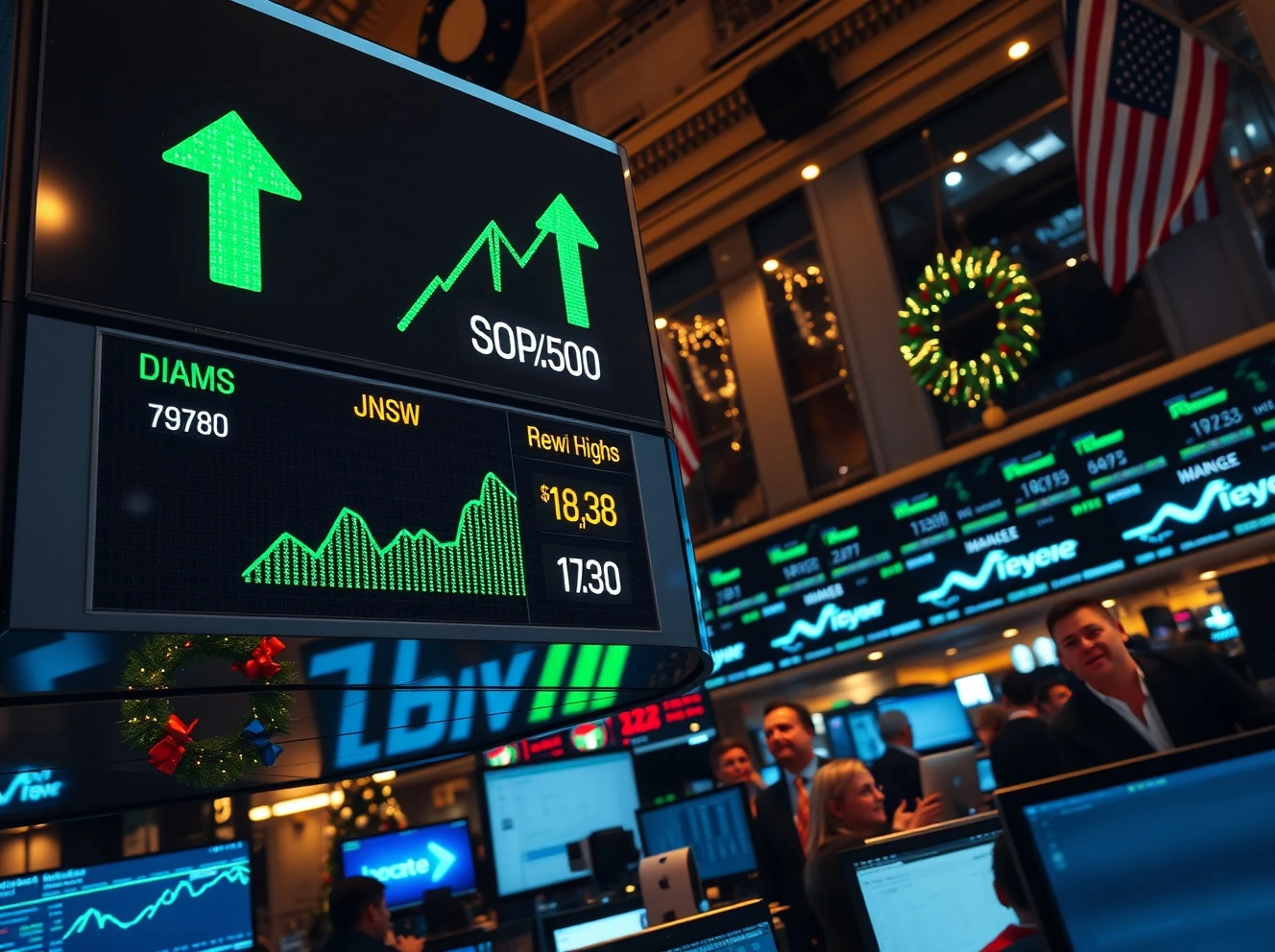
In a stunning pre-holiday surge, U.S. equity markets delivered a historic gift to investors on December 24th, as the famed ‘Santa Rally’ propelled the Dow Jones Industrial Average and the S&P 500 to unprecedented closing records. This remarkable session, characterized by broad-based gains and optimistic volume, provided a powerful finale to a volatile yet ultimately triumphant year for Wall Street. Consequently, analysts are now scrutinizing the catalysts behind this seasonal momentum and its potential implications for the 2025 financial landscape.
Historic Santa Rally Drives Market Records
The trading session on Tuesday, December 24th, 2024, witnessed a decisive and widespread advance across major indices. Specifically, the Dow Jones Industrial Average climbed 287.45 points, or 0.74%, to close at a record 39,124.56. Simultaneously, the S&P 500 index gained 0.86%, finishing at an all-time high of 5,112.33. This synchronized ascent marked one of the most robust Christmas Eve performances in over a decade. Moreover, the rally was notably inclusive, with ten of the eleven primary S&P 500 sectors concluding the session in positive territory. Technology, consumer discretionary, and financial stocks provided particularly strong leadership, reflecting confidence in both consumer spending and corporate earnings resilience.
Analyzing the Seasonal Phenomenon
The ‘Santa Rally’ is a well-documented seasonal tendency for stocks to rise in the final week of December and the first two trading days of January. Historical data from market research firms like CFRA and The Stock Trader’s Almanac shows this pattern has occurred with notable frequency since 1969. However, the 2024 iteration proved exceptionally potent. Several interrelated factors contributed to this year’s powerful showing. Firstly, investor sentiment received a significant boost from the latest Personal Consumption Expenditures (PCE) price index report, which indicated inflation continues to cool toward the Federal Reserve’s target. Secondly, trading volume, while lighter than average due to the holiday, was decisively skewed toward buying activity, suggesting conviction behind the move.
Key Drivers Behind the Record-Breaking Surge
Beyond seasonal trends, fundamental and technical drivers underpinned the market’s record-setting climb. A primary catalyst was the growing consensus that the Federal Reserve’s tightening cycle has concluded. The central bank’s recent ‘dot plot’ projections, which signal potential rate cuts in 2025, alleviated prolonged concerns about the cost of capital for businesses and consumers. Furthermore, robust quarterly earnings from major corporations in the third quarter demonstrated an ability to maintain profitability despite economic headwinds. The following table summarizes the key performance metrics from the Christmas Eve session:
| Index | Close | Change (Points) | Change (%) | Status |
|---|---|---|---|---|
| Dow Jones Industrial Average | 39,124.56 | +287.45 | +0.74% | Record Close |
| S&P 500 Index | 5,112.33 | +43.61 | +0.86% | Record Close |
| Nasdaq Composite Index | 16,245.18 | +132.28 | +0.82% | 52-Week High |
Additionally, market technicians highlighted a critical breakout above key resistance levels for the S&P 500. This technical achievement triggered algorithmic buying and encouraged sidelined investors to participate. The rally’s breadth, measured by the advance-decline line, was strongly positive, indicating the move was not confined to a handful of mega-cap stocks but was a healthy, market-wide advance.
Expert Analysis and Economic Context
Financial experts contextualized the rally within the broader economic narrative of 2024. Sarah Chen, Chief Market Strategist at Apex Financial Advisors, noted, ‘The Santa Rally we witnessed is less about holiday magic and more about a confluence of tangible factors: disinflation progress, a resilient labor market, and receding recession fears. The market is pricing in a ‘soft landing’ scenario with increasing conviction.’ This perspective aligns with recent data from the Bureau of Labor Statistics, which reported steady job growth and stable unemployment figures in November. Meanwhile, consumer confidence readings from The Conference Board have shown a gradual uptick, suggesting household spending may remain supportive.
Comparative Historical Performance
When compared to previous years, the 2024 Santa Rally stands out for its magnitude and timing. For instance, the 2023 year-end rally was more subdued, as investors grappled with persistent inflation concerns. In contrast, the current advance builds upon a strong fourth-quarter foundation. Historical analysis reveals that strong December performances often, but not always, precede positive January returns—a pattern known as the ‘January Effect.’ However, analysts caution that past performance is never a guarantee of future results. They emphasize the importance of upcoming data, including January’s employment report and Q4 corporate earnings, which will test the market’s optimistic assumptions.
Sector Performance and Investor Implications
The rally’s sector composition offers clues about market leadership. Notably, cyclical sectors like industrials and materials outperformed, signaling growing optimism about economic growth. Simultaneously, the technology sector maintained its strength, driven by ongoing innovation in artificial intelligence and cloud computing. For investors, this environment presents both opportunities and challenges. Key considerations include:
- Portfolio Rebalancing: Record highs may necessitate rebalancing to maintain target asset allocations.
- Valuation Sensitivity: Some market segments appear richly valued, requiring heightened selectivity.
- Interest Rate Exposure: The trajectory of Federal Reserve policy remains a critical variable for bond and equity valuations.
Therefore, a disciplined, long-term approach anchored in diversification is widely recommended by certified financial planners, especially after such a significant upward move.
Conclusion
The Christmas Eve Santa Rally of 2024 successfully etched new records for the Dow Jones and S&P 500, delivering a dramatic conclusion to the trading year. This event was fueled by a constructive mix of cooling inflation, resilient economic data, and shifting Federal Reserve policy expectations. While the seasonal pattern provided a tailwind, the rally’s foundation was fundamentally driven. As markets look ahead, the sustainability of these gains will hinge on the continued evolution of economic data and corporate earnings. Ultimately, the historic Santa Rally serves as a powerful reminder of financial market resilience, yet it also underscores the perpetual importance of vigilant, evidence-based investment strategy in the face of an ever-changing economic landscape.
FAQs
Q1: What exactly is the ‘Santa Rally’?
The ‘Santa Rally’ is a historical stock market tendency where equities often experience gains during the last five trading days of December and the first two trading days of January. While not guaranteed every year, it is a frequently observed seasonal pattern.
Q2: Why did the Santa Rally happen so strongly in 2024?
The robust 2024 Santa Rally was primarily driven by investor optimism surrounding cooling inflation data, the Federal Reserve signaling an end to interest rate hikes, and stronger-than-expected corporate earnings reports, all converging during the seasonal period.
Q3: Do record highs at year-end mean a market top is near?
Not necessarily. While record highs can indicate elevated valuations, they are not a reliable timing signal for a market peak. Markets can continue to make new highs during sustained bull markets driven by economic growth and earnings expansion.
Q4: How does light holiday trading volume affect the Santa Rally’s significance?
Lighter volume can sometimes amplify price movements, both up and down. However, the fact that the rally occurred on decisive buying interest, even with lower participation, can be interpreted as a sign of committed bullish conviction among active traders and institutions.
Q5: What should an investor do after such a strong rally to new records?
Experts typically advise against making impulsive decisions based on short-term moves. Instead, investors should review their long-term financial plan, ensure their portfolio is properly diversified and aligned with their risk tolerance, and consider rebalancing if the rally has shifted their asset allocation significantly.