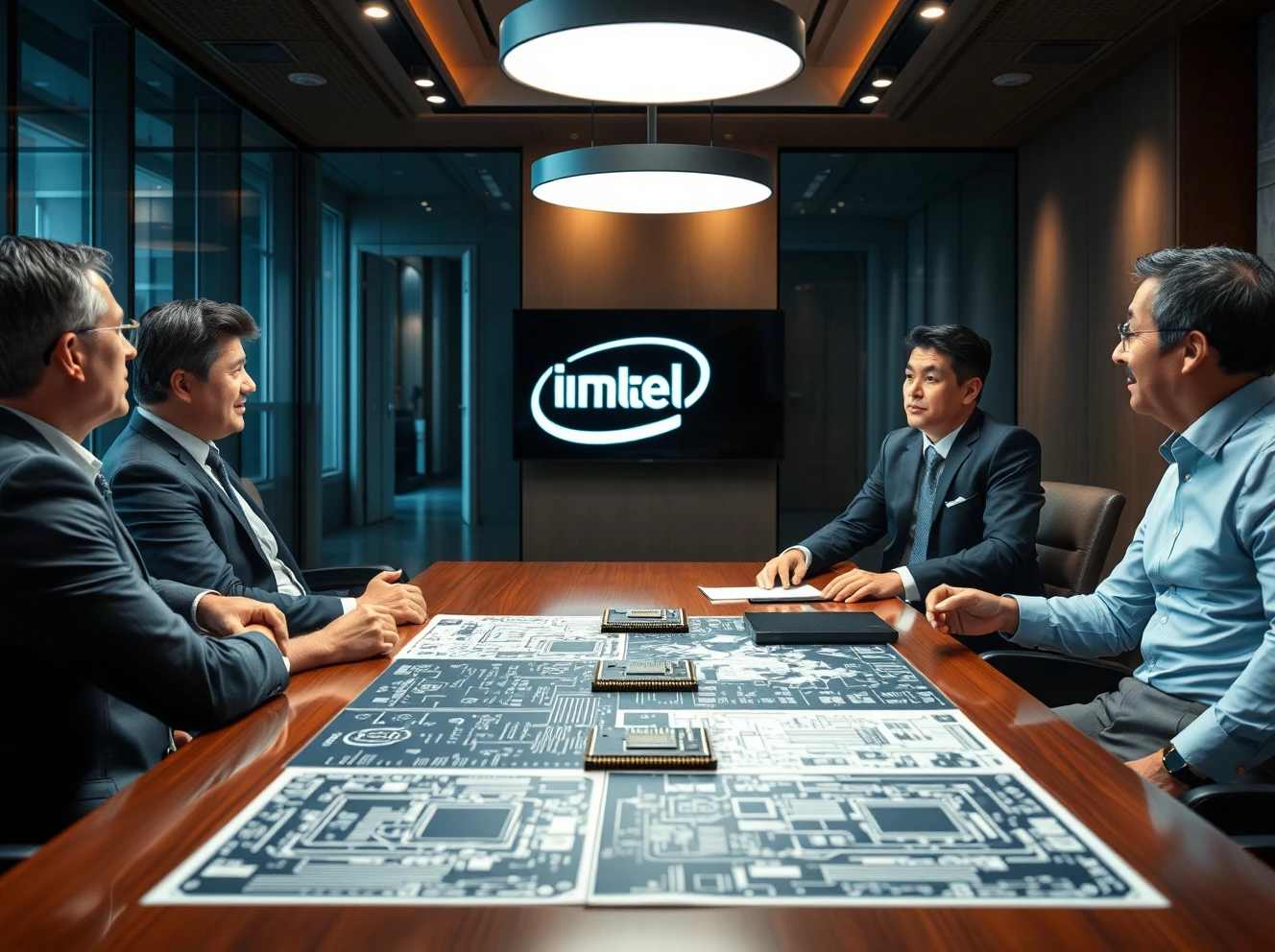
The global semiconductor landscape is undergoing one of the most dramatic shifts in its history, and at the center of this transformation stands the highly anticipated Intel turnaround—a strategic revival backed by none other than SoftBank. As Intel battles years of delays, shrinking market share, and fierce competition from AMD, Nvidia, and TSMC, SoftBank’s bold intervention could represent the lifeline that pushes Intel back into global dominance.
This partnership is more than financial; it’s a powerful synergy of technological ambition, capital strength, and a shared goal to rebuild Intel into a modern semiconductor powerhouse. With the rise of AI, data centers, 5G, and cloud computing, Intel’s turnaround has become mission-critical not only for the company itself but for global tech infrastructure.
Intel’s Struggles: Why the Turnaround Is More Urgent Than Ever
For years, Intel was the undeniable leader in semiconductor technology. However, several major setbacks weakened its position:
- Persistent delays in 7nm and 5nm manufacturing
- Losing Apple’s hardware partnership
- Reduced market share in CPUs to AMD
- Increasing reliance on third-party foundries
- High manufacturing costs
- Competitive pressure from Nvidia in AI and data center markets
These challenges made the Intel turnaround essential—not just optional.
To understand similar market pressures in the tech sector, consider reading:
➡ Big Tech Stocks Peak Analysis
SoftBank’s Bold Strategy: A Lifeline With High Stakes
SoftBank is known for investing in high-impact, future-centric technology companies. Its interest in Intel signals a significant shift in strategy—supporting established tech giants rather than only disruptive startups.
SoftBank’s key strategic goals include:
- Strengthening Intel’s foundry capabilities
- Expanding AI chip architecture
- Integrating ARM-based innovation into Intel platforms
- Supporting U.S.-based semiconductor independence
- Enhancing global chip supply chain resilience
This collaboration could transform Intel into a direct challenger to TSMC and Samsung in advanced chip fabrication.
How AI and ARM Integration Could Accelerate Intel’s Revival
SoftBank’s ownership of ARM gives it unprecedented leverage in global semiconductor design. Integrating ARM technologies with Intel’s manufacturing infrastructure could be a game-changing move.
Potential outcomes:
- New hybrid CPU architectures
- Stronger presence in mobile and low-power devices
- Improved AI inference performance
- Better alignment with modern chip demand
This could address Intel’s biggest weakness: falling behind in innovative chip design.
Intel Foundry Services: The Centerpiece of the Turnaround
The success of Intel’s turnaround heavily relies on the growth of Intel Foundry Services (IFS). With SoftBank’s support, IFS could rapidly expand and compete with global leaders like TSMC.
Strategic advantages include:
- Rebuilding domestic chip production
- Capturing government-funded semiconductor contracts
- Offering fabrication solutions to AI, automotive, and cloud companies
- Reducing global chip shortages
SoftBank’s capital and network connections give Intel a major edge in this new direction.
For further insight into corporate strategies reshaping industries, read:
➡ Carvana Stock Amazon Competition
Why Intel’s Success Matters for Global Technology Infrastructure
Intel remains one of the foundational pillars of global technology. Its success has massive implications for multiple industries:
1. Data Centers and Cloud Computing
Intel chips power millions of servers worldwide. A stronger Intel boosts global cloud efficiency.
2. Automotive & Autonomous Vehicles
Intel’s Mobileye can accelerate self-driving ecosystems if backed by SoftBank’s investment.
3. AI and Machine Learning
The rise of generative AI demands diverse chip architectures—an area where Intel can reemerge as a leader.
4. National Security & Geopolitics
The U.S. government relies on Intel to reduce dependence on Asian foundries.
SoftBank’s Vision: Building a Global Chip Superpower
SoftBank isn’t just investing; it’s pushing for a global semiconductor restructuring. Its strategy aligns with the belief that:
- Chip demand will multiply over the next decade
- AI devices will require massive hardware support
- Cloud and data center growth will explode
- Technological independence will become crucial for world powers
Backing Intel allows SoftBank to capitalize on these megatrends while supporting a crucial U.S.-based manufacturer.
Challenges Intel Must Overcome for a Successful Turnaround
While SoftBank’s involvement is a massive boost, Intel still faces hurdles:
- High cost of manufacturing plant expansions
- Strong competition from Nvidia and AMD
- Market confidence rebuilding
- Reclaiming OEM partnerships
- Achieving execution discipline on new architecture launches
The Intel turnaround will require flawless delivery on technology, leadership vision, and market strategy.
To understand how other companies are struggling with similar external pressures, explore:
➡ Bond Market Crisis Threatens Stocks
Investor Outlook: Can Intel Regain Its Global Leadership?
Analyst sentiment is cautiously optimistic. SoftBank’s involvement signals confidence in Intel’s long-term potential, and the company’s massive investments in new foundries demonstrate commitment to the future.
Positive indicators include:
- Diversification into AI chips
- Restructuring of old business units
- Strong government incentives
- Revived innovation pipeline
- Partnerships accelerating time-to-market
If Intel executes successfully, this could become one of the most significant corporate turnarounds in tech history.
Conclusion
The Intel turnaround backed by SoftBank represents a once-in-a-generation strategic transformation. By combining Intel’s legacy manufacturing expertise with SoftBank’s visionary investment strategy, the semiconductor giant finally has a clear path toward reclaiming leadership in AI, cloud computing, and advanced chip fabrication.
As global demand for semiconductors skyrockets, Intel now stands at a pivotal moment—one that could redefine the balance of power in the global technology industry for decades to come.