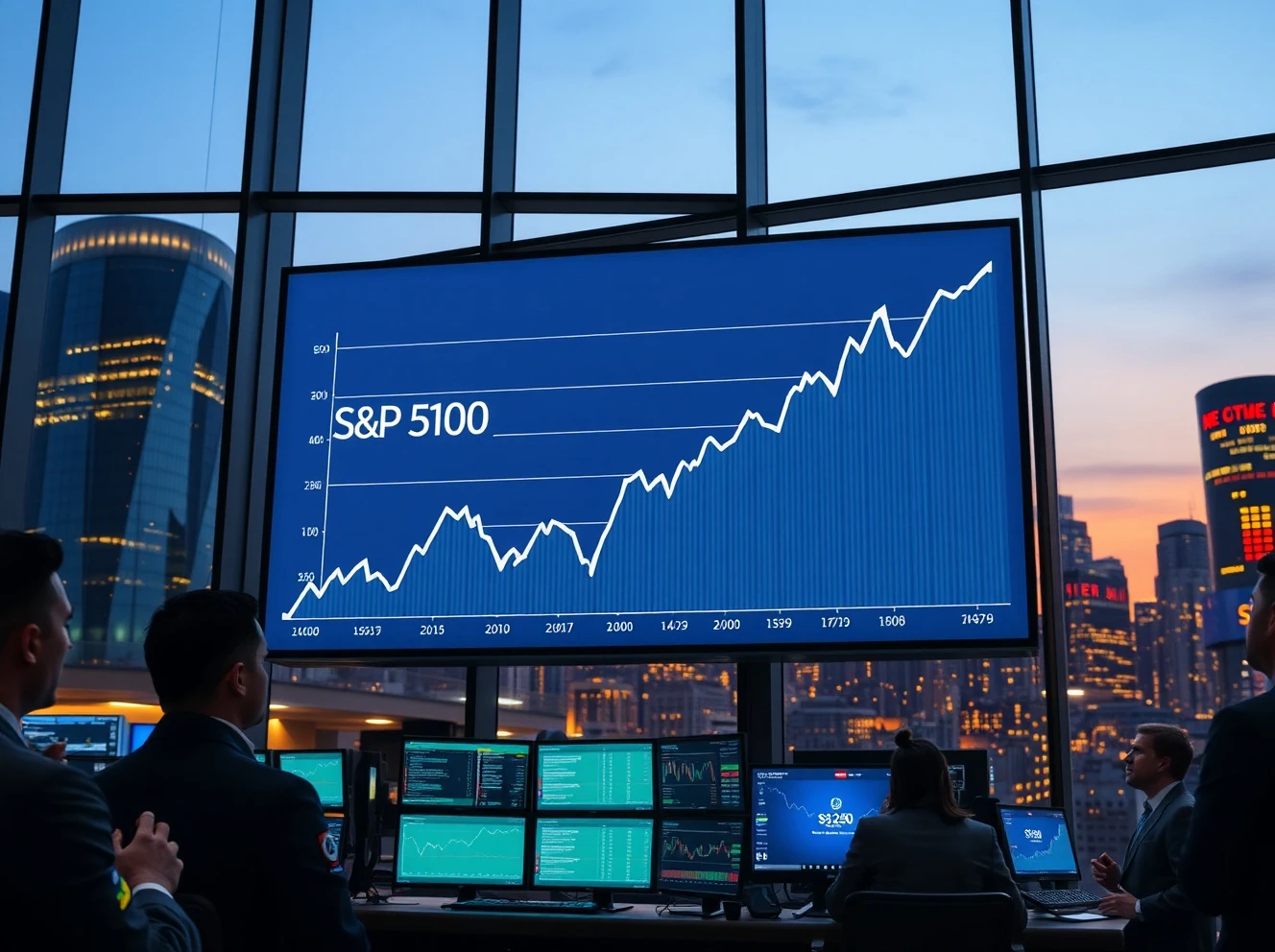
NEW YORK, March 21, 2025 – The S&P 500, the premier benchmark for U.S. large-cap equities, has conclusively broken a significant historical pattern, achieving a performance milestone it has not reached in several years. This development immediately captured the attention of global investors and analysts, prompting a deep re-evaluation of current market conditions and future trajectories. Consequently, the financial world is now scrutinizing the underlying drivers and potential implications of this notable event.
The S&P 500’s Historic Milestone Explained
Market data confirms the S&P 500 index has closed above its 10-month simple moving average for 15 consecutive months. This specific streak represents the longest sustained period above this key technical level since the bull market run of 2016-2018. Historically, maintaining a position above this long-term trend indicator signals persistent bullish momentum and broad investor confidence. Furthermore, this metric often serves as a primary filter for major institutional investment strategies.
Analysis of historical performance reveals the rarity of such an event. For instance, the index accomplished similar feats during the mid-1990s tech expansion and the post-financial crisis recovery. Each prior instance correlated with distinct macroeconomic backdrops, providing crucial context for the current environment. Therefore, understanding this pattern requires examining interest rate cycles, corporate earnings growth, and geopolitical stability.
Analyzing the Drivers Behind the Market Performance
Several interconnected factors contributed to this sustained advance. First, resilient corporate earnings across multiple sectors, particularly technology and healthcare, provided a fundamental foundation. Second, the Federal Reserve’s communicated path toward a neutral monetary policy stance reduced a major source of market volatility. Third, continued innovation in artificial intelligence and renewable energy has created new growth narratives, attracting sustained capital investment.
Comparatively, other major indices show varied performance. The technology-heavy Nasdaq Composite has experienced greater volatility but strong overall gains. Meanwhile, the Dow Jones Industrial Average, with its concentration in industrial and financial stocks, has advanced at a more moderate pace. This divergence highlights the S&P 500’s role as a balanced barometer of the overall U.S. economy.
Expert Perspective on Sustained Trends
Financial historians and market strategists emphasize the importance of context. “While the duration of this trend is notable, it’s not unprecedented,” notes Dr. Evelyn Reed, Chief Market Strategist at the Hamilton Financial Institute. “The critical analysis lies in the quality of the advance. We observe broadening participation beyond a handful of mega-cap stocks, which is a healthier sign for long-term sustainability. However, valuations require careful monitoring.” This expert insight underscores the need for measured interpretation rather than reactionary sentiment.
Potential Impacts on Investors and the Economy
The milestone carries direct implications for various market participants. For retail investors, it reinforces the principle of long-term, disciplined investing through vehicles like index funds. For active fund managers, it presents both an opportunity and a challenge to generate alpha in a steadily rising market. Pension funds and endowments, which rely on equity returns to meet obligations, may see improved funding statuses.
Key economic impacts include:
- Wealth Effect: Rising equity values can boost consumer confidence and spending.
- Corporate Financing: Favorable market conditions ease capital raising for business expansion.
- Retirement Security: Increased 401(k) and IRA account balances improve long-term financial outlooks for millions.
Historical Context and Market Psychology
Examining past periods of extended market strength reveals common psychological phases. Initially, skepticism often dominates as investors await a pullback. Subsequently, gradual acceptance leads to increased participation. Finally, excessive optimism can sometimes emerge, which historically precedes consolidation. The current environment appears positioned between the acceptance and optimism phases, warranting vigilance among participants.
The table below contrasts the current streak with two other notable periods:
| Period | Consecutive Months Above 10-Month SMA | Total S&P 500 Return During Streak | Primary Macro Driver |
|---|---|---|---|
| 1995-1998 | 18 | ~125% | Technology Adoption & Low Inflation |
| 2016-2018 | 16 | ~45% | Corporate Tax Reform & Synchronized Global Growth |
| 2024-2025 (Current) | 15* | ~38%* | AI Productivity Gains & Moderating Inflation |
*Data as of March 2025. This comparison illustrates similarities and differences in market drivers.
Conclusion
The S&P 500’s achievement of a milestone unseen for years marks a significant chapter in financial market history. This event reflects a combination of resilient corporate fundamentals, shifting monetary policy, and technological innovation. While the streak highlights strong bullish momentum, informed investors will continue monitoring valuation metrics, economic data, and geopolitical developments. Ultimately, the S&P 500’s performance serves as a complex but vital indicator of economic health and investor sentiment, demanding nuanced analysis rather than simplistic celebration or caution.
FAQs
Q1: What exactly did the S&P 500 do that it hasn’t done in a long time?
The S&P 500 index closed above its 10-month simple moving average for 15 consecutive months, a sustained technical achievement not seen since the 2016-2018 period. This indicates prolonged bullish momentum.
Q2: Why is the 10-month moving average considered important by analysts?
Many institutional investors and quantitative models use the 10-month (approximately 200-day) moving average as a key long-term trend filter. A sustained position above it is often interpreted as a primary bull market signal.
Q3: Does this milestone guarantee the market will continue to rise?
No single metric guarantees future performance. While historically positive, such milestones indicate the strength of the existing trend. They do not eliminate risks from economic shifts, geopolitical events, or changes in corporate earnings.
Q4: How should a long-term investor react to this news?
A long-term investor should view this as contextual data point within their broader, goals-based financial plan. It may reinforce the benefit of staying invested through cycles but does not, by itself, dictate a change in a disciplined strategy.
Q5: Have other major global stock indices shown similar strength?
Performance has been mixed globally. Some European and Asian indices have advanced, but often with less consistency than the S&P 500, reflecting the relative strength and size of the U.S. economy and its leading corporations in the current cycle.