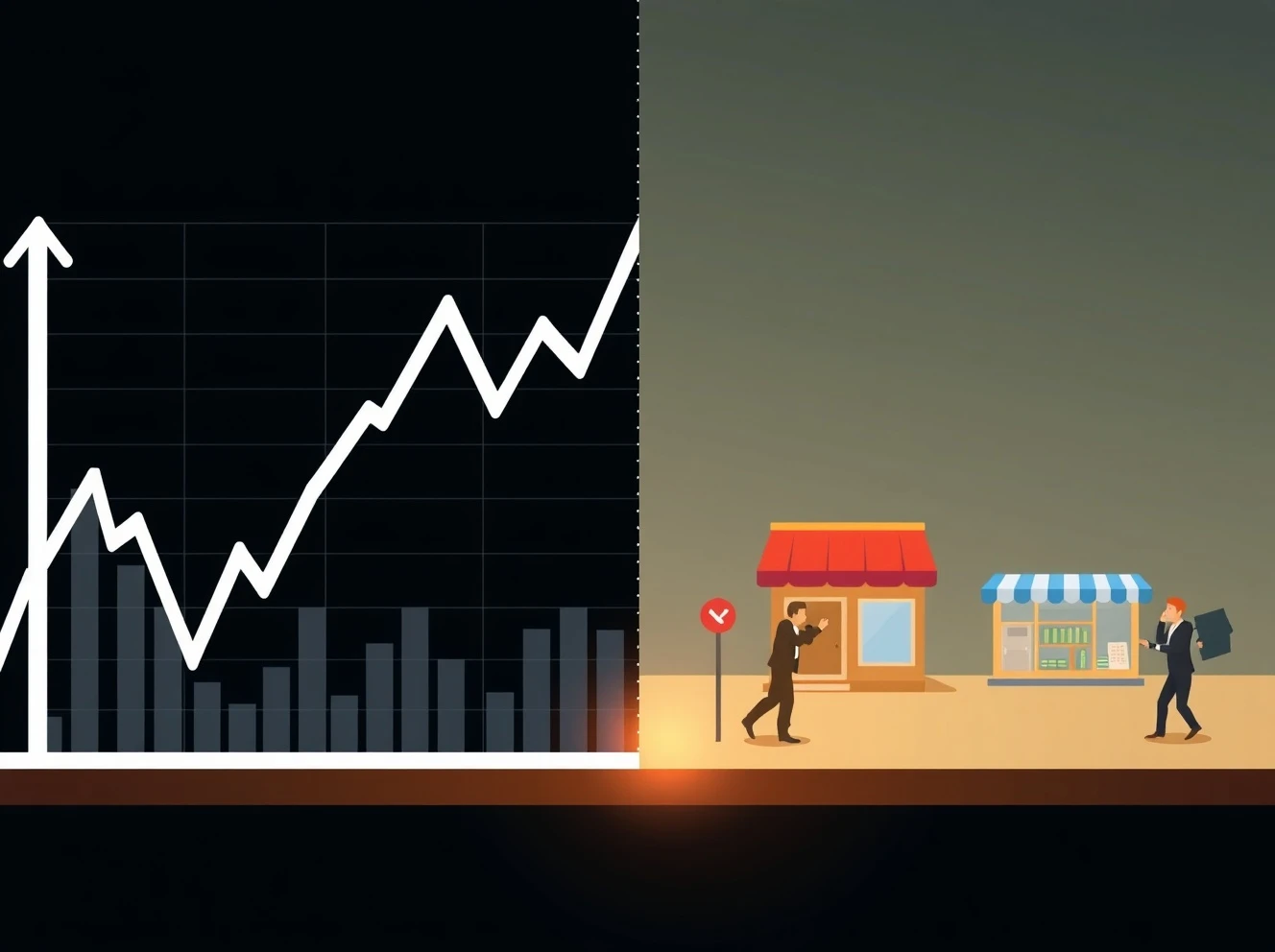
The stock market is often treated as the ultimate indicator of economic health—rising charts imply prosperity, while declines signal danger. But in truth, the stock market frequently paints a misleading picture. Behind the sharp rallies and optimistic earnings reports, deeper structural challenges may remain hidden. Investors, policymakers, and everyday consumers need to recognize the five biggest distortions that the stock market creates, masking the real economic pressures shaping today’s global landscape.
While the markets surge on speculation, hype, and short-term optimism, the underlying economy may be weakening under the surface—a dangerous disconnect that can mislead even experienced investors.
1. Market Gains Often Ignore Real-World Consumer Pain
The first and most significant distortion is the disconnect between Wall Street and Main Street. While the stock market may rally due to strong corporate earnings or favorable Fed guidance, consumers often struggle with:
-
Rising cost of living
-
Wage stagnation
-
Higher interest rates
-
Increasing credit card debt
-
Slow job growth
These pressures create an economy that feels worse for consumers even when the stock charts show upward momentum.
To see how this misalignment affects major corporations, explore:
➡ Big Tech Stocks Peak Analysis
2. Corporate Profits Inflate Market Optimism While Masking Fragile Fundamentals
Many companies beat earnings expectations not because business is booming, but due to:
-
Aggressive cost-cutting
-
Layoffs and workforce reductions
-
Limited investment in future growth
-
Stock buybacks boosting share price artificially
This creates an illusion of financial strength. Markets reward earnings beats—even when they result from temporary tactics rather than sustainable growth.
This is particularly visible in industries struggling with high inventory and weak demand, such as automotive retail. A relevant example can be seen here:
➡ Carvana Stock Amazon Competition
3. The Stock Market Reacts to Headlines, Not Economic Fundamentals
Another dangerous distortion is that markets respond instantly to news—positive or negative—without fully reflecting underlying fundamentals. Stock prices jump or fall based on:
-
Fed speeches
-
Rumored acquisitions
-
Temporary geopolitical events
-
Quarterly earnings headlines
-
Social media hype
-
Analyst upgrades or downgrades
This reactionary environment leads investors to believe the economy is volatile, even when conditions are stable—or stable when conditions are deteriorating.
4. Wealth Concentration in Stocks Creates a False Sense of Prosperity
A major but often overlooked distortion is that the majority of stock wealth is concentrated among the top 10% of earners. Market gains do not reflect widespread prosperity.
The consequences:
-
Rising markets disproportionately benefit wealthy households
-
Middle and lower-income groups remain financially strained
-
Consumer spending weakens despite strong market performance
-
Social and economic inequality widens
This creates a divergence between stock market wealth and real economic well-being.
To explore how this inequality is influencing major business outcomes, read:
➡ Lowe’s Acquisition & Earnings Beat
5. Bond Market Warnings Are Overlooked When Stocks Rally
One of the most dangerous distortions occurs when strong stock performance overshadows warnings from the bond market, which is often a much better predictor of recessions.
Key overlooked signals:
-
Inverted yield curves
-
Rising long-term yields
-
Falling bond prices
-
Liquidity shortages in government securities
-
Increasing credit risk
When investors focus solely on stocks, they may miss fundamental signs of economic deterioration.
A deeper look at these risks can be found here:
➡ Bond Market Crisis Threatens Stocks
The Danger of Believing the Stock Market Reflects Reality
The stock market has become more of a sentiment-driven machine than an economic mirror. It reacts quickly, often irrationally, and increasingly disconnected from everyday experiences. Believing the market equals the economy can lead investors into overconfidence, risky behavior, and vulnerability during downturns.
Key dangers include:
-
Mispricing of risk
-
Sudden market corrections
-
Investor overexposure
-
Economic shocks being ignored until too late
-
Herd mentality fueling bubbles
As markets continue to respond more to hype than fundamentals, understanding these distortions becomes essential for informed decision-making.
Conclusion
The stock market may be thriving on optimism, but real economic conditions tell a far more complex story. Rising consumer debt, weakening demand, corporate layoffs, bond market instability, and widening inequality all paint a picture far removed from what soaring stock prices suggest.
Investors must look beyond the charts, question market narratives, and pay more attention to underlying economic fundamentals. The more dependent we become on stock-driven signals, the greater the risk of being blindsided by economic reality.