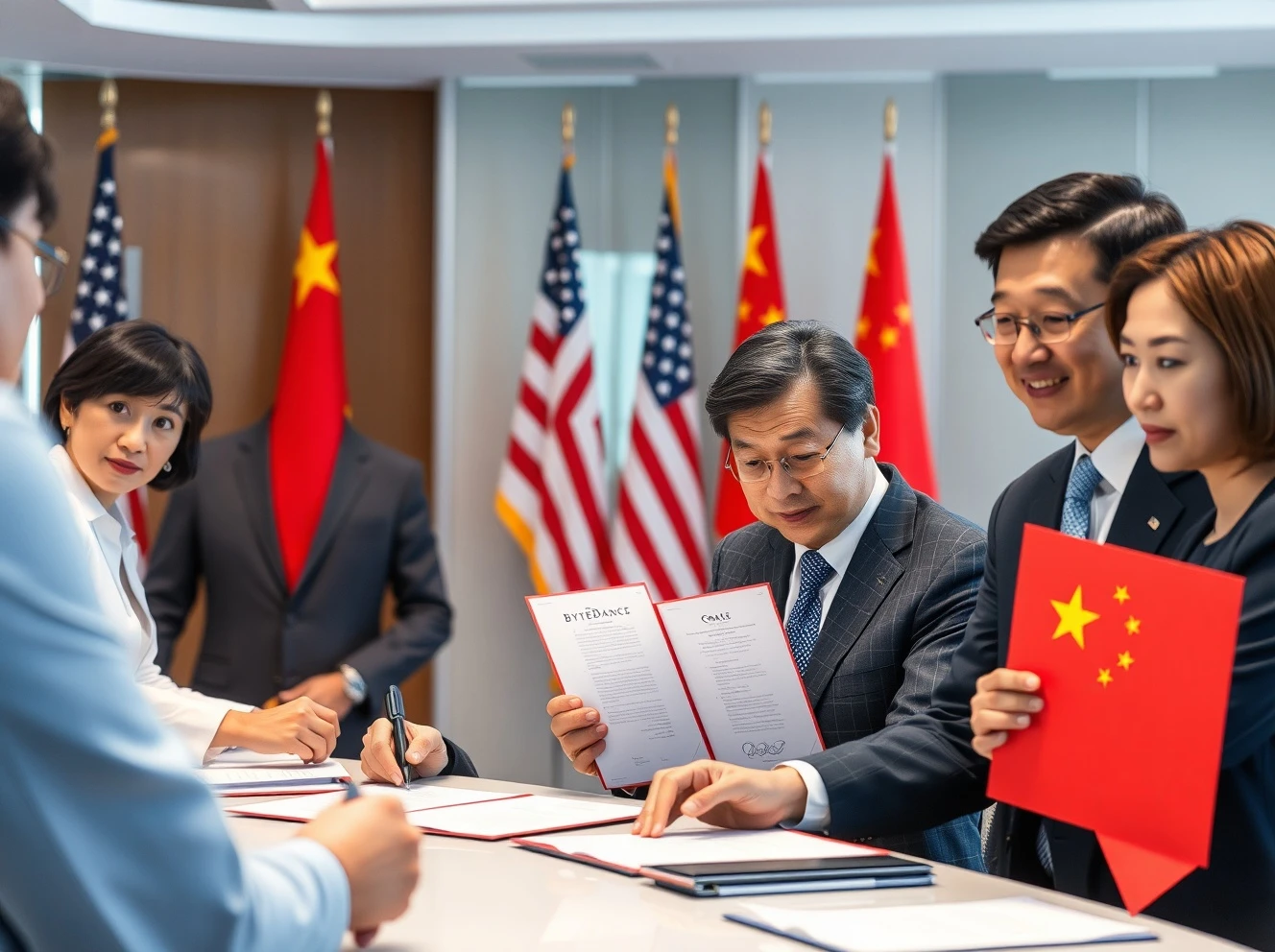
In a decisive move that ends years of political uncertainty, TikTok has secured its future in the United States through a landmark agreement signed on December 19, 2025. The TikTok owner, ByteDance, finalized binding agreements with a consortium of U.S. and international investors, creating a new joint venture that will control the platform’s American operations and avert the threatened ban on national security grounds.
TikTok US Ban Averted Through Complex Ownership Restructuring
TikTok’s chief executive, Shou Zi Chew, confirmed the breakthrough in a memo to staff on Thursday. The agreement establishes a new corporate structure designed to address longstanding concerns about Chinese influence over the popular video-sharing platform. Consequently, this restructuring represents one of the most significant technology deals in recent history, potentially reshaping U.S.-China digital relations.
The transaction, scheduled for completion on January 22, 2026, creates a carefully balanced ownership model. A consortium including Oracle, Silver Lake, and Abu Dhabi-based MGX will collectively own 50% of the new entity. Meanwhile, ByteDance will retain a 19.9% stake, with remaining shares held by affiliates of existing ByteDance investors. Specifically, Oracle, Silver Lake, and MGX will each take 15% holdings.
This arrangement follows a framework unveiled in September 2025, when former President Donald Trump delayed enforcement of legislation that would have banned TikTok unless its U.S. operations were sold. Originally passed by Congress in April 2024 under the Biden administration, that law faced repeated postponements as negotiations continued. The original deadline of January 20, 2025, passed without resolution, highlighting the complexity of the discussions.
Geopolitical Implications of the TikTok Resolution
The path to this agreement has been marked by significant geopolitical tension between the world’s two largest economies. Former President Trump revealed in September that he spoke directly with Chinese President Xi Jinping about the matter, claiming Beijing had given its approval for the restructuring. However, the app’s fate remained uncertain amid ongoing trade disputes and broader strategic rivalry between the nations.
Alvin Graylin, a lecturer at the Massachusetts Institute of Technology, observed that the agreement reflects a notable shift in tone between the powers. He described TikTok as having become “a bargaining chip in the wider U.S.-China relationship,” adding that China’s approval now appears as “calibrated de-escalation” rather than capitulation. This perspective suggests both nations sought compromise rather than confrontation.
National Security Safeguards and Algorithm Concerns
The White House has indicated that Oracle will license TikTok’s recommendation algorithm as part of the arrangement, with specific safeguards designed to address concerns over foreign influence and data security. These measures include:
- Oracle oversight of algorithm operations within U.S. borders
- Regular third-party security audits of data handling practices
- Transparency requirements for algorithmic changes affecting U.S. users
- Independent review boards to monitor compliance with agreed standards
Nevertheless, not all observers believe the deal resolves underlying concerns. Senator Ron Wyden, a Democrat from Oregon, warned that the agreement may do little to protect Americans’ data privacy or prevent algorithmic influence. TikTok has responded by stating its recommendation system will be retrained on U.S. user data to reduce the risk of external manipulation.
Economic Impact on American Businesses and Creators
Among creators and businesses that rely on the platform, reaction has been cautious but hopeful. Tiffany Cianci, a small business owner with hundreds of thousands of TikTok followers, expressed optimism that the new ownership structure would preserve the platform’s appeal to entrepreneurs. “This resolution provides much-needed stability for businesses that have built their marketing strategies around TikTok,” she noted.
TikTok estimates that more than seven million small businesses in the U.S. use the app to market their products and services. The platform has become particularly vital for:
| Business Type | Primary TikTok Use |
|---|---|
| E-commerce brands | Product demonstrations and reviews |
| Local services | Community engagement and promotions |
| Content creators | Audience building and monetization |
| Educational providers | Short-form instructional content |
Industry analysts project that a TikTok ban would have disrupted approximately $24 billion in annual U.S. economic activity tied to the platform. This figure includes advertising revenue, creator earnings, and small business sales directly facilitated through TikTok’s ecosystem.
Technical Implementation and User Experience
The transition to the new joint venture structure will involve significant technical changes behind the scenes while maintaining continuity for users. TikTok has assured its 170 million American users they will experience no disruption to service during the ownership transition. The company emphasized that “over 170 million Americans can continue discovering a world of endless possibilities” on the platform.
Key technical aspects of the implementation include:
- Migration of U.S. user data to Oracle cloud infrastructure with enhanced security protocols
- Establishment of separate algorithm training pipelines for U.S. and international user data
- Creation of independent review processes for content moderation decisions affecting U.S. users
- Implementation of geofencing to ensure U.S. data remains within approved jurisdictions
These measures aim to create what experts call “technological sovereignty”—keeping critical digital infrastructure and data under appropriate national oversight while maintaining global platform functionality.
Conclusion
The landmark deal to avert the TikTok US ban represents a complex compromise between national security concerns, economic realities, and geopolitical diplomacy. With the agreement now signed, TikTok appears to have bought itself stability in its largest overseas market. Whether the new structure fully satisfies lawmakers, regulators, and users alike will become clear only after the joint venture begins operating under its new ownership in January 2026. This resolution may establish important precedents for how nations navigate the intersection of technology, security, and global digital commerce in an increasingly interconnected world.
FAQs
Q1: What exactly does the TikTok deal involve?
The agreement creates a new joint venture to control TikTok’s U.S. operations, with Oracle, Silver Lake, and MGX collectively owning 50%, ByteDance retaining 19.9%, and existing ByteDance investor affiliates holding the remaining shares.
Q2: When will the TikTok ownership change take effect?
The transaction is scheduled for completion on January 22, 2026, following the signing of binding agreements on December 19, 2025.
Q3: How does this address national security concerns about TikTok?
Oracle will license and oversee TikTok’s recommendation algorithm in the U.S., with safeguards including third-party audits, transparency requirements, and independent review boards to monitor compliance.
Q4: Will U.S. TikTok users notice any changes to the app?
TikTok has stated users will experience no disruption to service, though behind-the-scenes changes include migrating U.S. user data to Oracle infrastructure and retraining algorithms on U.S. data.
Q5: What was the original deadline for TikTok to be sold or banned?
Legislation passed in April 2024 set a deadline of January 20, 2025, for TikTok to be sold or face a ban, but this was repeatedly postponed as negotiations continued throughout 2025.