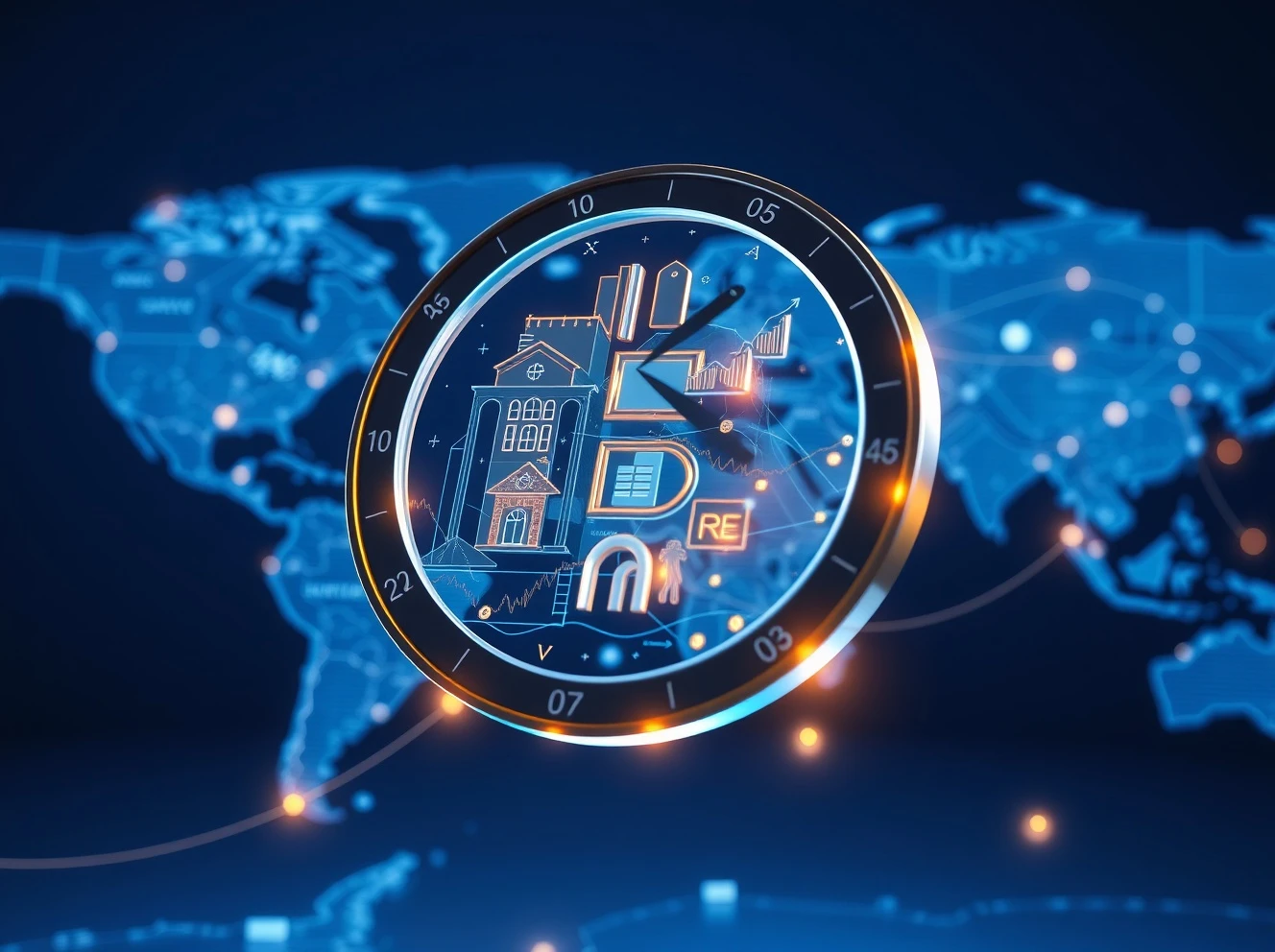
December 25, 2025 – The global financial landscape is undergoing a profound metamorphosis, fundamentally challenging our centuries-old understanding of money. According to Mark Greenberg, a leading executive at the cryptocurrency exchange Kraken, the catalyst for this shift is not a new currency but a revolutionary process: tokenization. This technological innovation, which converts rights to physical and financial assets into digital tokens on a blockchain, promises to dismantle traditional barriers and create a new paradigm of value exchange. The implications extend far beyond cryptocurrency markets, potentially reshaping everything from securities trading to real estate ownership on a global scale.
Understanding the Tokenization Revolution
Tokenization represents a seismic shift in how we perceive and handle value. At its technical core, the process involves creating a unique digital certificate on a distributed ledger, or blockchain, that represents ownership of a real-world asset. This asset can range from traditional securities and real estate to intellectual property and commodities. Consequently, these digital tokens become secure, verifiable, and easily transferable units of value. Greenberg emphasizes that this capability directly addresses a critical inefficiency in legacy systems: settlement latency. For instance, traditional equity trades often require two business days (T+2) to settle, tying up capital and introducing counterparty risk. Tokenization enables instant settlement, a feature that could unlock trillions in currently immobilized capital and dramatically reduce systemic risk.
The Mechanics of Converting Value to Tokens
The tokenization process follows a structured pathway from physical asset to digital fluidity. Initially, a custodian or trusted entity validates and secures the underlying asset, such as a commercial property or a corporate bond. Subsequently, a smart contract—a self-executing agreement coded on the blockchain—mints a corresponding number of digital tokens. Each token symbolizes a fractional share or full ownership right. These tokens then reside in digital wallets, enabling owners to transfer, trade, or use them as collateral across compatible platforms globally, 24/7. This mechanism effectively decouples the proof of ownership from the physical or legal asset, creating a new layer of financial interoperability.
Redefining the Very Concept of Money
Historically, societies have defined money by three primary functions: a store of value, a medium of exchange, and a unit of account. Traditionally, government-issued fiat currency has fulfilled these roles. However, Greenberg’s analysis suggests tokenization expands this definition exponentially. When any high-value, illiquid asset can be digitized, fractionalized, and transferred globally in seconds, it begins to exhibit monetary properties. Therefore, the definition of money evolves from ‘state-issued legal tender’ to ‘any widely accepted, secure, and liquid tokenized store of value.’ This philosophical shift moves the world toward a system where value is programmatic, borderless, and inherently more inclusive.
The practical manifestations of this shift are already emerging. For example:
- Universal Liquidity: A $10 million commercial building can be tokenized into 10 million tokens, each worth $1, enabling micro-investments.
- Borderless Transactions: An investor in Singapore can instantly purchase a token representing a fraction of a vineyard in France without intermediary banks.
- Programmable Value: A tokenized bond can automatically pay interest to holders via its embedded smart contract, eliminating administrative overhead.
Real-World Impact and Institutional Adoption
The momentum behind asset tokenization is accelerating beyond theoretical discussion. Major financial institutions, including global investment banks and asset managers, are launching pilot programs. These initiatives focus on tokenizing instruments like treasury bonds, private equity funds, and money market funds. The driving force is not merely innovation but tangible economic benefit. A comparative analysis reveals stark contrasts:
| Financial Process | Traditional System | Tokenized System |
|---|---|---|
| Settlement Time | 2-3 business days (T+2) | Near-instant (minutes) |
| Market Hours | Limited to exchange hours | 24/7/365 operation |
| Accessibility | Often high minimums | Enabled fractional ownership |
| Transparency | Opaque, layered record-keeping | Immutable, transparent ledger |
| Cross-border Cost | High fees and forex spreads | Dramatically reduced |
This institutional pivot signals a move toward a hybrid financial system. In this system, tokenized versions of conventional assets will coexist with native digital assets like Bitcoin, creating a more interconnected and efficient capital market.
Navigating the Path Forward: Challenges and Solutions
Despite its promise, the widespread adoption of tokenization faces significant hurdles. Regulatory frameworks remain fragmented globally, with jurisdictions like the EU, the UK, and the US taking different approaches to classifying and overseeing digital assets. Furthermore, integrating new blockchain networks with decades-old banking infrastructure presents a substantial technological challenge. Market adoption also requires building trust and understanding among both institutional players and the general public. Overcoming these obstacles necessitates clear regulation, robust cybersecurity standards, and interoperable technical protocols. Industry consortia and regulatory sandboxes are actively working to address these very issues, paving a practical path for integration.
The Future Landscape of Tokenized Finance
Looking ahead to the remainder of the decade, the trajectory points toward an increasingly tokenized economy. We can anticipate the emergence of comprehensive digital asset marketplaces where tokens representing real estate, art, carbon credits, and royalties trade alongside stocks and bonds. This convergence will blur the lines between distinct asset classes, fostering new forms of collateralized lending and composite financial products. The ultimate vision, as outlined by thought leaders like Greenberg, is a financial ecosystem where value moves with the same frictionless ease as information on the internet. This represents not just an upgrade in efficiency but a foundational change in economic participation and access.
Conclusion
The tokenization of assets marks a definitive turning point in financial history. By converting static, illiquid property into dynamic, programmable digital tokens, the technology is constructing a framework for a faster, more transparent, and inclusive financial future. The insights from industry pioneers like Kraken’s Mark Greenberg underscore that this is more than a technical trend; it is a philosophical recalibration of value itself. As institutional pilots become production systems, the revolution is transitioning from promise to practice, redefining global money one token at a time.
FAQs
Q1: What is the primary difference between a cryptocurrency and a tokenized asset?
While both utilize blockchain technology, cryptocurrencies like Bitcoin are native digital assets with no underlying physical claim. Tokenized assets are digital representations of pre-existing real-world assets, such as real estate or corporate bonds, providing ownership rights to that specific underlying value.
Q2: How does tokenization improve financial inclusion?
Tokenization enables fractional ownership, allowing individuals to invest small amounts in high-value assets like commercial real estate or fine art that were previously inaccessible. It also reduces reliance on traditional banking infrastructure for asset transfer, potentially serving unbanked populations.
Q3: What role do smart contracts play in tokenization?
Smart contracts are self-executing code on a blockchain that automate the terms of an agreement. In tokenization, they govern the creation (minting), transfer rules, and associated rights (like dividend payments) of the tokens, ensuring compliance and execution without manual intervention.
Q4: Are tokenized assets considered secure investments?
Security depends on multiple factors: the robustness of the underlying blockchain, the legal structure ensuring the token’s claim to the asset, and the custody solutions safeguarding private keys. While blockchain offers cryptographic security, the legal and operational framework is equally critical.
Q5: What is the biggest barrier to mass adoption of tokenization?
The most significant barrier is currently regulatory clarity and standardization. Without harmonized global regulations defining the legal status, treatment, and investor protections for tokenized assets, large-scale institutional adoption remains cautious and fragmented.