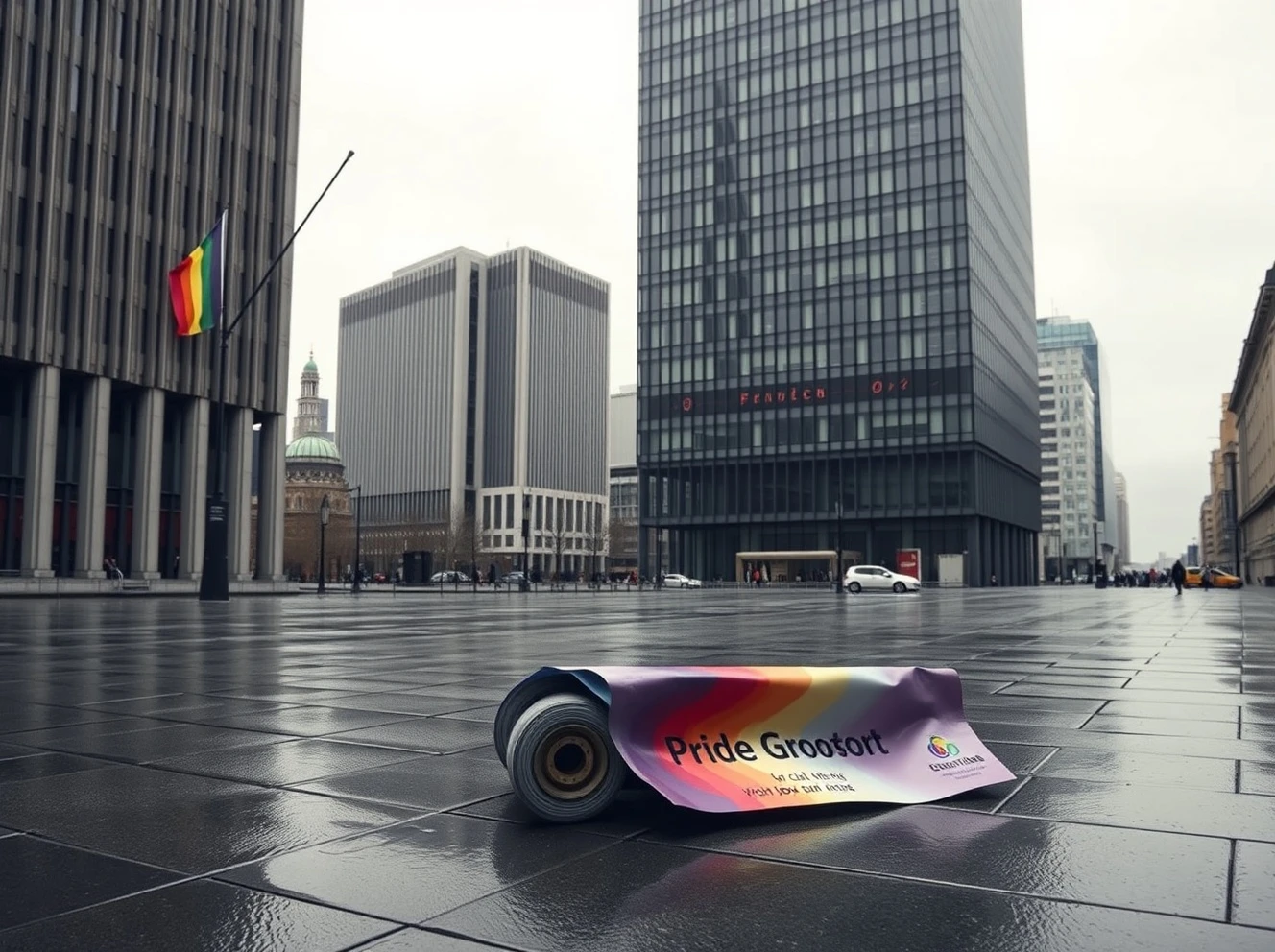
LONDON, December 2025 – A stark corporate retreat from public support for Pride events and diversity initiatives is reshaping the business landscape across the United Kingdom. Analysis reveals a precipitous drop in corporate engagement, with mentions from major UK companies falling by over 90% since 2023. This dramatic shift mirrors a parallel movement in the United States, creating a transatlantic trend that signals a fundamental reassessment of how businesses engage with social causes. The data points to a clear and accelerating corporate DEI retreat, driven by political pressure and a rapidly evolving cultural climate.
UK Pride Support Decline Reaches Critical Levels
Corporate backing has long been a financial and visibility cornerstone for Pride events nationwide. However, recent research presents a sobering picture of withdrawal. The UK Pride Organisers Network reports that 75% of event organisers have experienced a decline in corporate partnerships this year. A quarter of those report sponsorship income has been slashed by more than half. This financial impact threatens the scale and viability of future events, which traditionally commemorate the 1969 Stonewall riots and promote LGBTQ+ visibility.
Social media analysis of the ten largest UK-headquartered companies shows a near evaporation of public support. Pride-related posts on customer-facing accounts plummeted to just four in 2025, compared to 52 in 2023. This metric includes posts about Pride Month, event sponsorship, and internal employee network support. The decline is not merely a reduction but a near-silence, indicating a strategic shift in corporate communications and brand alignment.
The Tangible Impact on Community Events
Pride organisers now face significant budget shortfalls. Corporate sponsorships historically covered costs for security, staging, and community outreach programs. The funding gap forces difficult choices: scaling back events, increasing ticket prices, or seeking alternative public funding. This retreat risks undermining decades of progress in workplace inclusion and public visibility for the LGBTQ+ community. Campaigners warn that corporate silence can be interpreted as tacit approval for rising intolerance.
Corporate DEI Retreat Follows US Political Lead
The UK trend closely tracks a more aggressive corporate DEI retreat unfolding in the United States. Since returning to the White House, the Trump administration has launched a concerted pushback against diversity programs. A series of executive orders target what the administration terms “illegal DEI” initiatives within federal institutions. These actions have created a chilling effect, prompting widespread reassessment in the private sector.
State-level actions in the US have further intensified the climate. Utah pioneered legislation banning LGBTQ+ flags on government buildings and schools. Several other states are debating similar measures. For multinational corporations with significant exposure in both UK and US markets, this political landscape necessitates extreme caution. Business leaders privately express a desire to avoid becoming embroiled in increasingly polarized cultural debates, opting for neutrality over advocacy.
Key drivers of the corporate pullback include:
- Political and Legal Risk: Fear of backlash, litigation, or becoming a political target.
- Shareholder Pressure: Increased scrutiny on ESG (Environmental, Social, and Governance) spending and its perceived return on investment.
- Cultural Polarization: A desire to avoid alienating any segment of a consumer or employee base.
- Economic Headwinds: A challenging economic climate prompting cuts to perceived non-essential expenditures.
Transatlantic Data Comparison
The following table illustrates the parallel decline in corporate social media engagement with Pride across major UK and US firms, based on analysis of Facebook, Instagram, and X accounts:
| Metric | 2023 | 2024 | 2025 |
|---|---|---|---|
| Total Pride-Related Posts (Top 10 UK Cos) | 52 | 18 | 4 |
| Total Pride-Related Posts (Top 10 US Cos) | 61 | 22 | 7 |
| Reported Sponsorship Withdrawals | Minor | Significant | Widespread |
Business Strategy and the Future of Corporate Advocacy
This corporate DEI retreat represents more than a budget cut. It signifies a strategic pivot in how businesses view their public role. The era of vocal, public alignment with social justice causes appears to be contracting. Companies are now opting for lower-profile engagement strategies or withdrawing support entirely. Some are refocusing diversity efforts internally on employee resource groups, while ceasing external marketing tied to Pride.
Business leaders argue this shift is pragmatic. They aim to navigate a complex environment where consumer and political attitudes are fragmented. However, critics contend that this retreat abandons a moral commitment and exposes vulnerable communities. They argue that corporate influence was crucial in normalizing LGBTQ+ rights and that its withdrawal creates a vacuum others may fill with intolerance.
The Internal-External Disconnect
Evidence suggests a divergence between internal policy and external branding. Many companies maintain internal LGBTQ+ networks and non-discrimination policies while stripping Pride branding from products and marketing. This creates a paradox: support exists behind closed doors but vanishes in public view. This approach attempts to balance employee expectations with perceived market risks, but it may satisfy neither group in the long term.
Conclusion
The data from 2025 confirms an undeniable and accelerating trend: a major corporate DEI retreat is underway, with UK Pride support decline as one of its most visible symptoms. This shift, echoing US political developments, moves businesses toward a more neutral public stance. The long-term consequences for social progress, corporate reputation, and community funding remain uncertain. What is clear is that the relationship between big business and social advocacy is being fundamentally rewritten, with Pride events serving as an early and significant casualty in this wider reassessment.
FAQs
Q1: What is the main evidence for the decline in UK corporate Pride support?
The primary evidence comes from social media analysis showing a >90% drop in Pride-related posts from major UK companies since 2023, and survey data from the UK Pride Organisers Network indicating 75% of events have lost corporate partners in 2025.
Q2: How does the US political climate affect UK companies?
Many large UK companies are multinational with significant operations in the US. Political and legal actions against DEI initiatives in the US create global compliance and reputational risks, causing corporations to harmonize policies cautiously across all markets, often scaling back to the lowest common denominator.
Q3: Are companies ending all diversity and inclusion work?
Not necessarily. The retreat is most visible in public marketing, sponsorship, and external branding. Many firms continue internal DEI programs, employee resource groups, and non-discrimination training, but are ceasing public-facing campaigns associated with Pride or other social justice movements.
Q4: What impact does losing corporate sponsorship have on Pride events?
Sponsorship losses create direct financial shortfalls, potentially leading to smaller, less secure, or more expensive events. It can reduce production quality, limit community outreach programs, and threaten the long-term viability of some local Pride celebrations.
Q5: Is this trend likely to continue beyond 2025?
Analysts suggest the trend may continue or stabilize at a new, lower level of corporate engagement. A reversal would likely require a significant decrease in political polarization, a shift in consumer demand for corporate activism, or new legal frameworks protecting corporate social advocacy.