In a landmark demonstration of decentralized governance, the Uniswap community has overwhelmingly approved a transformative proposal that will permanently burn 100 million UNI tokens and activate a long-anticipated fee mechanism. This historic decision, finalized on December 26, 2025, represents one of the most significant economic changes in decentralized finance history and fundamentally alters UNI’s value proposition within the cryptocurrency ecosystem.
Uniswap Governance Proposal Details and Voting Results
The UNIFICation proposal received unprecedented support from the Uniswap decentralized autonomous organization (DAO). Community members cast 125.34 million votes in favor with only 742 opposing votes, achieving a 99.99% approval rate. This near-unanimous consensus demonstrates strong alignment among UNI token holders regarding the protocol’s economic future. Founder Hayden Adams announced the successful vote outcome through official channels, confirming immediate implementation of both primary components.
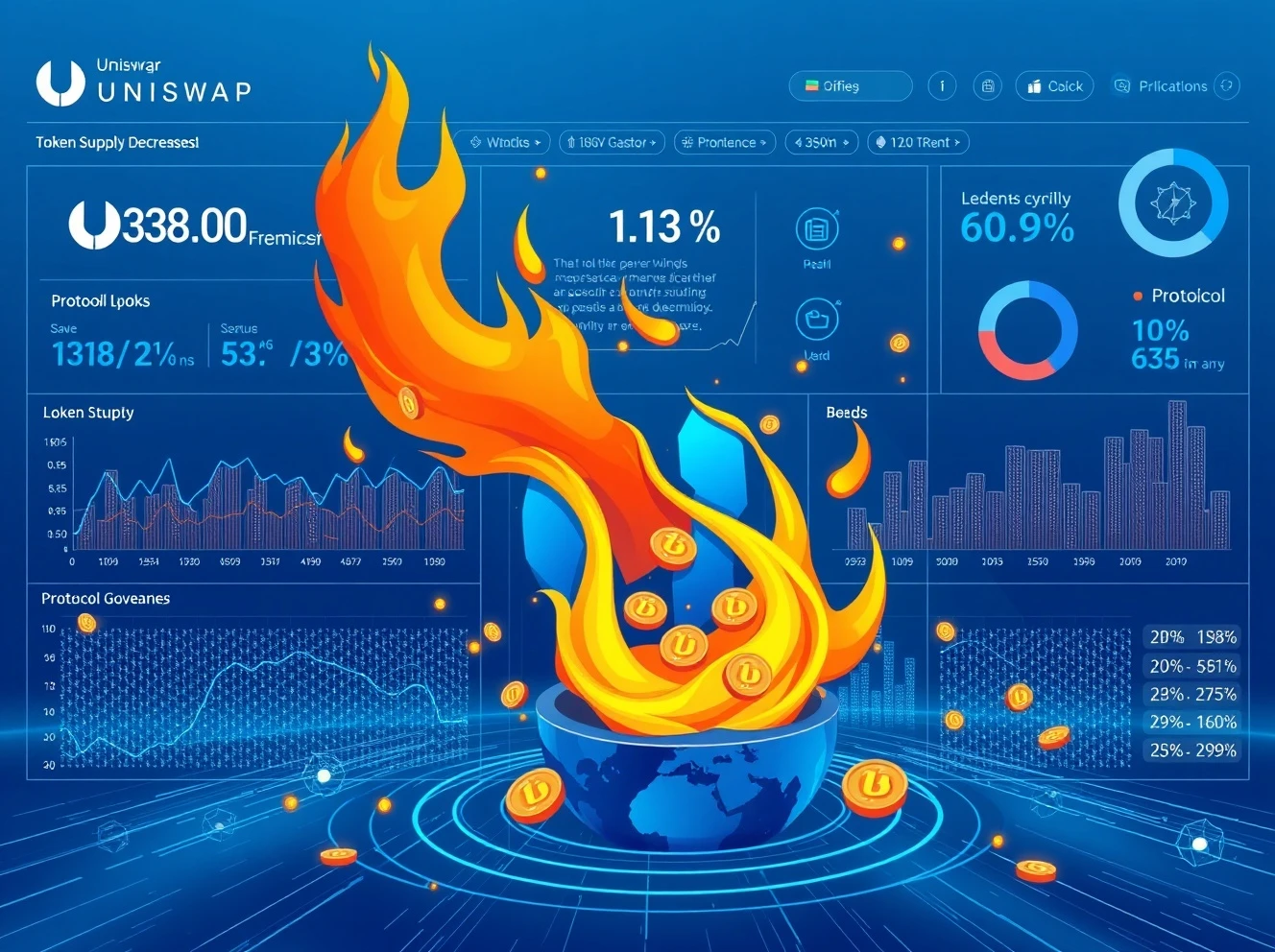
The proposal’s dual mechanisms work synergistically to enhance UNI’s economic model. First, the immediate treasury burn removes 100 million UNI from circulation, representing approximately 10% of the total supply. Second, the activated fee switch enables the protocol to collect a percentage of trading fees on the Ethereum mainnet, with collected UNI tokens subsequently burned rather than accumulated. This creates a continuous deflationary mechanism tied directly to protocol usage.
Economic Implications of the UNI Token Burn
Token burning represents a deliberate reduction in cryptocurrency supply, creating potential scarcity effects when demand remains constant or increases. The 100 million UNI removal constitutes a substantial supply shock, immediately decreasing circulating tokens available to market participants. Historically, similar burns in other cryptocurrency projects have correlated with increased price stability and value appreciation, though outcomes vary based on broader market conditions and adoption metrics.
This strategic move addresses long-standing discussions about UNI’s tokenomics, which previously focused primarily on governance utility rather than direct value accrual. By implementing deflationary mechanics, the Uniswap DAO aligns token holder interests more closely with protocol success. The decision follows extensive community debate and economic modeling, reflecting mature decentralized governance processes within the DeFi sector.
Comparative Analysis of Major DeFi Token Burns
Several prominent decentralized finance protocols have implemented token burns with varying economic outcomes. Ethereum’s EIP-1559 introduced a continuous burn mechanism for transaction fees, reducing net issuance significantly during high network activity. Binance Coin (BNB) employs quarterly burns based on exchange volume, systematically decreasing total supply over time. The Uniswap approach combines immediate supply reduction with ongoing burning tied to protocol revenue, creating a hybrid model unique among major DEX tokens.
| Protocol | Burn Mechanism | Annual Reduction Rate | Economic Impact |
|---|---|---|---|
| Uniswap (New) | Initial 100M burn + fee revenue burn | Variable based on volume | Supply shock + continuous deflation |
| Ethereum | Transaction fee burn (EIP-1559) | 0.5-2% during high activity | Reduced net issuance |
| Binance Coin | Quarterly burns based on volume | Approximately 1-3% | Predictable supply decrease |
| PancakeSwap | Token buyback and burn program | Variable based on revenue | Market-driven supply reduction |
Fee Mechanism Activation and Protocol Economics
The activated fee switch represents a fundamental shift in Uniswap’s economic structure. For the first time on the Ethereum mainnet, the protocol will capture a percentage of trading fees generated through its liquidity pools. This revenue stream creates sustainable funding for protocol development and maintenance while simultaneously implementing the burn mechanism. The specific fee percentage remains adjustable through future governance proposals, providing flexibility as market conditions evolve.
Key aspects of the fee mechanism include:
- Revenue Generation: Creates a direct income stream for protocol sustainability
- Continuous Burning: All collected UNI fees undergo permanent removal from circulation
- Usage Alignment: Higher trading volume directly increases burn rate
- Governance Control: Fee parameters remain adjustable through community voting
This approach establishes a virtuous economic cycle where increased protocol usage generates more fee revenue, which accelerates token burning, potentially enhancing scarcity over extended periods. The mechanism carefully balances competitiveness concerns by implementing modest initial fee percentages that maintain Uniswap’s position as a leading decentralized exchange.
Governance Process and Community Considerations
The proposal’s development followed Uniswap’s established governance framework, involving multiple discussion phases, temperature checks, and formal voting. Community members raised various considerations during deliberation periods, including alternative uses for fee revenue such as development grants, ecosystem funding, or direct distributions to token holders. The final decision to implement burning reflects consensus around long-term value creation rather than short-term distribution.
Some participants expressed concerns about potential competitiveness impacts, as protocol fees might make Uniswap slightly more expensive than competing decentralized exchanges without similar mechanisms. However, the community ultimately determined that Uniswap’s substantial liquidity advantages, brand recognition, and user experience would maintain its market position despite minimal fee implementation.
Expert Perspectives on Decentralized Governance Evolution
Decentralized finance analysts note this proposal represents maturation in DAO governance capabilities. Previous large-scale decisions often involved simpler parameter adjustments or treasury allocations. The UNIFICation proposal demonstrates complex economic restructuring through decentralized coordination, setting precedents for other protocols considering similar transformations. Governance participation metrics indicate increased token holder engagement, with voting participation rates exceeding historical averages for significant proposals.
The decision-making process incorporated extensive economic modeling and scenario analysis, reflecting professional-grade financial planning within decentralized organizations. This development suggests DAOs are evolving beyond experimental governance structures toward sophisticated economic management entities capable of executing strategic financial decisions comparable to traditional corporate boards.
Market Impact and Future Implications
Immediate market reactions to the proposal’s passage included increased trading volume and price volatility as participants adjusted positions based on new economic fundamentals. Longer-term implications extend beyond price movements to structural changes in how decentralized protocols manage token economics. The Uniswap decision establishes a template for other DeFi projects considering similar deflationary mechanisms or protocol-owned value strategies.
Future developments may include:
- Parameter Optimization: Adjustments to fee percentages based on usage data
- Cross-Chain Implementation: Extension of fee mechanisms to Uniswap deployments on other blockchain networks
- Governance Innovations: Enhanced voting mechanisms for future economic decisions
- Ecosystem Integration: Coordination with other DeFi protocols for synergistic economic policies
The proposal’s success validates decentralized governance as a viable mechanism for executing complex financial strategies, potentially increasing institutional interest in DAO participation. As regulatory frameworks for decentralized organizations continue developing globally, this precedent may influence how policymakers perceive and regulate community-governed financial protocols.
Conclusion
The Uniswap governance proposal represents a transformative moment for decentralized finance, successfully implementing both immediate token burns and sustainable fee mechanisms through community consensus. This decision fundamentally alters UNI’s economic model, creating deflationary pressure through supply reduction and continuous burning tied to protocol usage. The overwhelming voting support demonstrates strong community alignment around long-term value creation strategies, setting important precedents for decentralized governance capabilities. As the DeFi sector continues maturing, this Uniswap governance proposal establishes new standards for protocol economics and token holder value alignment within decentralized ecosystems.
FAQs
Q1: What specific actions does the Uniswap governance proposal authorize?
The proposal authorizes two primary actions: immediate burning of 100 million UNI tokens from the protocol treasury and activation of a fee mechanism on the Ethereum mainnet that collects trading fees and burns the collected UNI tokens continuously.
Q2: How does token burning affect UNI’s economic model?
Token burning reduces total supply, creating potential scarcity effects when demand remains constant or increases. The continuous burn mechanism tied to fee revenue establishes ongoing deflationary pressure, fundamentally shifting UNI from a pure governance token to an asset with built-in scarcity mechanics.
Q3: What percentage of votes supported the proposal?
The proposal received 125.34 million votes in favor with only 742 against, achieving approximately 99.99% approval from participating UNI token holders, demonstrating near-unanimous community consensus.
Q4: Will the fee mechanism make Uniswap more expensive for traders?
The protocol fee represents a small additional percentage on trades, separate from existing liquidity provider fees. While there is a minimal cost increase, the community determined Uniswap’s liquidity advantages and user experience would maintain competitiveness despite this implementation.
Q5: How does this decision compare to other DeFi protocol economic changes?
The Uniswap approach combines immediate supply reduction with continuous burning tied to usage, creating a hybrid model distinct from other major protocols. This represents one of the most comprehensive economic restructures executed through decentralized governance in DeFi history.