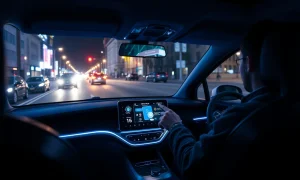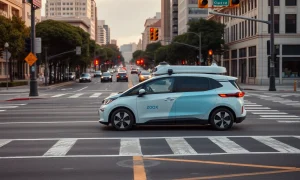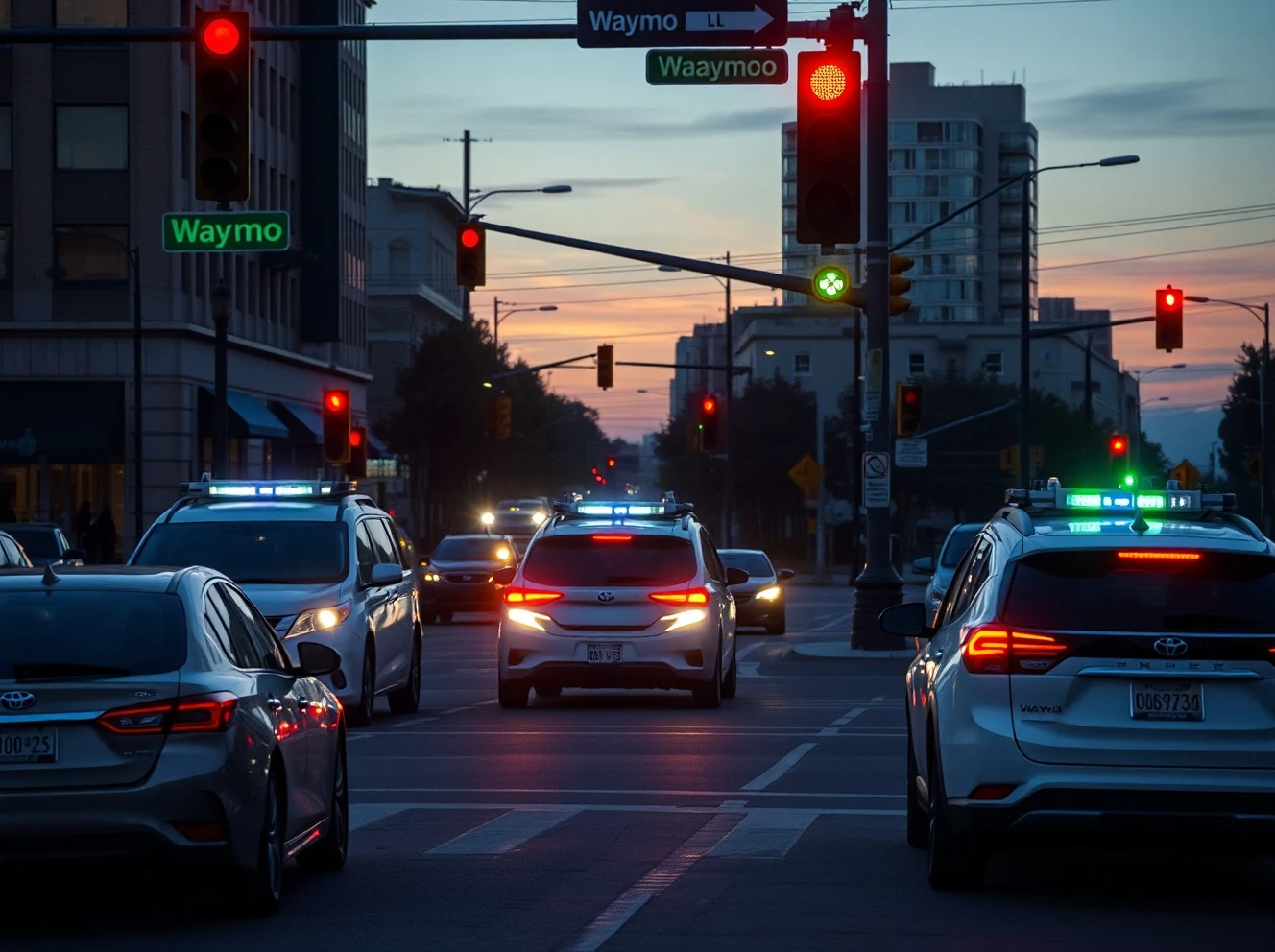
In San Francisco on Saturday, October 12, 2024, a widespread power outage created an unexpected stress test for autonomous vehicle technology when Waymo’s robotaxis encountered disabled traffic signals across the city. The incident revealed both the capabilities and limitations of current self-driving systems during infrastructure failures, prompting Waymo to announce immediate software updates to improve how its vehicles handle similar situations in the future.
Waymo Robotaxis Encounter Unprecedented Challenge
During the San Francisco blackout, Waymo’s autonomous vehicles faced what the company described as “a unique challenge for autonomous technology.” The self-driving system, designed to treat dead traffic lights as four-way stops—mirroring human driver protocols—encountered unexpected complications. Instead of navigating these intersections autonomously, many vehicles initiated “confirmation checks” with Waymo’s remote fleet response team.
This safety protocol, implemented during early deployment phases, created a bottleneck when multiplied across dozens of vehicles simultaneously. The concentrated spike in confirmation requests overwhelmed the system’s capacity, resulting in visible congestion at multiple intersections. Video footage circulating on social media showed clusters of Waymo vehicles hesitating at darkened intersections, highlighting the real-world limitations of autonomous systems during infrastructure failures.
The Technical Breakdown of the Confirmation System
Waymo’s confirmation request system represents a critical safety layer in their autonomous technology stack. Built “out of an abundance of caution during our early deployment,” according to company statements, this system allows vehicles to seek human verification when encountering ambiguous or high-stakes scenarios. The system operates through:
- Real-time sensor data analysis from LiDAR, cameras, and radar
- Contextual understanding algorithms that assess intersection dynamics
- Risk assessment protocols that trigger confirmation requests
- Secure communication channels to remote assistance operators
During normal operations with isolated signal failures, this system functions effectively. However, the scale of Saturday’s outage—affecting numerous intersections simultaneously—exposed scalability limitations that Waymo now addresses through software refinement.
Software Update Promises More Decisive Navigation
Waymo announced on Tuesday that it’s shipping a fleet-wide software update specifically designed to handle power outage scenarios. The update provides autonomous systems with “specific power outage context,” enabling vehicles to navigate disabled intersections “more decisively” without requiring confirmation checks in most cases.
The technical improvements focus on several key areas:
| Update Component | Function | Expected Impact |
|---|---|---|
| Regional Outage Context | Provides system awareness of widespread infrastructure failures | Reduces unnecessary confirmation requests |
| Enhanced Decision Algorithms | Improves intersection negotiation logic during signal failures | Enables smoother traffic flow |
| Emergency Protocol Integration | Incorporates lessons from the San Francisco event | Improves future response to similar incidents |
These updates represent Waymo’s ongoing evolution from cautious early deployment to scaled operations. The company emphasized that while the confirmation strategy proved effective during smaller, isolated outages, current operational scale requires more autonomous decision-making capabilities.
Success Amidst Challenges: 7,000 Dark Signals Navigated
Despite attention on vehicles that got stuck, Waymo reported significant operational success during the outage. Company data indicates their vehicles “successfully traversed more than 7,000 dark signals on Saturday” without incident or assistance. This statistic provides important context about the overall reliability of autonomous systems during infrastructure failures.
The 7,000 successful navigations demonstrate the baseline capability of Waymo’s technology to handle standard four-way stop scenarios at disabled intersections. These successful operations occurred across San Francisco’s varied urban landscape, including complex multi-lane intersections and areas with heavy pedestrian traffic.
Historical Context: Previous Software Updates and Recalls
The San Francisco blackout incident follows previous software adjustments Waymo has implemented to address unforeseen operational challenges. Most notably, the company previously issued multiple software updates to ensure its robotaxis properly respond to stopped school buses.
That earlier issue prompted a National Highway Traffic Safety Administration investigation and led to a formal recall—a standard automotive industry procedure for safety-related software updates. These sequential refinements illustrate the iterative nature of autonomous vehicle development, where real-world operation continuously reveals edge cases requiring technical adjustment.
Transportation technology experts note that such iterative improvement processes mirror historical patterns in aviation and other safety-critical industries. Each incident provides valuable data that engineers use to enhance system robustness and reliability.
Industry Implications for Autonomous Vehicle Development
The San Francisco incident offers important lessons for the broader autonomous vehicle industry. Infrastructure resilience represents a critical consideration for scaling self-driving technology, particularly in urban environments with aging electrical grids and frequent service interruptions.
Other autonomous vehicle developers, including Cruise and Zoox, likely monitor such incidents closely to inform their own system designs. The event highlights the importance of:
- Scalable safety systems that maintain effectiveness during widespread events
- Redundant decision-making protocols for infrastructure failures
- Emergency response coordination with municipal authorities
- Public communication strategies during operational disruptions
These considerations become increasingly important as autonomous vehicle services expand to new cities with different infrastructure characteristics and emergency response protocols.
Emergency Response Protocol Improvements
Beyond software updates, Waymo committed to improving its emergency response protocols by “incorporating lessons from this event.” This holistic approach addresses both technical systems and operational procedures, recognizing that infrastructure failures require coordinated responses across multiple organizational levels.
Enhanced emergency protocols may include improved communication with city transportation departments during outages, modified fleet deployment strategies during infrastructure failures, and refined remote assistance operator training for mass-context events. These procedural improvements complement the technical software updates, creating a more resilient overall system.
The company’s response demonstrates maturity in incident management—acknowledging limitations while implementing concrete improvements and maintaining perspective about overall system performance. This balanced approach aligns with industry best practices for technology companies operating safety-critical systems in public spaces.
Conclusion
The San Francisco blackout provided a valuable, if unplanned, stress test for Waymo robotaxis and autonomous vehicle technology generally. While the incident revealed scalability limitations in confirmation systems during widespread infrastructure failures, it also demonstrated the underlying robustness of autonomous navigation systems, with thousands of successful dark signal traversals. Waymo’s responsive software updates and protocol improvements illustrate the iterative development process essential for advancing autonomous vehicle technology toward reliable, scalable deployment. As self-driving systems encounter increasingly complex real-world scenarios, such incidents provide crucial data for enhancing safety, reliability, and public trust in autonomous transportation solutions.
FAQs
Q1: What caused Waymo robotaxis to get stuck during the San Francisco blackout?
Waymo vehicles encountered disabled traffic lights and initiated confirmation checks with remote operators. The high volume of simultaneous requests created processing bottlenecks, causing temporary congestion at some intersections.
Q2: How does Waymo’s software update address the blackout issue?
The update provides autonomous systems with specific context about regional power outages, enabling more decisive navigation at disabled intersections without requiring confirmation checks in most scenarios.
Q3: Were all Waymo vehicles affected during the outage?
No, Waymo reported that its vehicles successfully navigated over 7,000 disabled traffic signals without incident. Only a subset of vehicles required confirmation checks that contributed to visible congestion.
Q4: Has Waymo faced similar software challenges before?
Yes, Waymo previously issued software updates to address how its vehicles respond to stopped school buses, which prompted an NHTSA investigation and formal recall procedure.
Q5: What broader implications does this incident have for autonomous vehicle development?
The event highlights the importance of scalable safety systems, infrastructure resilience considerations, and emergency response coordination for autonomous vehicle services operating in urban environments.