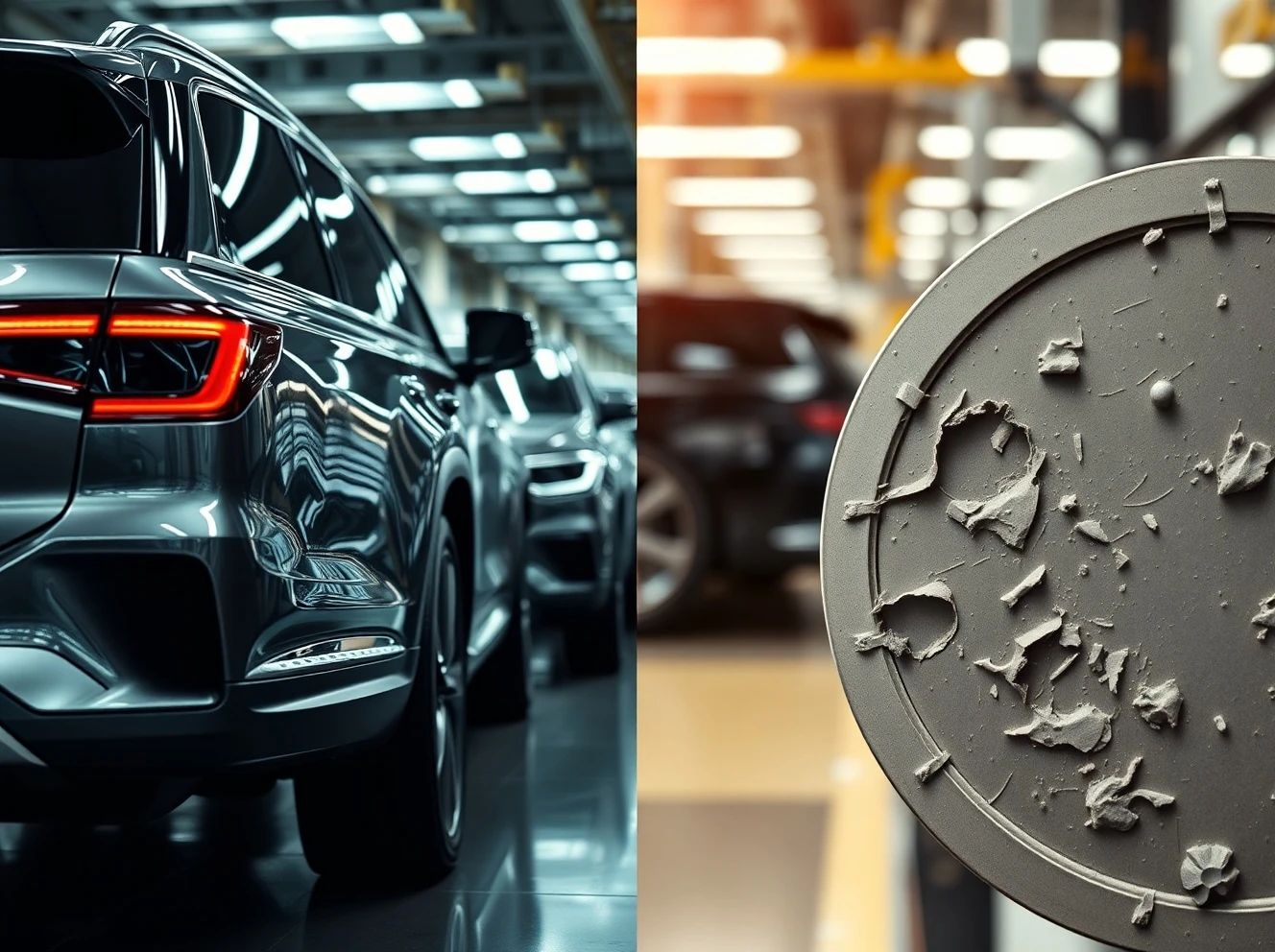
In a revealing development shaking the automotive world, affluent consumers are exposing a distressing auto industry trend that prioritizes technological gimmicks over fundamental reliability, creating ripple effects throughout the global market. Industry analysts confirm this pattern represents a systemic shift affecting manufacturers from Detroit to Stuttgart to Tokyo. Recent data from J.D. Power’s 2024 Vehicle Dependability Study shows a 12% increase in problems per 100 vehicles among premium brands compared to 2020 figures, signaling a concerning reversal of decades-long quality improvements.
Auto Industry Trend Revealed Through Premium Buyer Experiences
High-net-worth individuals traditionally insulated from quality concerns now report identical frustrations to mainstream consumers. Consequently, their vocal dissatisfaction carries disproportionate weight in industry conversations. These buyers typically purchase multiple vehicles annually, providing manufacturers with crucial revenue streams. However, their recent experiences with software glitches, premature component failures, and inconsistent build quality have triggered alarm across executive suites. For instance, a 2024 survey by Automotive News found 68% of luxury vehicle buyers reported at least one significant quality issue within the first six months of ownership, compared to just 42% in 2019.
Manufacturers historically reserved their highest quality standards for premium segments. Meanwhile, mass-market vehicles received more cost-conscious engineering. This tiered approach maintained brand prestige while maximizing profitability. Nevertheless, recent production pressures have eroded these quality distinctions. Supply chain disruptions, accelerated electrification timelines, and software complexity have created perfect storm conditions. As a result, even six-figure vehicles now exhibit problems once confined to entry-level models.
The Data Behind the Discontent
Industry analysts point to measurable indicators confirming this auto industry trend. The table below illustrates key quality metrics comparing premium and non-premium segments:
| Quality Metric | Premium Segment (2024) | Non-Premium Segment (2024) | Change Since 2020 |
|---|---|---|---|
| Problems per 100 Vehicles | 156 | 182 | +14% Premium / +8% Non-Premium |
| Software-Related Issues | 42% of total problems | 31% of total problems | +18% Premium / +12% Non-Premium |
| First-Year Service Visits | 3.2 average | 2.8 average | +0.7 Premium / +0.3 Non-Premium |
These statistics reveal a convergence of quality experiences across price segments. Previously, premium vehicles maintained a substantial quality advantage. Currently, that gap has narrowed to statistically insignificant levels in several categories. Consequently, wealthy buyers feel their substantial investments no longer guarantee superior ownership experiences.
Manufacturing Pressures and Systemic Challenges
Multiple converging factors explain this distressing auto industry trend. First, the rapid transition to electric vehicles requires entirely new manufacturing competencies. Traditional automakers struggle with battery integration, thermal management systems, and electric motor reliability. Simultaneously, they must maintain combustion engine production for existing model lines. This dual-track approach strains engineering resources and quality control systems. Additionally, semiconductor shortages forced manufacturers to ship vehicles without promised features, creating customer disappointment and retrofitting complexities.
Software development presents another critical challenge. Modern vehicles contain over 100 million lines of code, exceeding advanced fighter jets. However, automotive companies traditionally excelled at mechanical engineering, not software development. This competency gap results in:
- Infotainment system failures affecting navigation and entertainment functions
- Driver assistance malfunctions creating safety concerns
- Over-the-air update problems that sometimes worsen existing issues
- Integration failures between vehicle subsystems
Furthermore, just-in-time manufacturing practices leave little buffer for quality verification. Assembly lines move at relentless paces, allowing minimal time for inspection. Consequently, problems reach customers rather than being caught at factories. Industry veterans note this represents a fundamental shift from traditional quality-first manufacturing philosophies.
The Ripple Effect on Mainstream Buyers
This auto industry trend affecting wealthy buyers creates downstream consequences for all consumers. When premium segments accept lower standards, those standards inevitably filter downward. Manufacturers rationalize that if luxury buyers tolerate certain issues, mainstream buyers will certainly accept them. This normalization of diminished quality affects vehicle safety, longevity, and resale values across all price points. Moreover, warranty claims increase operational costs, which manufacturers offset through higher prices or reduced content in base models.
Consumer advocacy groups document concerning patterns. For example, the Center for Auto Safety reports a 34% increase in premature brake wear complaints across all segments since 2021. Similarly, electronic steering failures have increased 22% despite being critical safety components. These issues transcend price categories, indicating systemic manufacturing or design flaws. Regulatory agencies have noticed these patterns too. The National Highway Traffic Safety Administration opened 24% more defect investigations in 2024 compared to 2022 averages.
Market Responses and Industry Adaptation
Wealthy buyers employ various strategies responding to this auto industry trend. Some return to trusted older models with proven reliability records. Others explore emerging brands specifically focusing on quality fundamentals. Additionally, extended vehicle testing before purchase has become commonplace among affluent consumers. They increasingly utilize third-party inspection services, something previously associated only with exotic or classic car purchases.
Manufacturers recognize the business implications. Premium brands risk losing their most profitable customers to competitors or alternative transportation solutions. Consequently, several initiatives have emerged:
- Enhanced quality verification programs adding inspection points
- Software quality task forces with technology partnerships
- Extended warranty offerings to restore confidence
- Direct executive engagement with dissatisfied customers
These responses indicate serious concern within corporate leadership. However, industry observers question whether these measures address root causes or merely treat symptoms. True quality improvement requires manufacturing philosophy changes, not just additional inspections. Some manufacturers now delay product launches for additional testing, representing a significant cultural shift toward prioritizing reliability over speed-to-market.
Conclusion
The distressing auto industry trend exposed by wealthy buyers reveals systemic challenges affecting all vehicle segments. Luxury consumers once insulated from quality concerns now experience frustrations mirroring mainstream buyers. This convergence signals fundamental manufacturing and design issues requiring immediate industry attention. Consequently, manufacturers must rebalance technological innovation with reliability fundamentals. Otherwise, they risk eroding consumer trust across all price categories. The coming years will determine whether the industry corrects this trajectory or accepts diminished quality as the new normal.
FAQs
Q1: What specific problems are wealthy buyers reporting with luxury vehicles?
A1: Affluent consumers report software glitches in infotainment systems, premature failures of advanced driver assistance features, inconsistent build quality with panel gaps and interior trim issues, and unexpected mechanical problems in complex hybrid and electric powertrains that previously appeared in reliability testing.
Q2: How does this auto industry trend affect mainstream vehicle buyers?
A2: When premium segments accept lower quality standards, manufacturers often extend those standards downward to mainstream vehicles. This normalization affects safety, reliability, and ownership costs for all consumers, regardless of vehicle price point.
Q3: Are certain automotive brands performing better despite this trend?
A3: Yes, several manufacturers maintain stronger quality records. Brands with simpler technology implementation, more conservative update cycles, and established manufacturing processes generally show fewer quality issues, though even these companies face challenges from supply chain and workforce factors.
Q4: What should consumers look for when purchasing vehicles given this quality trend?
A4: Experts recommend prioritizing proven platforms over all-new designs, researching specific model year reliability data, test-driving vehicles thoroughly with attention to technology interfaces, considering extended warranty options, and verifying repair network accessibility before purchase.
Q5: How might this trend evolve in the coming years?
A5: Industry analysts predict either significant quality improvement as manufacturers address root causes, or further divergence between brands that prioritize reliability and those chasing technological features. Regulatory pressure and consumer backlash will likely determine which direction dominates.