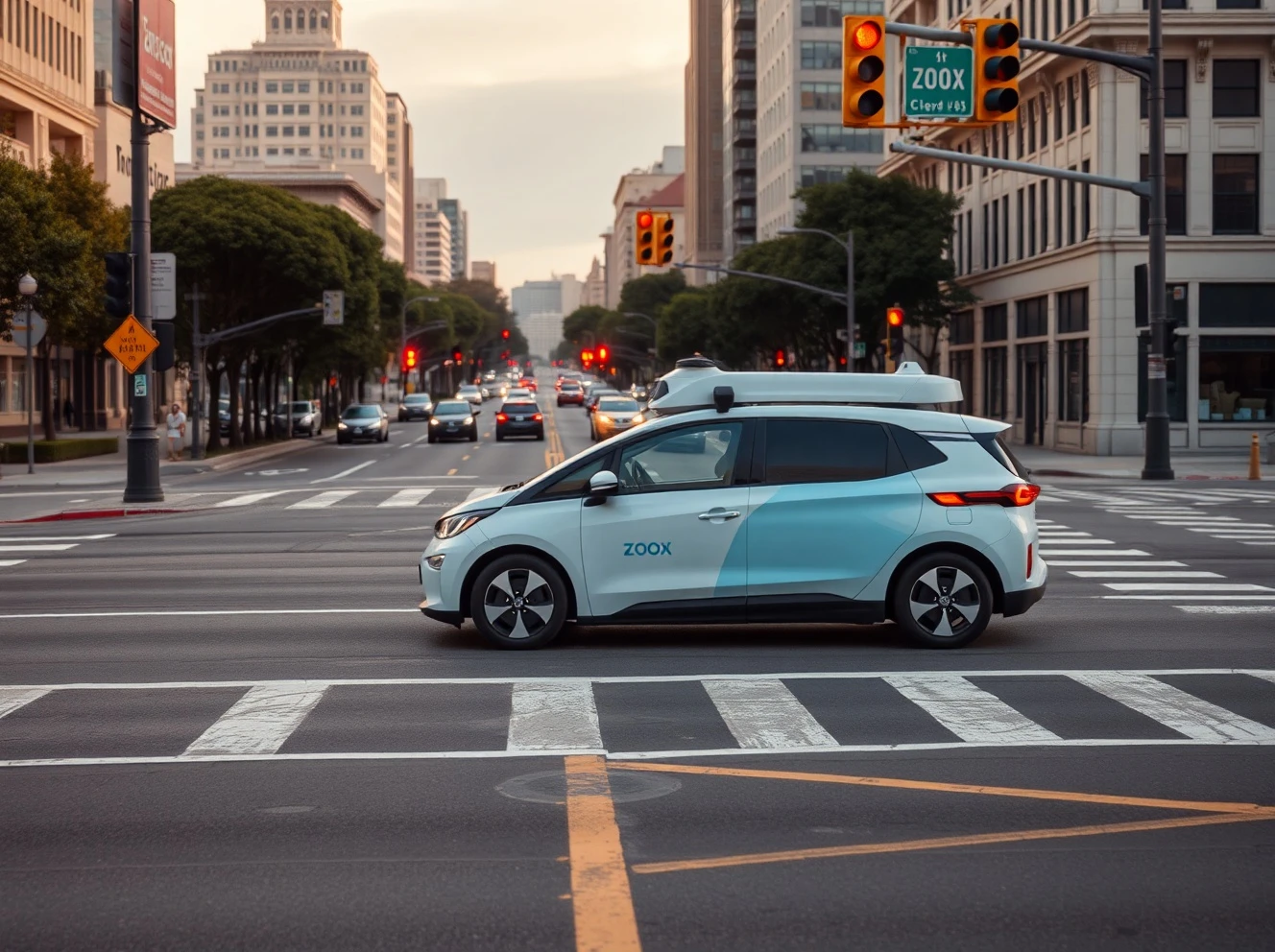
In a significant development for autonomous vehicle safety, Amazon-owned Zoox has issued a voluntary software recall affecting 332 of its driverless vehicles following concerns about lane crossing incidents near intersections. The recall, filed with the National Highway Traffic Safety Administration (NHTSA) on Tuesday, addresses specific scenarios where Zoox robotaxis crossed center lane lines or blocked crosswalks during turns. While no collisions resulted from these incidents, the company identified potential safety risks requiring immediate attention.
Zoox Software Recall Details and Scope
The voluntary recall specifically addresses software issues that caused Zoox vehicles to make maneuvers that, while common for human drivers, didn’t meet the company’s stringent safety standards. According to NHTSA documents, the recall affects vehicles operating on public roads between March 13 and December 18 of this year. Zoox provides free rides to the public in its distinctive driverless vehicles in select areas of San Francisco and Las Vegas, making this recall particularly relevant for urban transportation systems.
Company representatives explained the specific scenarios that prompted the recall. In some instances, vehicles attempting to avoid blocking intersections at red lights would stop in crosswalks. In other cases, robotaxis made late turns resulting in wide turns that crossed partially into opposing travel lanes. These incidents represent critical challenges in autonomous vehicle programming, particularly in complex urban environments with multiple variables.
Timeline of Discovery and Response
Zoox first identified the issue on August 26 when one of its robotaxis made a wide right turn, crossed partially into the opposing travel lane, and temporarily stopped in front of oncoming traffic. Following this initial discovery, the company implemented extensive data monitoring across its fleet. Between August 26 and December 5, Zoox identified 62 additional instances of similar lane crossing incidents near intersections.
The company responded with two significant software updates. On November 7, Zoox deployed initial improvements to address the identified issues. Then in mid-December, the company implemented further refinements to comprehensively resolve all related concerns. These updates demonstrate the iterative nature of autonomous vehicle software development and the importance of continuous improvement cycles.
Industry Context and Regulatory Framework
This recall represents part of a broader pattern in the autonomous vehicle industry, where companies must balance rapid technological advancement with rigorous safety protocols. The NHTSA has increasingly focused on autonomous vehicle safety in recent years, establishing clearer reporting requirements and investigation procedures. Zoox’s proactive approach to this recall reflects growing industry maturity and regulatory expectations.
Autonomous vehicle companies face unique challenges in urban environments. Unlike highway driving, city streets present complex scenarios including pedestrians, cyclists, emergency vehicles, and unpredictable human drivers. Intersections particularly challenge autonomous systems due to multiple decision points, varying traffic patterns, and complex right-of-way calculations.
Technical Analysis of the Lane Crossing Issue
The specific technical challenges involve several interconnected systems within Zoox’s autonomous driving architecture. Perception systems must accurately identify lane markings, crosswalk boundaries, and intersection geometries. Prediction algorithms must anticipate the movements of other road users. Planning systems must then execute appropriate maneuvers within strict safety parameters.
According to technical experts familiar with autonomous vehicle systems, wide turns and crosswalk blocking typically result from conservative programming approaches. When systems encounter uncertain situations, they often default to overly cautious behaviors that, while preventing collisions, can create traffic disruptions or unexpected vehicle positions. Balancing safety with smooth traffic flow remains a persistent challenge in autonomous vehicle development.
| Date | Event | Vehicles Affected |
|---|---|---|
| August 26 | Initial incident identified | 1 vehicle |
| August 26 – December 5 | Monitoring period | 62 incidents total |
| November 7 | First software update | All active vehicles |
| Mid-December | Final software update | All active vehicles |
| Recall filing date | Voluntary recall submitted | 332 vehicles total |
Comparative Analysis with Previous Recalls
This marks Zoox’s third significant software recall this year, highlighting the evolving nature of autonomous vehicle safety. In March, the company issued a recall to address unexpected hard braking issues. That recall followed a preliminary NHTSA investigation initiated after reports of motorcyclists colliding with the rear of Zoox vehicles. In May, Zoox filed two additional software recalls concerning the system’s ability to predict other road users’ movements.
These successive recalls demonstrate several important industry trends:
- Increasing regulatory scrutiny: NHTSA has intensified its oversight of autonomous vehicle safety
- Transparency improvements: Companies now proactively report potential issues
- Software complexity: Autonomous systems require continuous refinement
- Safety prioritization: Companies balance deployment speed with safety assurance
Expert Perspectives on Autonomous Vehicle Safety
Transportation safety experts emphasize that software recalls represent normal development processes for emerging technologies. Unlike traditional vehicle recalls that often involve physical components, software updates can address issues remotely and rapidly. This capability represents a significant advantage for autonomous vehicle safety management.
Industry analysts note that Zoox’s approach reflects Amazon’s broader technology philosophy. The parent company emphasizes rigorous testing, data-driven decision making, and continuous improvement cycles. This corporate culture influences how Zoox addresses safety concerns and implements corrective measures.
Impact on Public Perception and Trust
The recall occurs during a critical period for autonomous vehicle public acceptance. Recent incidents across the industry have heightened public awareness of autonomous vehicle safety considerations. Zoox’s transparent approach to this recall may actually bolster public trust by demonstrating responsible safety management.
Public perception of autonomous vehicles involves complex psychological factors. While incidents understandably generate concern, transparent responses and clear safety improvements can build long-term confidence. Zoox’s detailed explanation of the issues and their resolution represents a strategic approach to public communication.
Urban transportation departments particularly monitor these developments. Cities considering autonomous vehicle integration need assurance that companies can identify and address safety issues promptly. Zoox’s documented response process provides valuable data for municipal planning and regulatory development.
Future Implications for Autonomous Vehicle Development
This recall provides important lessons for the entire autonomous vehicle industry. The specific scenarios identified—wide turns and crosswalk blocking—highlight common challenges in urban autonomous navigation. Other companies will likely examine their own systems for similar issues, potentially preventing future incidents across the industry.
The technical solutions Zoox implemented may influence industry best practices. As companies share learnings through technical conferences and industry associations, successful approaches to specific challenges become standardized across the field. This collective learning accelerates overall industry safety improvements.
Regulatory agencies will also incorporate these lessons into future guidelines. NHTSA and other regulators continuously update their understanding of autonomous vehicle risks and appropriate safety measures. Documented incidents and successful resolutions inform regulatory frameworks and testing requirements.
Conclusion
The Zoox software recall represents a significant moment in autonomous vehicle development, demonstrating both the challenges of urban autonomous navigation and the industry’s growing maturity in addressing safety concerns. By proactively identifying lane crossing issues, implementing targeted software improvements, and transparently reporting to regulators, Zoox exemplifies responsible autonomous vehicle development practices. This recall ultimately strengthens the safety foundation for autonomous transportation systems while providing valuable insights for the entire industry’s continued evolution toward safer urban mobility solutions.
FAQs
Q1: What specific issues prompted the Zoox software recall?
The recall addresses instances where Zoox autonomous vehicles crossed center lane lines during turns or stopped in crosswalks while attempting to avoid blocking intersections. These maneuvers, while sometimes made by human drivers, didn’t meet Zoox’s safety standards.
Q2: How many vehicles are affected by this recall?
The voluntary software recall affects 332 Zoox autonomous vehicles that were operating on public roads between March 13 and December 18 of this year.
Q3: Were there any accidents or injuries resulting from these issues?
No. Zoox confirmed there have been no collisions or injuries associated with the lane crossing incidents that prompted this recall. The company identified potential risks and addressed them proactively.
Q4: How did Zoox discover these software issues?
The company identified the initial incident on August 26 when a vehicle made a wide turn crossing into the opposing lane. Subsequent data monitoring revealed 62 similar incidents between August 26 and December 5, prompting the software updates and recall.
Q5: How does this recall compare to Zoox’s previous safety actions?
This marks Zoox’s third significant software recall this year. Previous recalls addressed unexpected hard braking in March and prediction system improvements in May, demonstrating the company’s ongoing commitment to safety refinement.